Law
The human body and the law: status, value and limits
The law protects human integrity and personality, governs the legal status of parts of the human body and bodily substances, and determines who has the right to make decisions regarding the human body. Franziska Sprecher, an expert in constitutional and administrative law, discusses the current legal debates surrounding the human body.

At first glance, the human body appears to be a deeply personal matter. It is part of our identity, an expression of our individuality, and provides the basis for our lives. At the same time, however, the human body is also the subject of social concepts, scientific research, economic interests, and legal regulations.
The law determines what is permitted regarding the human body – and where the boundaries lie. It protects integrity and personality, governs the status of parts of the human body and bodily substances, and determines who has the right to make decisions regarding the human body.
The human body as a bearer of dignity and freedom
The Swiss Federal Constitution protects human beings in terms of their physical and mental existence: Article 7 guarantees human dignity, while Article 10, paragraph 2, guarantees personal freedom and physical and mental integrity. Swiss criminal law and private law supplement the protections. The body is not an ordinary object that can be freely disposed of.
“Self-determination over one’s own body is far-reaching, but not unlimited.”
At the same time, the human body is a realm of personal freedom. People decide whether they want to undergo medical treatment, donate tissue or organs, participate in research involving their bodies, or make aesthetic changes to their bodies. For a decision regarding one’s own body to carry legal weight, it must be made freely, be based on sufficient information, and be made by a person who is able to comprehend its implications.
The limits of self-determination
Self-determination over one’s own body is far-reaching, but not unlimited. The law permits many things: surgery, drug therapy, cosmetic procedures, living donations or participation in research. Yet consent alone cannot give the green light to everything. Trade in organs, surrogacy and genetic modifications to one’s own body that could be passed on to future generations are prohibited, for example.
There are also areas where the legal situation is unclear or controversial. One example is organoids: organ-like structures grown in a laboratory from human cells that are able to mimic the properties of an organ. These do not constitute complete organs, but they are significant in terms of research. They exemplify how new technology is blurring the lines between parts of the human body, research, and economically exploitable material.
Before birth: the protection of unborn life
The legal classification of the human body before birth is particularly challenging. Swiss law distinguishes between embryos, foetuses and born persons. Legal capacity generally only commences at live birth (Art. 31 of the Swiss Civil Code).
About the person

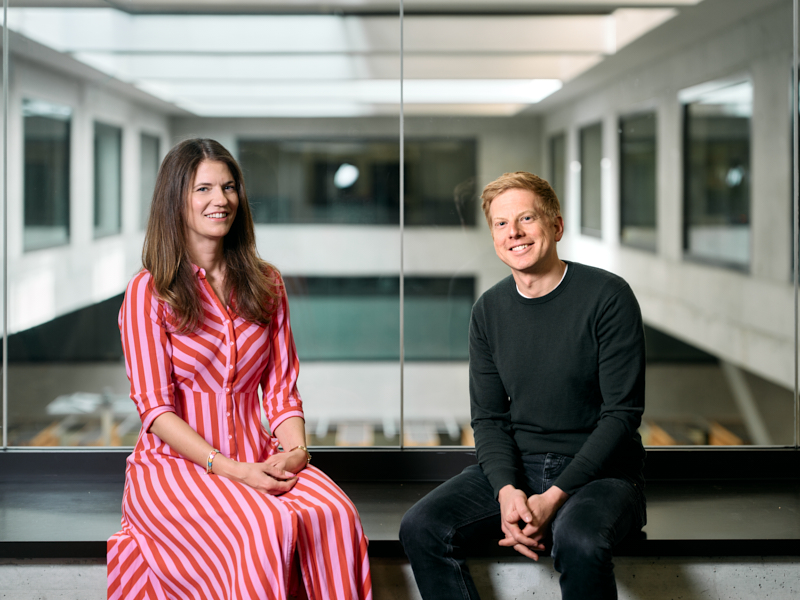
Franziska Sprecher
Franziska Sprecher is associate professor of constitutional and administrative law with a special focus on health law at the Institute of Public Law at the University of Bern. She is also Director of the Center for Health Law and Health Care Management (MiG) at the University of Bern.
Contact
Prof. Dr. Franziska Sprecher
franziska.sprecher@unibe.ch
The legal status of the unborn child is not entirely clear. According to criminal law and reproductive medicine law, however, protections and limits can be seen to exist before birth. Reproductive medicine, in particular, highlights just how closely medical progress, societal expectations and legal assessments are intertwined. The Swiss Act on Medically Assisted Reproduction also governs artificial insemination and the use of embryos.
A practical example: who actually owns human cells?
Unresolved questions are particularly evident when it comes to the handling of human bodily substances. For example, tissue samples are taken from a person as part of a treatment. Yet something that initially serves a diagnostic or therapeutic purpose may also be relevant for other purposes: research, cell lines or cell and tissue-based therapeutic procedures.
This shifts the legal perspective. The issue is not only whether the collection of the material was permissible, but what could happen to it in the future. Under what conditions may cells be reused, modified or propagated? Can they be used to create commercially viable products? Do the affected individuals retain rights to the bodily substances or materials that were once part of their bodies?
Swiss law contains provisions on this matter in the laws covering human research, medicinal products, transplantation and data protection. Despite this, crucial questions remain: How long does the legal connection to a material’s origin in a specific human body last? When does it become an independent research asset or an economic good?
Magazine uniFOKUS
Body images
This article first appeared in uniFOKUS, the University of Bern print magazine. Four times a year, uniFOKUS focuses on one specialist area from different points of view. Current focus topic: Body images
At this point, it becomes clear that protection and use are not necessarily opposing factors. Human bodily substances can be indispensable for research; if new procedures, products or treatments result from them, economic interests may also be justified. At the same time, the fact that these substances originate from a human body must not be rendered meaningless. The law should strike a balance between freedom of research, use, the protection of human rights, and protection against inappropriate commercialisation.
After death: the human body between reverence and use
The human body also remains legally relevant after death. While an individual’s legal capacity ends with their death, their body does not suddenly become an ordinary object. It remains associated with dignity, reverence and personality. At the same time, its use can be of considerable importance to other people and to science: organs, tissue and parts of the human body can save lives, assist research and be significant in terms of education and medical advances. Their use therefore requires clear conditions and respectful handling.
New technology, age-old fundamental questions
Biotechnological developments are fundamentally changing the way in which we handle parts of the human body and bodily substances. Organoids, artificially generated tissues, cell lines and novel cell-based methods open up great opportunities. Yet they also raise questions that cannot be answered by technical means alone: when does human bodily material become a research subject – and when does it become an economic asset? What kind of consent is valid – and how far should it reach? What limits should continue to apply in the future?
“When does human bodily material become a research subject, and when does it become an economic asset? What kind of consent is valid, and how far should it reach? What limits should continue to apply in the future?”
In conclusion, the human body is far more than just a biological object. It is the bearer of dignity, personality and self-determination. At the same time, it is also the foundation of research, medical progress and economic value. The legal interpretation of the human body therefore remains a key task: it compels us to continuously redefine what a human being should be – and what they must never become.