In Focus
Our Bodies as Reflected in Society
From the muscular aristocrats of antiquity to “Volkskörper” idea of an ethnic body politic that found hold in the early 20th century and on to today’s fitness culture: two historians and a scholar of religious studies shed light on how influential body ideals emerge—and what alternative models exist.
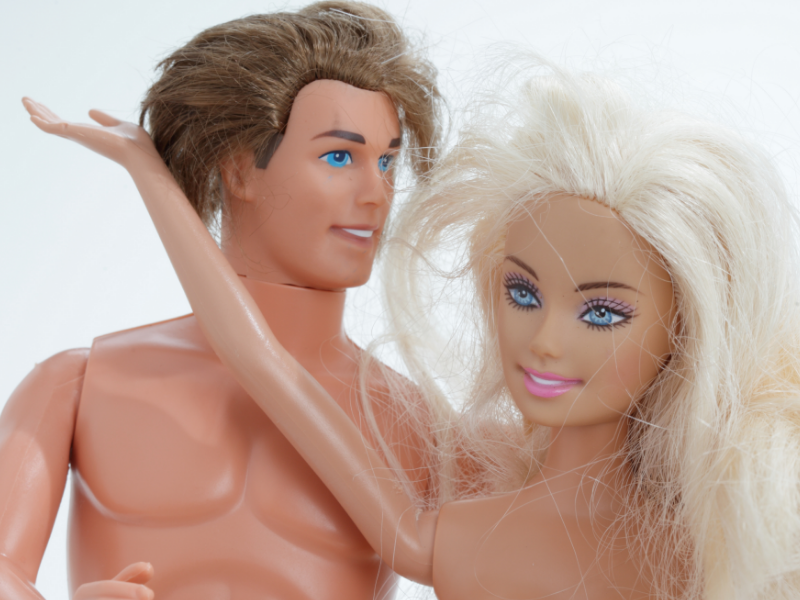
It’s an intimate moment when we stand in front of the mirror and look at ourselves. We scrutinize, evaluate and all too often condemn ourselves; for supposed flaws that have crept in over time or that have always been part of us. Yet, although we are not really aware of this, we’re not actually standing alone in front of the mirror. Also present are the historical and cultural norms and ideals of an entire society. Ideals that very few of us live up to. Yet these body images shape us and how we want to be. Some go to the gym or to a cosmetic surgeon; others inject themselves with weight-loss drugs or bounce from one diet to the next. Women shave their legs, men shave their chests; some don’t dare go to the pool in the summer because of their “imperfect” bodies, or silently and secretly judge their own bodies.
Antiquity: Women in Male Roles
The ideal body and perception of beauty can vary by culture and region and have changed repeatedly over the centuries. Yet the origins of today’s male ideal of beauty are easily recognisable in the statues of antiquity: these depict idealised images of naked, muscular young men. In ancient Greece, these were erected in cemeteries for the deceased or for the winners of athletic competitions, as ancient historian Seraina Ruprecht explains. She emphasises: “These depictions of the body were reserved for the aristocracy. They used them to express that they were more beautiful and superior.” Poor people had neither the leisure time to train their bodies specifically in the “gymnasium” nor the money to have stone monuments erected in their own honour. Furthermore, only men and gods were depicted nude; women were portrayed clothed.
“Even as far back as in ancient Greece, it is clear how social role expectations regarding gender shape body ideals,” says Ruprecht, illustrating this with the example of the comedy Assemblywomen from 392 B.C. In it, the women of Athens dress up as men to participate in the assembly and vote there to hand over political power to women. In preparation, they go outside every day to get a tan. The logic here was that while men worked outdoors and were therefore tanned, women stayed indoors whenever possible—and had fair skin. In the comedy, the women put on men’s clothes and fake beards, practice walking like men, and learn to speak in public. But only one woman succeeds at the latter: the one who lives next to the assembly hall and therefore knows what it sounds like. “This anecdote illustrates very well what distinguishes male and female bodies and how much of that is learned through practice.”
“Even as far back as in ancient Greece, we can see how social gender roles shape body ideals.”
Seraina Ruprecht
The social practices regarding gender varied depending on the culture and region—and, consequently, so did body images. In ancient Greece, athletic competitions were reserved for men; the military city-state of Sparta being an exception. As Seraina Ruprecht explains, the Athenians were amazed by the strong, well-toned bodies of Spartan women. They attributed this peculiarity to the fact that the Spartans placed great importance on training their women so that they, too, would be particularly capable of self-defence—and consequently give birth to particularly strong children.
Some 2,000 years later, these notions of gender roles sound strikingly similar. In Switzerland at the beginning of the 20th century, the same principle applied: while men engaged in sports to strengthen their bodies for a well-defended state, women were expected to exercise only enough to ensure they could give birth to healthy children. Women were prohibited from competing in sporting events. Historian and gender researcher Yvonne Schüpbach is well aware of this and quotes the motto of the Swiss Women’s Gymnastics Association, which remained in use until the 1960s: “Healthy mothers, healthy children, healthy nation.”
From the “Volkskörper” Body Politic to the Individual Project
The historian explains that this was based on the idea of the “Volkskörper”. This concept stems from eugenics and was intended as a way to improve the strength of the entire nation by “keeping the gene pool healthy”. This biologistic ideology uses class, ethnicity or skin colour to determine who is allowed to be part of this “national body politic” and reproduce—and who is not. It was this ideology that was used to justify forced sterilisations and murders took place in Nazi Germany. Switzerland, too, condemned marginalised people in particular for this reason to forced sterilisation under the guise of “compulsory welfare measures”.
The concept of the “national body politic” was deeply rooted in the perceptions of people in the Western world in the early 20th century. From the 1960s onward, however, Schüpbach observes a clear shift from the collective body to the individual body. With increasing individualisation, “healthism” has gained ground. According to this ideology, which elevates health to a status symbol and the ultimate goal in life, every person is responsible for their own health—and thus also for having a slim body. This became the new moral imperative—seemingly achievable through exercise, nutrition and a healthy lifestyle. With fitness centres and trackers, dietary supplements, weight-loss drugs and wellness offerings, this has evolved into a massive industry that continues to advance thanks to technological progress. Measuring health metrics such as sleep or blood sugar using so-called wearables—small computers worn on the body—also plays a major role in the “longevity” trend. The goal of this trend is to remain physically and mentally fit for as long as possible by optimising sleep, exercise and nutrition.
Sexiness and Broken Bones
What brings joy, motivates and can improve health also has its downsides. The moral perception of anyone who is still overweight or falls ill despite these efforts is that they are doing something wrong and has only themselves to blame. “Instead of addressing structural or economic inequalities, everything is attributed personal responsibility or failings. Yet the necessary resources—such as genetic predisposition, money or time—are unevenly distributed,” criticizes Schüpbach. The fitness boom has long since become a global mass movement. “In an increasingly confusing world, the body becomes the last place one supposedly can control.”
The body ideals associated with healthism are: women should above all be slim, but also “feminine”; men should primarily be muscular and likewise slim. However, Schüpbach has observed something interesting in this regard: since the year 2000, women’s bodies in sports have become significantly more muscular. “For a moment, it seemed as though women’s and men’s bodies were converging. But instead, a situation evolved in which the more muscle women have, the more they must prove their femininity through ‘heterosexiness’”. This can take the form of longer fingernails, more makeup or skimpier dresses.
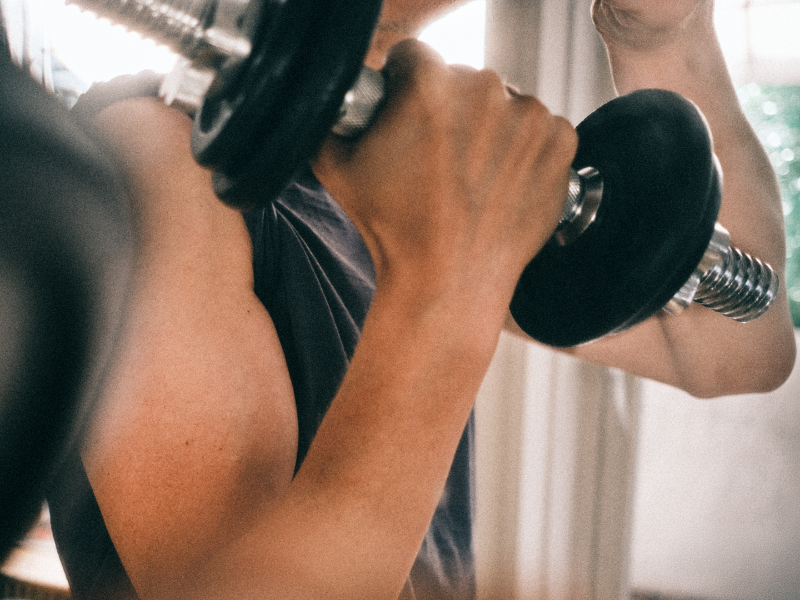
Among men, especially young men, Schüpbach observes that muscularity is being taken to ever greater extremes, fuelled by TikTok trends. One such extreme is “Looksmaxxing”, which originated in the misogynistic movement of “involuntarily celibate” men (incels) and ranges from weight training to deliberately breaking cheekbones so they regrow more prominently.
Internalised from an Early Age
These societal ideals are internalised, at least in their general strokes, already in childhood and adolescence. This is demonstrated by various studies, such as the most recent representative survey conducted by the Zurich University of Applied Sciences among 12- to 19-year-olds in Switzerland: girls strive for slimmer bodies, while boys want more muscle. These ideals are conveyed both by family and peers and through images in the media. It is also evident that girls face greater pressure from idealised images on social media to alter their bodies.
This has consequences, as a positive body image is closely linked to healthy self-esteem and mental well-being. In psychology, the term “body image” refers to a person’s subjective perceptions, thoughts and feelings about their own body. A negative body image can lead to psychological distress and behaviours that are harmful to one’s health, such as eating disorders, exercise addiction, social withdrawal or obsessive-compulsive disorder.
Magazine uniFOKUS
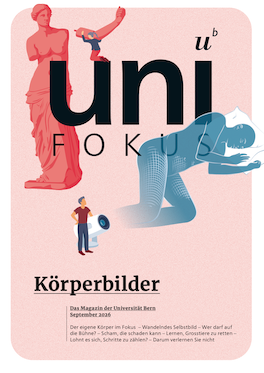
Body images
This article first appeared in uniFOKUS, the University of Bern print magazine. Four times a year, uniFOKUS focuses on one specialist area from different points of view. Current focus topic: Body images
The Body as a Neutral Tool
Even though adolescents are more heavily exposed to social media and often experience a particularly complicated relationship with their bodies, body dissatisfaction is also widespread among adults, especially women. The “body positivity” movement advocates for all people to be able to value and love their bodies—regardless of body shape or weight. It promotes images of diverse, realistic bodies and presents them as beautiful.
One alternative, the concept of “body neutrality”, has gained prominence in recent years. This concept advocates paying less attention to one’s own appearance, viewing the body instead as a tool, and turning one’s focus to more important issues for a meaningful life. Research also emphasises that it is beneficial to focus less on the body’s appearance and more on experiencing and appreciating its diverse functions. In this way a person can—regardless of age, body type or disability— experience joy and pride through appropriate physical activity and derive a positive body image from it.
Religions as a Counterpoint
Religions also offer a perspective going beyond the body. Religious studies scholar Anna-Katharina Höpflinger explains: “Religions look beyond the body and open up an additional dimension: transcendence—that is, what lies beyond the controllable everyday world and is described by concepts such as God, the soul, fate or spiritual energy.”
The body itself falls within the realm of the uncontrollable. “We don’t have complete control over our bodies; we get sick, we age, we die. Religions offer a way to come to terms with this by providing explanations for it.” These explanations vary depending on religion, place and time. In the Christian context, old age is regarded as something willed by God, and the supposedly imperfect body is usually seen as something that has a purpose. Throughout the history of this religion, the body has not been considered particularly important; beauty has not been seen as something to strive for, and vanity has even been regarded as a sin. Höpflinger illustrates this using the 15th-century tale of the “Trailing Devil”. As the tale goes, a “vain” woman enters the church wearing a beautiful train; the priest sprinkles holy water on it, and everyone sees that the devil is sitting on her train, laughing to himself—because she is so vain. “Instead of worrying about beauty, people should devote themselves to a good, pious life,” says Höpflinger, summarising the moral of this tale.
However, she emphasises that religions are often contradictory when it comes to body image. “Religions can include a wide variety of people; by looking beyond the body, they can provide meaning and offer comfort in dealing with illness, disability, old age and death. But, depending on the religious system, they can also exclude people based on their bodies and exert power over the body—through commandments and prohibitions.” A current example of the latter is the abortion debate.
“We don’t have complete control over our bodies; we get sick, we age, we die.”
Anna-Katharina Höpflinger
Ten Genders Instead of Two
As an inseparable part of culture, religions have also helped shape body images, for example regarding modest clothing or gender roles. “It’s fascinating that there are very different body images depending on religion, region and culture,” says the religious studies scholar. One of the most surprising concepts from a Western perspective comes from Amarete, a village in the Bolivian highlands. According to research by German cultural anthropologist Ina Rösing, they recognise ten genders there. An individual’s gender depends on the land they cultivate and the office they hold. In Amarete, gender determines social status and the way one dresses and moves.
Perhaps we can draw inspiration from this? Let’s broaden our thinking and open our eyes—to the diversity of possible gender roles and real body shapes, to all those things that are more precious to us than being slim and growing muscles. Let’s appreciate what our bodies accomplish every day. And we could ask ourselves how we want to look at other people’s bodies. And the next time we look at ourselves in the mirror, let’s try a little experiment: what happens if we set aside societal norms for a moment? What do we see in the mirror then?
About

Seraina Ruprecht
is a lecturer on ancient cultures and constructions of antiquity at the Institute of History at the University of Bern. Her research focuses, among other things, on masculinity and femininity in classical Greece. Other areas of focus include friendship and network research in Late Antiquity as well as the history of the reception of antiquity.
Contact:
Dr. Seraina Ruprecht, seraina.ruprecht@unibe.ch
About

Yvonne Schüpbach
is a research associate at the Interdisciplinary Centre for Gender Studies (ICFG) at the University of Bern. Her research focuses, among other things, on sports and gender, the history of aging and health, and the history of the body, women and gender.
Contact:
Dr. des. Yvonne Schüpbach, yvonne.schuepbach@faculty.unibe.ch
About

Anna-Katharina Höpflinger
is an associate professor of religious studies at the University of Bern with a focus on contemporary religious developments. Her research focuses, among other things, on religion in relation to the body and clothing, visuality and gender, as well as on transcendent elements in heavy metal.
Contact:
Prof. Dr. Anna-Katharina Höpflinger, anna-katharina.hoepflinger@unibe.ch
Subscribe to the uniAKTUELL newsletter

Discover stories about the research at the University of Bern and the people behind it.