Healthcare costs
Is health becoming a luxury?
Switzerland has mandatory health insurance, But the premiums people need to pay for it continue to rise. Is health becoming a luxury? Health economist Michael Gerfin, public health researcher Annika Frahsa and medical ethicist Rouven Porz offer their perspectives.

uniAKTUELL: Healthcare costs keep rising. Will health soon become an unaffordable luxury?
Michael Gerfin: We need to distinguish between health itself and healthcare services. Being perfectly healthy is in itself a luxury that none of us can fully attain all the time — due to our genetics or other conditions we are born with. The question is: what is the best possible state of health a person can achieve? And yes, I think it is becoming harder for more and more people to reach that state. Healthcare is becoming less accessible because mandatory insurance premiums are rising. There is also ongoing discussion about increasing deductibles.
Rouven Porz: As a medical ethicist at Inselspital, I see every day that our healthcare system is at a very high level. Switzerland has one of the best healthcare systems in the world. But I agree: if costs continue to rise like this, premiums will eventually become a luxury that part of the population can no longer afford.
In my opinion, we do indeed have a kind of two-tier healthcare system.
Annika Frahsa
Even though premium subsidies exist for people with lower income?
Gerfin: Yes, they do exist, but they vary so greatly from canton to canton that they do not provide the best possible compensation for the rising costs. Basic insurance premiums are not income-based; they are flat-rate premiums per person. Economically disadvantaged people are therefore much more heavily burdened.
Annika Frahsa: Even considering subsidies, I would say from a public health perspective that health has become a luxury for certain population groups in Switzerland. The gap between particularly vulnerable and privileged groups has widened over the past twenty years. The mechanism at play here are subtle and barely discernible.
What do you mean specifically?
Frahsa: There are subtle forms of exclusion. Take premium subsidies, for example: am I automatically informed that I am eligible for one? How easy or difficult to understand is the application form? Am I ashamed to apply? Our task as researchers is to uncover and draw attention to such mechanisms. Because one thing is clear: more and more people are going into debt because of medical treatment. And educational level strongly influences how well someone can navigate the healthcare system and how health-literate they are.
Gerfin: Restricted access to healthcare is also reflected in studies showing that at least ten percent of low-income people in Switzerland sometimes forgo medical services because of the costs.
Porz: In that sense, the statement that we have a high-quality healthcare system is relative. The real question is: who can actually access it? In hospitals — apart from A&E — we see those who found access, but not everyone does.
So do we have a two-tier healthcare system?
Gerfin: It would be a true two-tier healthcare system if the scope of services covered by basic insurance were reduced and certain treatments were available only through supplementary insurance. That is not the case. Basic insurance covers a great deal — from medical treatment and hospital stays to medication and medical aids. Nevertheless, compared internationally, Switzerland has one of the highest levels of out-of-pocket costs for patients.
Frahsa: And because of the differences in accessibility we mentioned, I do think we effectively have a kind of two-tier system. It is acceptable for people to buy differences in comfort — such as a private hospital room — through supplementary insurance. But the quality of medical treatment itself should be the same for everyone. I think it is — provided people actually use healthcare services. Possibly an even larger share of the population avoids seeking care. After all, people first need to know what services they are entitled to — which brings us back to health literacy.
Porz: And that closes the circle. Limited access to healthcare services negatively affects people’s health in turn.
Magazine uniFOKUS

What do we really need?
This article first appeared in uniFOKUS, the University of Bern print magazine. Four times a year, uniFOKUS focuses on one specialist area from different points of view. Current focus topic: Luxury
How large are social differences in health?
Frahsa: They are substantial. This becomes most apparent in self-assessments of health and in healthy life expectancy. Both are lower among low-income individuals with lower education levels and among the long-term unemployed. Research has not yet fully clarified the question of causality: to what extent does poverty make people sick, and to what extent does illness make people poor? This interaction still needs further investigation.
Why do healthcare costs — and therefore insurance premiums — continue to rise?
Gerfin: Population aging accounts for roughly ten to fifteen percent. The largest share is due to medical and technological progress. New treatments are constantly being added to the catalogue of services covered by basic insurance. In my opinion, this happens too automatically, especially with regard to expensive new medications. Expanding the catalogue means accepting higher premiums. We are a contradictory people in this regard. At the end of every year, everyone is outraged when higher premiums are announced, but nobody wants to give up any of those new treatment options.
Porz: I also see an ambivalence among people. Health is the most important thing for most people. At the same time, healthcare costs often rank as the public’s top concern. We want everything medicine can offer, but we want it to cost as little as possible.
Should we forgo more medical treatments?
Porz: We should allow medical professionals greater authority to decide what is necessary. Increasingly, however, patients demand doctors provide everything that is technically possible — even when it makes little sense.
Doctors today sometimes struggle to say: ‘This is medically unnecessary.›
Rouven Porz
When deciding what medical services health insurers should cover, does the question ultimately become an ethical one about the value of life?
Porz: The question of whether a medical intervention should be carried out is often only superficially ethical or economic in nature. We cannot blame ethics alone for all the contradictions of our healthcare system. Often, the issue is simply what makes medical sense. Just because we can technically do many things does not mean we should. But there is still enough money in the healthcare system for society to avoid these questions and continue chugging along as we have for years.
Frahsa: Ultimately, it is not ethical but political decisions that determine the catalogue of services covered by basic insurance. The same applies to many other issues. The shortage of skilled workers, for instance, will continue to get worse in healthcare and social services and cannot simply be solved by artificial intelligence. Questions about what kind of healthcare system we want are therefore also educational and labour-market policy questions.
Gerfin: Economically speaking, the question of what a year of life is worth does arise when evaluating treatments. This is not about calculating the value of a particular individual lying in a hospital bed. But statistical thresholds can be defined that relate the costs and benefits of treatments. The United Kingdom, for example, has established such benchmarks. In Switzerland, the financial pressure still seems too low to do the same.
About the person
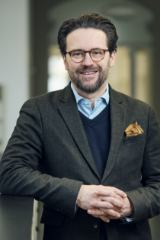
Rouven Porz
studied biology and philosophy. He is head of medical ethics at Inselspital and associate professor at the University of Bern. He supports medical staff through ethical consultations and case discussions.
What does luxury mean to you?
“Luxury is when I do not have to think about the difference between luxury and non-luxury at all. Because doing so easily leads to a guilty conscience.”
Swiss health insurance law requires medical services to be effective, economical and appropriate. Isn’t that enough?
Gerfin: It is not being implemented consistently enough. And we must not forget that costs covered by mandatory insurance account for only about forty percent of total healthcare spending. There are also supplementary insurance and long-term care costs, which are not covered by basic insurance. Due to population aging, we will be facing enormous costs in this field, and we are not prepared. We urgently need solutions. Otherwise, elderly care will become a luxury that only a few can afford.
Frahsa: Especially since women then provide a disproportionate amount of unpaid care work — particularly when families cannot afford external care services.
Porz: Especially in connection with population aging, there is a danger that ethical decisions may become necessary in ways Switzerland has previously experienced only briefly during the pandemic. Suddenly questions of triage emerged that may become relevant again as the population ages further. Who gets an ICU bed? Who receives the expensive new medication?
About the person
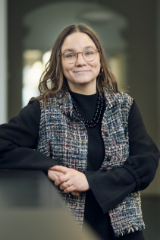
Annika Frahsa
is a Lindenhof Foundation professor of Social-Spatial Health Systems Research and assistant professor (tenure track) at the Institute of Social and Preventive Medicine at the University of Bern.
What does luxury mean to you?
“Luxury is a triad for me: leisure, time and autonomy — being able to decide for myself how I work, live and what I devote myself to.”
Frahsa: That is when the question of luxury really emerges: who can afford to shape their life in such a health-promoting way that they remain healthy and independent in old age?
Porz: Over the past decades, medical ethics in the Western world has not had to deal much with these questions. The focus was more on patient autonomy — essentially a right to object, ensuring that patients did not have to accept everything done to them but could participate in decisions. Today, the discussion is entirely different. Patients often demand the right to receive every medical treatment possible. The logic becomes: I paid high premiums, now I want to benefit from them.
I advocate for income-based premiums and the abolition of deductibles.
Michael Gerfin
But there is no legal claim to receive every possible treatment.
Porz: That is true. But for decades physicians were told that paternalistic attitudes toward patients had to end — co-determination on equal footing was the new standard. As a result, doctors today sometimes struggle to set limits and clearly say: “this diagnostic procedure or therapy is medically unnecessary.”
How could the situation be improved? Can costs be contained while maintaining social accessibility to healthcare?
Gerfin: Yes, with sufficient political will — if the different interest groups within healthcare could agree. The goal would be to increase efficiency and expand the catalogue of covered services only carefully. Regarding social accessibility, I advocate for income-based premiums and the abolition of deductibles.
Why abolish deductibles? Don’t they strengthen personal responsibility?
Gerfin: Deductibles are too blunt an instrument. It is mainly chronically ill people who choose low deductibles. If deductibles rise, those people simply pay more out of pocket. This does not reduce healthcare costs. Studies show that deductibles reduce unnecessary care, but also necessary care. That creates high costs down the line — for example, when patients take only half the prescribed dose of medication.
Frahsa: I agree. Prevention also needs to be strengthened. In the long term, that could help reduce a considerable share of healthcare spending. And by prevention I do not simply mean nutritional counselling or smoking cessation programmes. Structural prevention would be even more effective. The United Kingdom, for example, taxes sugary foods. That almost automatically reduces sugar consumption across all social groups.
About the person
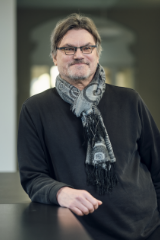
Michael Gerfin
is a professor at the Department of Economics at the University of Bern. His areas of expertise include health economics. Among other things, he studies how different actors in this field respond to incentives within the healthcare system.
What does luxury mean to you?
“Luxury means not having to worry about whether I can afford what I need.”
What form of cost-sharing would make sense, if not deductibles?
Gerfin: We would need a system along the lines of “value-based insurance design”. Cost-sharing should depend on the benefit of a medical intervention. Established, evidence-based treatments for chronic diseases, for example, would then be exempt from cost-sharing. One the other hand, someone insisting on antibiotics for a viral infection — even though antibiotics do not work against viruses — would have to pay themselves. There are attempts in the United States to test such systems. We should think in that direction as well.
Porz: To do that, we need a societal debate and collaboration across disciplinary boundaries without falling into myths. For example, the idea that the salaries of hospital and insurance CEOs are driving healthcare costs. We need facts — and that, too, contributes to greater health literacy.