
Between desire and exclusivity
Why we spend the money on luxury
Luxury promises status, a sense of belonging and a feeling of uniqueness. But when is it that we reach for the expensive brands, and how do companies succeed in making themselves seem more desirable? A look behind the psychology of luxury consumption.
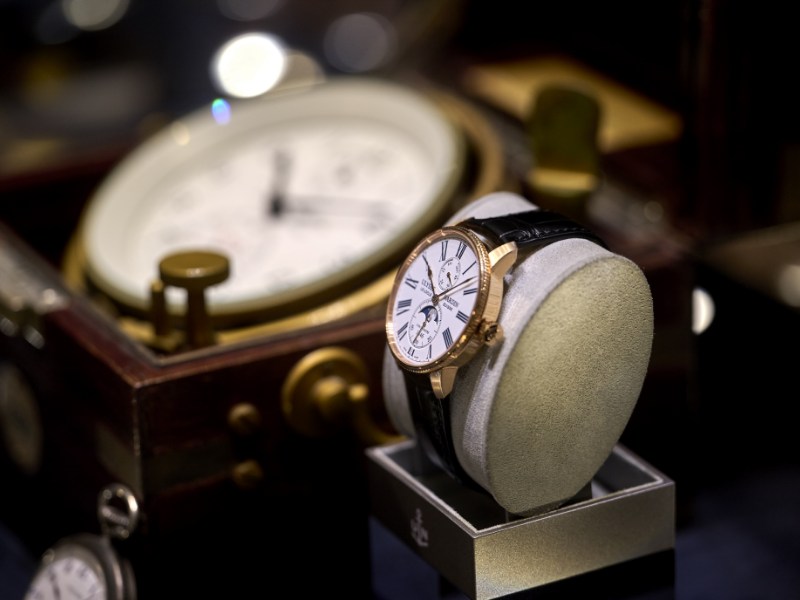
"Luxury is everything we don't actually need to live," says Claude Messner, Professor of Psychology and Consumer Behavior at the University of Bern. Strictly speaking, a croissant with your coffee or that subscription service that delivers organic vegetables to your home every month are also a type of luxury. Here, however, we are talking about luxury in the narrower sense, i.e. products that not everyone can afford and that signal material wealth. It is therefore fitting that our conversation is taking place at "Uhrsachen," a watch store in Bern's old town run by the fourth generation of the Maegli family.
Why do we need a watch when we have a smartphone?
In view of the expensive brand watches sitting in the showcases awaiting for the right costumer, we cannot help but ask: why do we still buy watches for our wrist nowadays when almost everyone carries a smartphone around with them – especially as an inexpensive quartz watch tells the time just as well or even more precisely than a mechanical Swiss luxury watch? "Because with a watch, we're not just buying a timepiece, but a symbol," answers Messner. It is a means of signalling to others which social group we belong to or want to belong to.
«People with luxury goods visible on their person are often given preferential treatment in social interactions.»
Claude Messner
This is how we would recognise whether someone shares similar values. We adapt these symbols to the situation: we have a different social identity at work and wear different clothes than when we cheer on our team at the football stadium. Conversely, a uniform at school, in the military or in monasteries, for example, is intended to make social identities from outside those institutions unrecognizable.
When the neighbour has a new car
"Of course, we also communicate via inexpensive products," explains Messner. Even buying a colourful plastic watch means more to use than just getting a timepiece, it is a symbol for how we want to feel, such as fun or youthfulness. However, luxury brands benefit from the fact that people tend to present themselves as more successful than they actually are and are always oriented towards a slightly higher social status. This is where the Veblen effect comes into play, named after the American economist Thorstein Veblen. He was the first who described the phenomenon of people buying expensive products to signal status and prestige in 1899. "It works to a certain extent," says Messner. "People with luxury goods visible on their person are actually often given preferential treatment in social interactions."
Social comparisons play an important role in purchasing behaviour: if my neighbour has a new car, I need one too. This may sound overly simplified or banal, but it has been proven by several studies. For example, a financial institution in the USA has found an increased risk of personal bankruptcy when someone in the neighbourhood has won the lottery.
Luxury brands also take advantage of this effect by having their products advertised by celebrities and influencers. By buying the product, consumers can – at least that is the message this form of marketing conveys – come a little closer to the lifestyle of those famous people beyond the screen.
«People with a high need for social recognition and a propensity for vanity are more likely to surround themselves with luxury symbols.»
Claude Messner
However, according to Messner, buying luxury products not only serves to impress others, but also to reward oneself. It signals to the outside world: "you can see who I am" and to the inside: "I am worth it." The purchase of an expensive product is often made on certain occasions, such as after passing exams, but also to compensate for a failure: "when our self-esteem suffers, the need to symbolically compensate for this feeling increases," explains the behavioural psychologist. For example, an amateur athlete who is simply not blessed with that much talent can feel better about herself if she buys expensive equipment to "balance things out."
In addition, certain people are more receptive to buying luxury goods than others: "people with a high need for social recognition and a propensity for vanity are more likely to surround themselves with luxury symbols," says Messner.
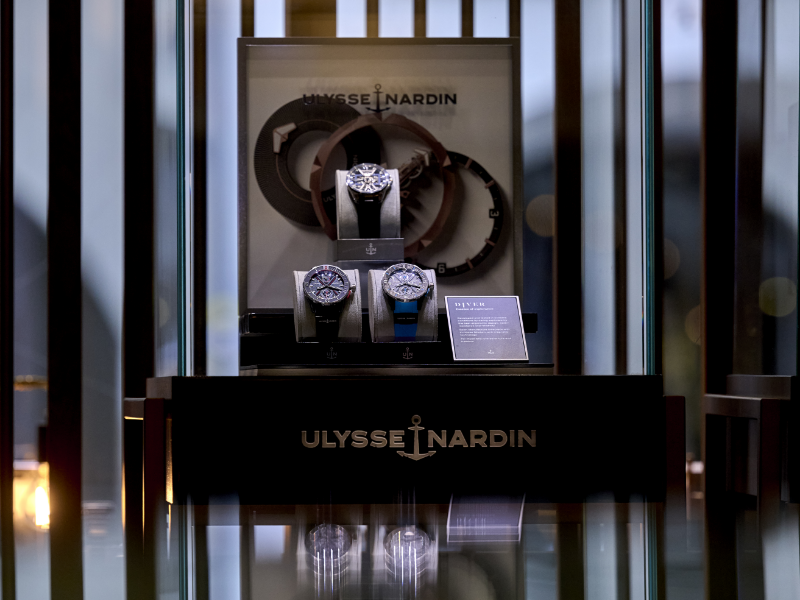
People who buy luxury goods are therefore satisfying a need for status, quality and personal reward. Luxury marketing makes use of this phenomenon by giving these abstract needs a concrete form and a name, explains Harley Krohmer, Professor of Marketing at the University of Bern. Luxury also offers a sense of security against the fear of buying the wrong thing: "By charging a premium, the brand symbolically guarantees that you have made the right choice." The high price alone, however, does not make a product a luxury good,. though it does underline the value of a product because not everyone can afford it.
It is true that luxury companies also allow less well-off customers to share in the experience by offering small goods such as fragrances or accessories at affordable prices or entering into collaborations with less exclusive brands. The low-cost fashion chain H&M, for example, regularly teams up with well-known designers, and Swatch launched an affordable version of the Omega Speedmaster with great success. But ultimately, social inequality is part of the principle of luxury.
Why can't I buy a "Birkin" bag?
Marketing expert Harley Krohmer calls this "curated visibility": a luxury brand needs a high enough degree of visibility to remain desirable, but little enough that it does not become banal. To achieve this, companies use various marketing strategies: they legitimise the higher price by selling not only a product, but above all a story behind it. They reduce production through elaborate craftsmanship or controlled distribution; Hermes bags such as the "Kelly" or the "Birkin" are by no means available to every customer with money. And through personalized service and exclusive packaging, they transform the purchase transaction into a ceremony for fortunate enough to enter the inner circle. "Luxury brands build entire ecosystems around their products," says Krohmer.
«You don't scrap a Porsche. At some point, it simply becomes a classic car.»
Harley Krohmer
Loud versus quiet luxury
Of course, social changes always influence our perception of what constitutes luxury. For some years now, Krohmer has observed a strong movement away from loud, conspicuous luxury towards "quiet" luxury.
This form of luxury relies on timeless design and fine materials instead of visible logos. The trend towards "quiet luxury" could be linked to increasing polarisation, Krohmer suspects. As the gap between rich and poor continues to widen, the super-rich no longer want to flaunt their wealth so openly. Krohmer sees another trend in experiential luxury: the rich afford themselves vacations away from the masses, exclusive wellness resorts, art, personal service – and health. For example, the current "longevity" trend could even lead to the formation of a new upper class that buys itself a longer life thanks to access to new technologies.
Resources are unevenly distributed
The term "luxury" comes from "luxus" in Latin and means excess or extravagance. "Luxury always signals that I have too much," says Claude Messner. On the one hand, this is problematic because luxury shows that the world's resources are distributed unequally.
On the other hand, there are certainly socially responsible luxury goods companies. They meet their responsibility as employers, but also by financing charitable foundations or campaigning for fair wages and better production conditions, for example. In addition, a luxury product is durable due to its good workmanship and is passed on to the next generation. Krohmer: "You don't scrap a Porsche. At some point, it simply becomes a classic car."
About the person

Claude Messner
is a professor of psychology at the Institute of Marketing and Management at the University of Bern, where he heads the Consumer Behavior & Behavior Change department. He studies the principles that influence consumer behaviour in general and in individual target groups.
What is luxury for you?
"A 'flat white' at Travois, sourdough bread from leBread, cheese from Bruni or a ride on a carbon bicycle are examples of my privileged life."
About the person

Harley Krohmer
is Professor of Marketing at the University of Bern and Director of the Institute of Marketing and Management. His research focuses in particular on brand and price management as well as strategic marketing topics.
What is luxury for you?
"My Cyrus watch and a red Ferrari. But I only own a very small model of it."
Department of Consumer Behavior & Behavior Change
The Department of Consumer Behavior studies the attitudes, decisions and behavior of consumers. Research, teaching and service projects are designed to promote health and sustainability behavior in line with the UN’s Sustainable Development Goals. The work is interdisciplinary, involving experiments, quantitative and qualitative surveys and process tracing methods. The approaches originate from the fields of social, environmental and economic psychology, judgment and decision making, social marketing and behavioral economics.
Magazine uniFOKUS

What do we really need?
This article first appeared in uniFOKUS, the University of Bern print magazine. Four times a year, uniFOKUS focuses on one specialist area from different points of view. Current focus topic: Luxury
Subscribe to the uniAKTUELL newsletter

Discover stories about the research at the University of Bern and the people behind it.