Equal Opportunities
“Visibility Is Important in Everyday University Life”
To mark “IDAHOBIT” on May 17, uniAKTUELL introduces the newly founded Queer UniBE network. A conversation about visibility and what an inclusive university actually means in everyday life.
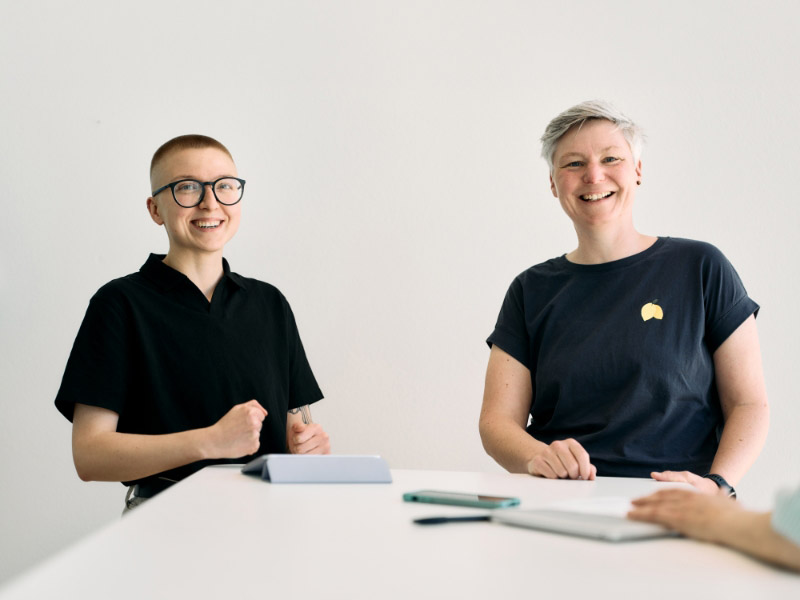
Around the world, rainbow flags are raised on May 17 to mark the International Day Against Homophobia, Biphobia, Interphobia, and Transphobia (IDAHOBIT). Since 2022, the University of Bern has also celebrated IDAHOBIT annually. What began as a symbolic gesture has evolved into a regular event: Together with the City of Bern and other organizations, several IDAHOBIT events have been organized since then. This year, the “Queer UniBE” network—founded in 2025—participated as a co-organizer for the first time. Julia Feldmann and Jay King are the co-chairs of the association. In this interview, they discuss why queer staff members at the University of Bern need their own network.
Julia Feldmann and Jay King, why was the “Queer UniBE” network founded in October 2025?
Julia Feldmann: In 2022, when the University of Bern hosted its first public event for IDAHOBIT, there was a so-called “feedback box.” After evaluating the responses, participants expressed a desire for a network for queer staff members. The following year, on May 17, it was announced that the “Queer UniBE” network was in the works, and all interested parties were invited to get in touch to get involved. The network was finally founded on October 15, 2025.
Jay King: When I came across the flyer for the founding meeting, I immediately realized that this was an important initiative. I particularly liked that the entire process was supported by the Office for Equal Opportunity (AfC); incidentally, they also accompanied the association’s formation process.
“Because I know what it feels like to be treated with hostility, IDAHOBIT on May 17 has become very important to me. ”
Julia Feldmann
How is the association organized?
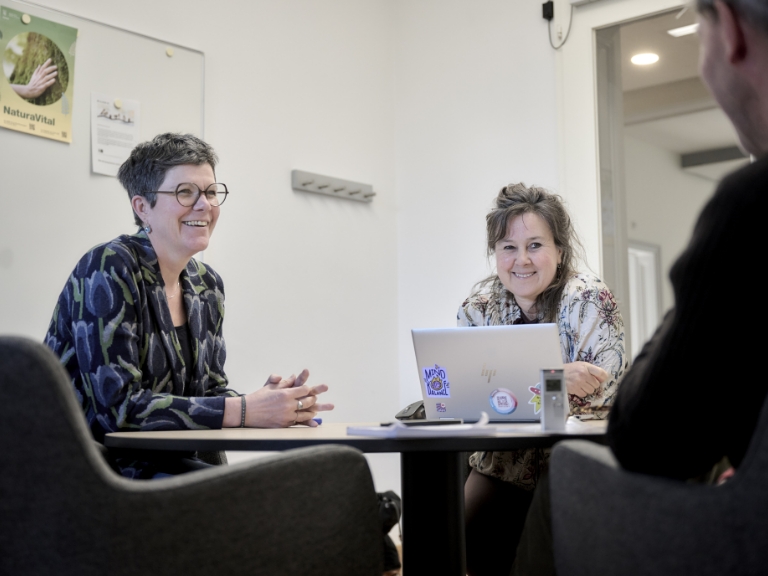
Julia Feldmann: We’ve established a four-person board. Jay King and I share the co-presidency; another person is responsible for communications and keeps the network informed about our events; and a fourth person assists with coordinating the working groups and handling administrative tasks. We also have a website, which is currently still under construction. We work based on the interests we gather during regular meetings. Some people are also involved in working groups to advance specific issues.
Jay King: We are organized as an independent association and follow a bottom-up approach. As volunteers, however, we are supported by the AfC.
What goals does your network pursue to create a respectful and inclusive work environment?
Julia Feldmann: We want to raise awareness of queer issues, combat discrimination, and provide safe spaces for exchange and networking. Specifically, this means raising awareness of our concerns at the University of Bern, initiating dialogue, and supporting structural changes so that diversity is not only accepted but actively lived. What we’ve observed at our events: The need is great.
“Receiving support with such administrative processes is important for queer people and goes beyond mere bureaucracy: A name change enables many to live their identity. ”
Jay King
Jay King: Official structures, as they are experienced at a university, can be slow-moving, especially for queer people and other minorities. In my current working group, we are developing comprehensive FAQs on the process of name changes for trans employees to make this process more accessible and straightforward. Receiving support with such administrative procedures is important for queer people and goes beyond mere bureaucracy: a name change enables many to live their identity. Since I have gone through this process myself, I know how emotionally significant it is, and I’ve come to realize that I’m not alone in this experience.
What role do networking and visibility play in everyday university life?
Jay King: Visibility is important in everyday university life. That’s why the Office of Equal Opportunity has also supported us in creating and distributing flyers for our meetings. We are also involved in co-organizing this year’s IDAHOBIT event. This visibility is what creates the foundation for us to advocate for more inclusive processes at the university. Our connection to the institution also enables us to address many of our goals and, hopefully, implement them as well.
What is already going well in your network, and where is there still room for improvement?
Jay King: We sense a strong commitment within the various working groups. We also have nothing but praise for our collaboration with the AfC. We are currently working on a concept for regular network meetings that are not—as has been the case so far—tied to official meetings. The goal is to create spaces for relaxed exchange.
What does the International Day Against Homophobia, Biphobia, Interphobia, and Transphobia mean to you?
Julia Feldmann: It wasn’t until 2022 that I really became aware of the day. This was thanks to the City of Bern’s Office for Gender Equality, which drew attention to IDAHOBIT for the first time with rainbow-colored flags and benches. Because I know what it feels like to be treated with hostility, May 17 has since become very important to me.
Jay King: The diversity of sexual identities has now entered the collective consciousness. But when it comes to gender identities—such as non-binary gender identity—we are still in the early stages. This is especially true regarding inclusive language. That’s why, for me, IDAHOBIT is above all about visibility and offers a platform to address and discuss important issues from the community—and to do so in the public sphere.
About the person
Julia Feldmann
Julia Feldmann was involved from the very beginning when the association for queer employees at UniBE was founded. She now co-chairs the board with Jay King. She also helped organize the Queersicht film festival. As a trained laboratory technician, she works at the Institute for Infectious Diseases (IFIK) in the Biosafety Center.
About the person

Jay King
Jay King has served as co-chair of the board since the founding of the “Queer UniBE” association on October 15, 2025. At the University of Bern, King studied English and Social Sciences for a BA and Sociolinguistics for an MA, and will soon complete a PhD in Sociolinguistics on language, LGBTQ+, and national identity in Poland.
Subscribe to the uniAKTUELL newsletter

Discover stories about the research at the University of Bern and the people behind it.