10 years Prix Lux
Celebrating 10 years of equal opportunity
For the past 10 years, the Prix Lux has recognized initiatives at the University of Bern that promote equal opportunities or work to combat discrimination based on racism, gender, social background, disability or sexual orientation. In an interview, Claudia Willen and Heike Mayer explain the significance of the prize.
Ms. Mayer, Ms. Willen, what is the name Prix Lux all about?
Claudia Willen: It's about light, the light of a spotlight so to speak, with which good ideas are to be made visible and disseminated.
Which awards from the past ten years have been particularly important to you personally?
Claudia Willen: In 2023, a collective of medical students was recognized for standing up against sexism and sexual harassment in everyday hospital and university life. They call themselves CLASH Bern. I found it very courageous how the group named a taboo and asked what can be done structurally and culturally to combat sexism in medical training courses.
Heike Mayer: I really liked the initiative that won an award in 2024: Diversity for AI in Medicine (DAIM) deals with the digitalization of medicine and wants to pay attention to how AI algorithms are very male-dominated, for example. DAIM has created a discussion forum in which researchers who conduct research into diversity in AI and medicine can network, and organizes lectures on topics such as gender bias in AI.
What was the idea behind the Prix Lux when it was launched ten years ago?
Claudia Willen: I was already head of the Equal Opportunities department at the time and we were aware of many good ideas and initiatives, of good leadership practices, but also of collectives that were committed. We wanted to make these approaches visible and highlight best practices. But we also wanted to remain self-critical and encourage a willingness to change.
What was the response to the first call for entries for the award?
Claudia Willen: We had 25 submissions, which really surprised us. There was a really great dynamic.
“A project still has to stimulate discussion, it should be innovative, original, sustainable and transferable.”
Claudia Willen
Is there still so much interest?
Claudia Willen: We now have fewer submissions, but they are of a very high quality. The applications today are much more sophisticated and complex. You can see the development that has taken place over the past ten years: The projects are no longer as focused on gender and compatibility as they were in the beginning, but instead take a look at the various categories of discrimination and diverse instruments in equal opportunities.
And you Ms. Mayer, were you also involved in the creation of the Prix Lux?
Heike Mayer: No, I was on the other side, so to speak. In the Department of Geography, where I am a professor, we always knew about the prize and applied for it two or three times...
...until the Department of Geography was then recognized in 2021 for "its long-standing commitment to equal opportunities" and its "pioneering achievements for an inclusive academic culture".
Heike Mayer: Yes, we were not only awarded for achieving parity between women and men at professorship level, but also for how we have changed processes, how we organize our meetings, what culture of discussion we have and what criteria we apply when making appointments. In the 16 years that I have been at the Institute, this has changed for the better.
What does that mean in concrete terms?
Heike Mayer: Our example shows how complex the work of an entire institute can be. This ranges from shifting regular meetings from late to early afternoon to providing support for care commitments at conferences. We had a parent-child room very early on, we enable job sharing and we support the reduction of the workload of professors with care responsibilities to 80 percent. It's not just about a single equality measure, but about many smaller things that can be implemented.
“I also see the Prix Lux as a reward for this heartfelt work.”
Heike Mayer
Has the list of criteria for the Prix Lux award changed in recent years?
Claudia Willen: No, we have not adapted them. A project or initiative must still stimulate discussion, it should be innovative, original, sustainable and transferable. Experience shows that these values are still good criteria.
What about the impact? Do the award-winning projects only have to be original, or do they also have to make a difference?
Heike Mayer: There have always been larger units or groups among the award winners that are both exemplary and have a big impact. Initiatives, for example, that achieve a great deal of impact because they address certain grievances and organize themselves to remedy these grievances. We also achieve a lot of impact because the award gives such initiatives and projects visibility - and legitimacy. For example, awarding the Prix Lux to students who organize against gender discrimination or sexual harassment in medicine shows that this is an important issue.
So the award is given more for the potential of an initiative and not retrospectively for the impact achieved?
Claudia Willen: There are definitely established initiatives that we have awarded prizes to, but basically we want to focus on discussions. We are interested in suggestions, solutions for things that are not going well or that could be improved. It's important to talk about gaps, name them and find solutions or even try something new.
Heike Mayer: That's why we also recognize broad networks that bring topics to the table and then anchor them sustainably.
Claudia Willen: I would like to emphasize how important it is for us to stimulate discussion, that is what makes this award so special.
Heike Mayer: I think prizes are generally important because they express appreciation. A lot of heart and soul goes into the award-winning initiatives, a lot of extra work that is not remunerated and is not included in the specifications. I also see the Prix Lux as a reward for this heartfelt work.
Claudia Willen: We want to reward things that have grown from the bottom up and are very consciously not awarding prizes to individuals, but to collectives.
So the Prix Lux is a counterpoint to the classic science prizes that honor individual researchers?
Claudia Willen: That's right, it's always about groups and precisely not about individual exceptional talents - after all, these always need a team too.
About the Prix Lux
The University of Bern's Equal Opportunities Award is aimed at university units and groups of students and employees. Nominations are made by submitting a proposal to the Equal Opportunities Department. The proposal must describe the initiative, its objectives and its impact and be able to be expanded with supplementary materials. The submission deadline for the current call for proposals is June 30, 2026.
About the person
Claudia Willen is Head of the Equal Opportunities Department at the University of Bern.
About the person
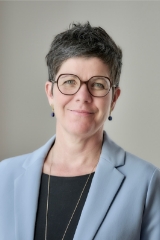
Heike Mayer is Vice-Rector for Quality and Sustainable Development at the University of Bern and Professor of Economic Geography at the Institute of Geography.
Subscribe to the uniAKTUELL newsletter

Discover stories about the research at the University of Bern and the people behind it.