Linguistics
The scientist at the "Matteänglisch-Höck" get-together
"Mattenenglisch" is an old secret language of Bern's Matte neighborhood that combines Bernese German words in new ways. To better understand the linguistic processes behind Bernese German, linguist Florian Matter is taking this phenomenon under the microscope.
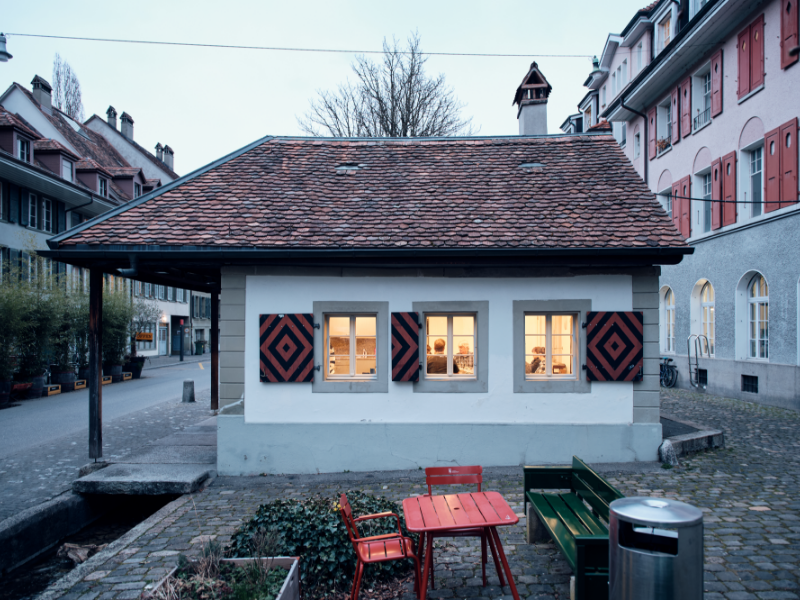
"Iu'tsche!" goes the chorus of voices when another person enters the "Wöschhüsi." This is how people greet one another in Mattenenglisch. And today, the "Matteänglisch" Club is holding its monthly get-together in the historic washhouse in Bern's Matten neighborhood. On the table are "Iggi'sche" and "Ietzli'ge", which are the Mattenenglisch form of the more common Swiss words "Schoggi" and "Guetzli," or chocolates and cookies in English, and there is not only water to drink, but also "Iggi'ge" - i.e. "Goggi", meaning cola.
Secret languages are interesting for linguists
Every now and then, the club members weave in a word in Mattenenglisch. The colloquial language, however, is Bernese German. Very few people here speak fluent Mattenenglish. The secret language, which was spoken in Bern's Matten neighborhood in the 19th and 20th centuries to distinguish the speaker from non-local traders, the authorities or the upper classes, is now near extinction. The "Matteänglisch-Club" is keeping the language alive in order to preserve this unique cultural heritage (see box "Past and present").
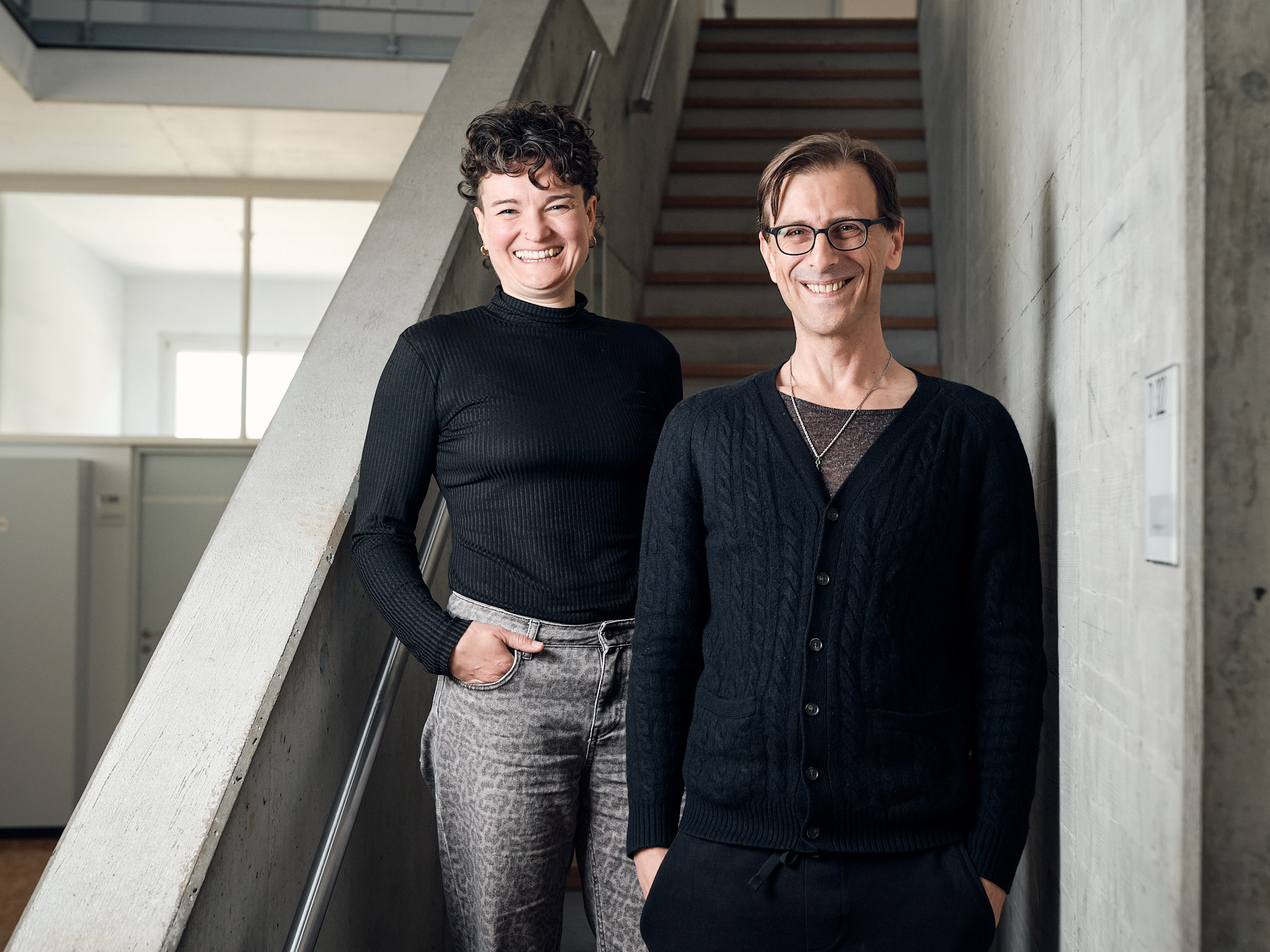
Today the club gets a special guest: linguist Florian Matter from the University of Bern. He is called "Iru'fle" in Mattenenglisch, in reference to the Bernese German "Flöru." People are on a first-name basis here, and the atmosphere is quite informal. Matter wants to tap into the knowledge of Mattenenglisch speakers in order to learn more about Bernese German. Mattenenglisch is a so-called language game, or secret language, that takes Bernese German as a starting point, then breaks it down according to defined rules to form the secret language Mattenenglisch (see box "Instructions").
Such language game can be interesting for linguists. This is because during the transformation into the language game, the speakers must consciously or unconsciously decide how to handle certain syllables, vowels, consonants or other sounds from the source language. This can provide input and clues for answering various linguistic questions.
"As a linguist, the diphthongs in my mother tongue are an interesting analytical problem for me."
Florian Matter
Matter wants to know, for example: How are diphthongs treated in Mattenenglisch? As a unit or are they broken up? Linguistics defines diphthongs as sounds that include, for example, "ei," "öi," "ou" or "eu" in German, i.e. a double sound consisting of two different vowels within a single syllable.
He also looking into the question of whether Mattenenglisch treat Bernese German clitics, i.e. attached pronouns and articles, such as -nech or -nis as part of a word or as a word in their own right? For example, in the question "Het-er-nech agglüte?". To get to the bottom of this, the linguist has brought along a whole list of Bernese German words and wants to hear how the club members "convert" them into Mattenenglisch.
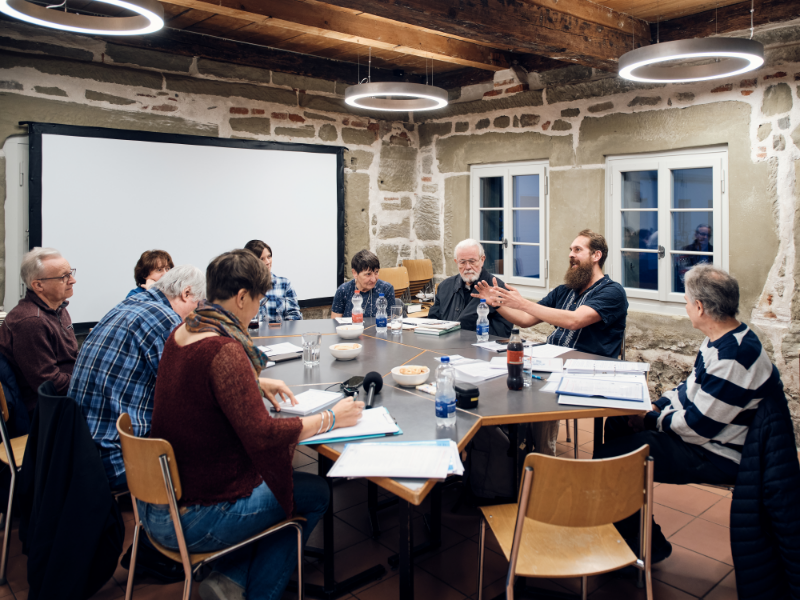
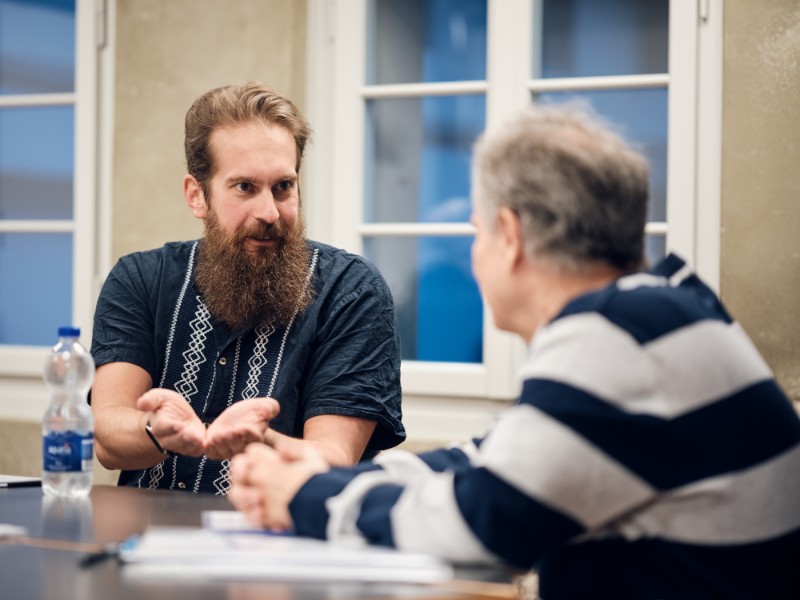
Ten men and women sit in a circle around tables in the "Wöschhüsi" and are eager to find out what the linguist wants to know from them. One by one, he throws Bernese German words and phrases into the room and wants to know how to say them in Mattenenglisch. "Ids Wöschhüsi?" becomes "Ids'e Isch'we-Isi'he!" "Isches fein gsy?" becomes "Isches'e iin'fe i'gse!" "Pfiu?" "Iu'pfe!", "Gieu?" "Ieu'ge!" Sometimes only one or two voices answer, sometimes several, often with a delay.
Is "Summ Summ" a word?
Not everyone manages to convert the words in their heads at the same speed. Some answers contradict each other and start discussions. There is always laughter, the club members love linguistic games and sometimes go off the rails, for example when Matter asks for the Mattenenglisch word for the Bernese German "Beiji" (High German: "Biene", a bee). "Iji'be", replies Fredi. "Imm'se Imm'se" says Ursula and adds: "From Summ Summ." "Well, nobody would get that," says board member Viktor with a laugh; "Summ Summ is not an official word in Bernese German." "But the very aim of Mattenenglisch is to not be easily understandable," replies another. "But the person you’re talking to should understand it!" replies Viktor. Everyone laughs.
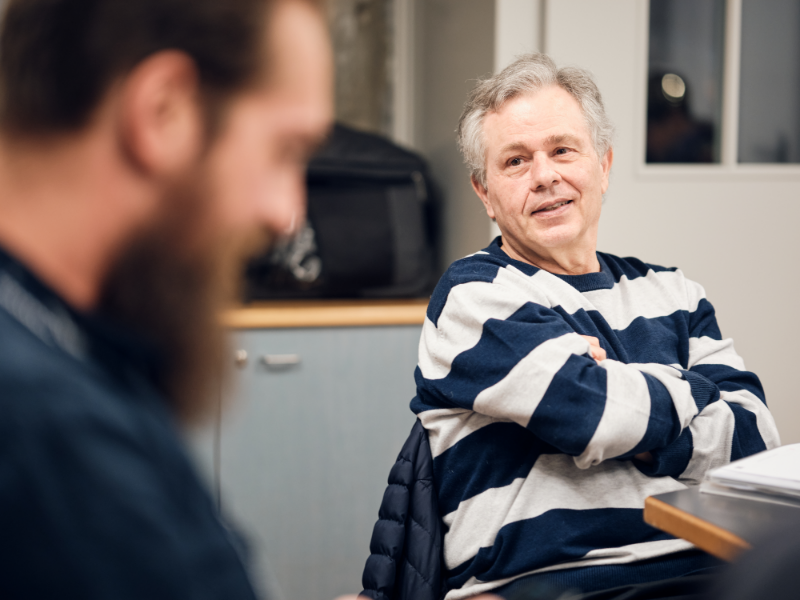
Indeed, it is essential that the speakers transform the Bernese German words into Mattenenglisch in such a way that the listeners understand them clearly. Because the vowels "a" and "o" are dropped in Mattenenglisch, this is not so easy with some words. Some rules therefore aim to ensure that the back-translation be clear. Although it was originally a purely oral language game, there are written rules. These are constantly being refined, as this evening shows.
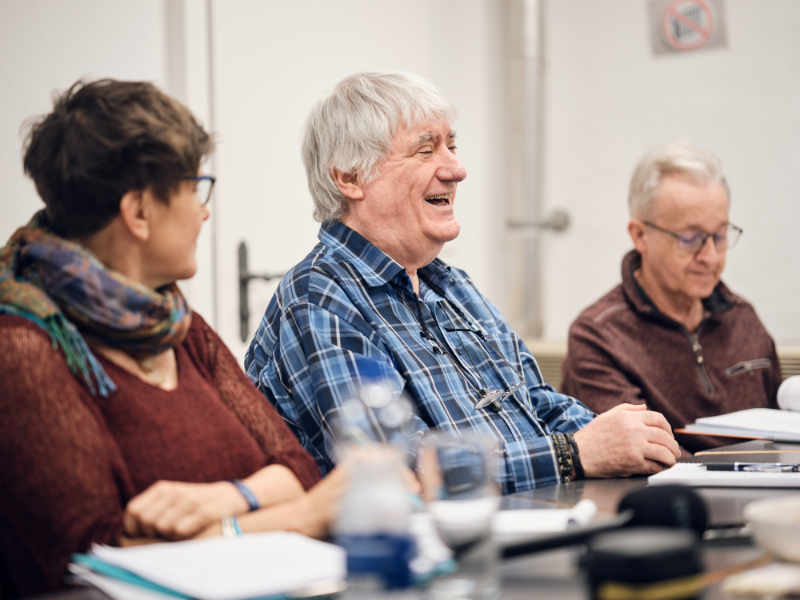
What sometimes sounds complicated is clarified by Viktor's explanations. The Bernese German word "Tschou," for example, sounds like "Ieu'tsche" in Mattenenglisch, but it is spelled "Iu'tsche." If the "e" were written, the back-translation would be unclear because you would get "Tschoeu.". At the same time, the unstressed "e" is important when speaking so that "iu" does not sound like the English word "you." "The swing or timbre of the original word has to be transferred into Mattenenglisch," says Viktor.
This short scene illustrates how the evening goes: discussions on linguistic minutiae that can only be followed if you are well versed in Bernese-German grammar and Mattenenglisch. Matter's eyes light up; he is in his element.
"Well, nobody would get that!"
Viktor Stöckli
Viktor is also delighted with the linguist's in-depth questions and thought-provoking ideas, which sometimes reveal contradictions in the interpretation of the rules. "So exciting!" Viktor exclaims again and again. And when analyzing Bernese German, the question arises as to where the word boundaries run. Are "cha me" counted as two words or as one ("chame")? Depending on what is regarded as a word unit, Mattenenglisch would produce very different results: "i'che" or "i'me" or "ime'che".
Or where the boundaries between the words run with "i d Matte". I d Matte? Id Matte? I Dmatte? Using various examples, the linguist wants to find out what Mattenenglisch defines as a word unit and why.
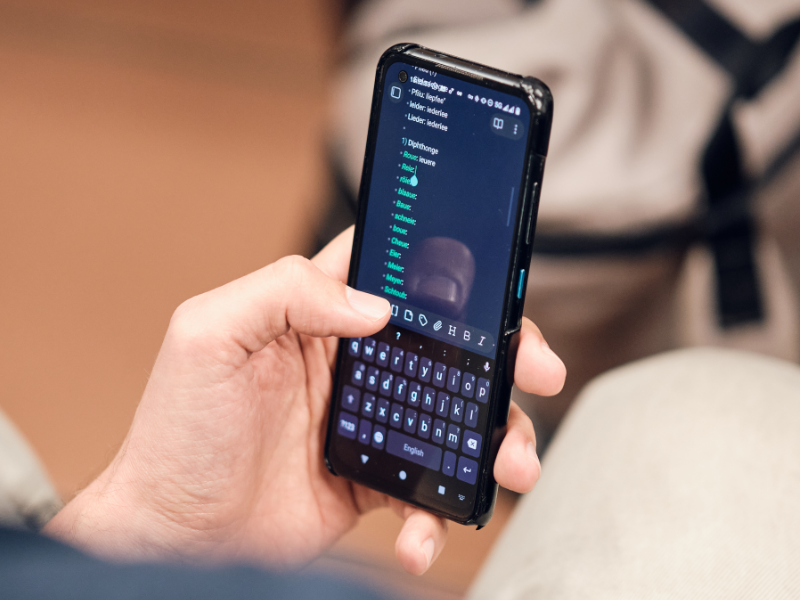
Matter is concerned with the question of whether there are only 3 "real" diphthongs in Bernese German instead of more than 30, and whether the rest are "merely" consonants that follow a vowel. He is therefore interested in the question of how Mattenenglisch deals with such double sounds. For example, does it regard "öi" as an inseparable unit or rather as "ö" and "j," which are taken apart when converting to Mattenenglisch?
"With a dialect like Bernese German, I wouldn't really have expected spelling to have any influence in a language game."
Florian Matter
He hopes that this will provide him with new input for his book on Bernese German diphthongs. Why exactly did this topic spark Matter's interest? "As a linguist, the diphthongs in my mother tongue are an interesting analytical problem for me."
Throwing diphthongs into the mix
Now the linguist throws various Bernese German words with diphthongs into the mix and waits for whatever comes back in Mattenenglisch. Often the reply is unanimous. But with the Bernese German word "höische," two different versions can be heard. some voices say "Iiusche'he", with "iu" at the beginning. Peter, former president of the "Matteänglisch" Club for many years, answers "Iiesche'he" with an audible "ie." The reason they give is the different spelling in Bernese German. If you write "höische," it sounds different in Mattenenglisch than if you were to write "heusche."
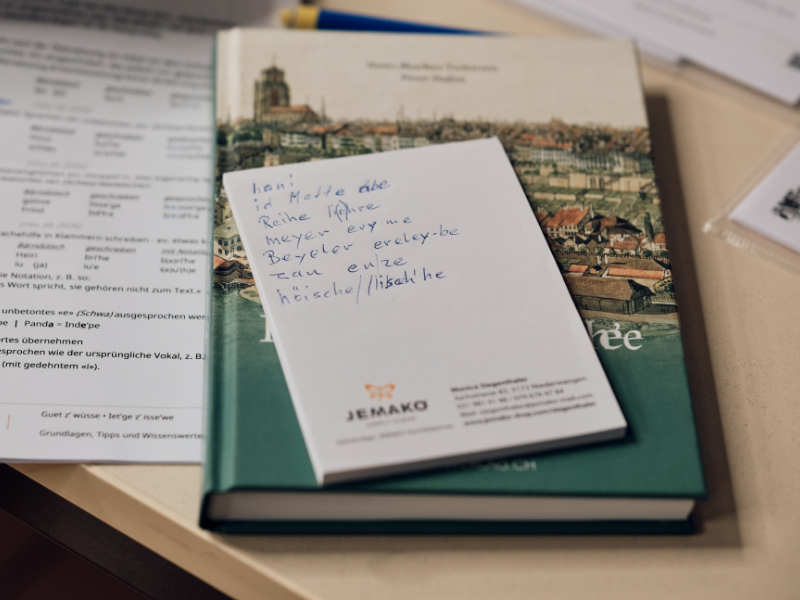
This surprises the linguist. "With a dialect like Bernese German, I wouldn't have expected the spelling to have any influence in a language game," he says. What really surprised the linguist, however, is something else: Both the Bernese German "ei" and the Bernese German "öi" turn into the same sound in Mattenenglisch, namely "ie." "Leitere" sounds like "Iietere'le" in Mattenenglisch, "Fröid" like "Ied'fre." This transformation is unexpected and fascinating for the scientist. He will take his time to analyze what he hears and look for explanations.
But for the here and now, Matter is done asking his questions. He thanks the club members. Salome slips the linguist a registration form for the "Matteänglisch" Club. He accepts it with a smile and says he will be happy to join. The club members beam with satisfaction; new members are always welcome. And the linguist is already in his element when it comes to breaking down, analyzing and reassembling syllables.
Now Viktor turns on the boombox. A rock song in Bernese German fills the room: "Einisch simer z'Bärn ir Matte gsy," a song about the special Matte groove and Mattenenglisch. Viktor wrote the lyrics himself. And as the sound of Bernese rock fills the room, the club members pack up their things, say goodbye to each other and slowly walk out into the dark night. "Iu'tsche ime'ze" - "bye, everyone!"
Mattenenglisch
Instructions for Mattenenglish
1. Separate letters up to and including the 1st vowel and replace them with an "I." 2. Move the separated part to the end of the word and replace the vowel with an "e." 3. Place an apostrophe in front of the part of the word that has been moved to the end to make it easier to read and back-translate.
1. Ta-ssli → Issli... ("Ta" replaced by an "I")
2. Ta → te → Isslite ("a" replaced by "e", then "te" moved to the end)
3. Issli'te
These are the basic rules. There are also more detailed rules, for example for dealing with vowels at the beginning, double vowels, elongation letters or the Bernese German diphthongs. These are primarily intended to ensure that the back-translation into Bernese German be clear so that the listener understands the secret message. Additional rules also take account of an identical sound to Bernese German.
Mattenenglisch
Past and present
In the 19th and early 20th centuries, the secret language was used by traders and people in the Matte neighborhood to communicate secretly without outsiders – non-local traders, authorities, police or teachers – understanding them. Later, it became a symbol of cohesion and local identity, which the Matte population used to distinguish themselves from the upper town. In linguistics, Mattenenglish is regarded as a language game or cant. Play languages are playful modifications of existing languages according to certain rules, for example by inserting, shifting, displacing or omitting certain syllables or sounds. These are often popular with children, for example Pig Latin. An example of a language game based on French is Verlan, for Argentinian Spanish there is the example of Vesre.
Mattenenglisch is based on Bernese German, more precisely the Matte dialect, i.e. the traditional Bernese German of the Matte neighborhood of Bern. Today, Mattenenglish is only actively spoken by a few people and is considered intangible cultural heritage and an endangered language form.
The Matteänglisch Club has been working to preserve the language since 1959: It publishes books and a club newspaper, offers courses and organizes a monthly get-together.
About the person
Dr. Florian Matter
is a linguist and scientific programmer. He works at the Institute of Linguistics at the University of Bern and at the Swiss Idiotikon, the dictionary of the Swiss-German language. His focus is on languages for which hardly any data or digital tools exist: For example, he has developed a morphological parser for Yabarana, an endangered Cariban language spoken in Venezuela. He now devotes his time to Bernese German, among other languages – for which there is also a lack of digital resources and manual work is required.
Magazine uniFOKUS
Language
This article first appeared in uniFOKUS, the University of Bern print magazine. Four times a year, uniFOKUS focuses on one specialist area from different points of view. Current focus topic: Language.