
From the inkwell to the keyboard
Writing as a reflection of society
Language without writing? Hard to imagine. In this interview, Hanne Griessmann and Roland Reichen explain how writing emerged, why it still shapes us today and why handwriting will probably stay with us for some time to come.
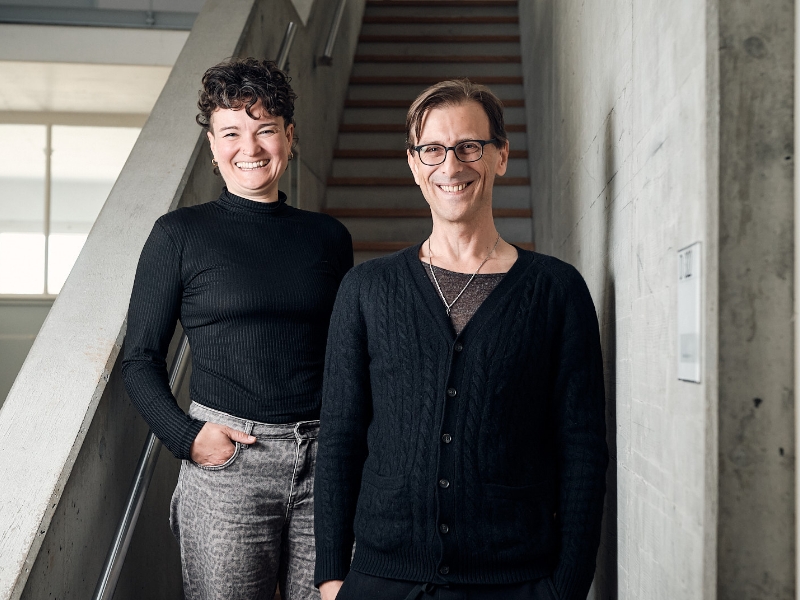
Ms. Griessmann, Mr. Reichen, when or what do you consciously write by hand?
Hanne Griessmann: I still keep a paper calendar; so it’s hard for me to switch to a digital one. And I still write personal letters by hand.
Roland Reichen: That’s probably a generational thing. I also still use a paper calendar. And I often take notes by hand during classes. When I’m working on something more formal, I usually use the computer, but on train journeys I prefer to write in my notebook.
You teach codicology together. What does this involve, and why is it relevant?
Roland Reichen: In the narrow sense, it is the study of handwritten books from the Middle Ages, particularly with regard to how they were produced. We teach students about the development of manuscripts in the German‑speaking world, using practical transcription exercises from the early Middle Ages to the 20th century. Knowledge of the scripts used in the German‑speaking world at a given time is essential for reading handwritten sources in the original. Codicology is therefore a foundational discipline in the humanities.
Hanne Griessmann: Writing is a formative part of our society and culture and is therefore always subject to aesthetic and political, but also technical and material influences.
“Writing is a formative part of our society and culture.”
- Hanne Griessmann
Can you give an example of such influences?
Roland Reichen: The easily legible Antiqua typeface, still in use today and developed from Carolingian minuscule, has existed as a print script since the late Middle Ages. For a long time, however, the use of Antiqua in the German‑speaking world was limited, originally mostly to Latin texts. Until 1941, the Nazi regime used Fraktur, which was regarded as genuinely German, for printed matter, until Antiqua was suddenly prescribed as the standard typeface for all Nazi publications, as Fraktur was allegedly based on “Schwabacher Judenlettern” (Jew-letters of Schwabach).
Hanne Griessmann: This was the antisemitic and, from the perspective of the history of writing, simply incorrect justification given in the Führer decree of 1941, which banned the Fraktur typeface. One of the main reasons was in fact that Nazi propaganda could be spread more easily in occupied territories using the more legible Antiqua. This brought an end to the dual system of Antiqua and Fraktur that had existed in the German‑speaking world since the 16th century.
About the person

Roland Reichen
has been head of the Codicology Department at the Jeremias Gotthelf Research Center at the University of Bern since 2015. He previously studied German literature in Bern and received his doctorate in 2011. He has also published three novels with a strong dialectal focus and was awarded a literary prize by the Canton of Bern in 2015.
Let’s talk about the beginnings of writing: the first clay tablets bearing structured markings appeared around 5,200 years ago in what is now Iraq, though those markings did not yet constitute texts in the modern sense. How and where did a script develop that enabled more complex texts?
Roland Reichen: Neither of us are experts in this field. The history of writing begins around 3300 BC in Sumer, in what is now Iran and Iraq, and almost simultaneously in Egypt. To put it very briefly: at first, signs stood for individual terms, royal administrations wanted to record how much beer or grain they had in in their granaries. Syllabic writing then developed relatively quickly, and the first phonetic alphabet appeared at around 1000 BC.
Magazine uniFOKUS

Language
This article first appeared in uniFOKUS, the University of Bern print magazine. Four times a year, uniFOKUS focuses on one specialist area from different points of view. Current focus topic: Language.
How crucial was the Roman Empire for the spread of writing in Europe?
Hanne Griessmann: There are sources that show that, in particular, the educated elite in Rome could read and write. The Roman Empire and its administrative apparatus also brought writing to the territories it conquered. However, it is difficult to gauge the extent to which it truly took root there; this influence was probably rather indirect. By contrast, it was of decisive importance that Christianity continued to exist after the fall of the Roman Empire. Because Latin was the language of the Church, the Latin alphabet – the basis of our modern alphabet – spread increasingly along with Christianity.
“Writing was both an artistic craft and a gruelling profession.”
- Hanne Griessmann
In the Middle Ages, one of the duties of monks was copying books in monastic writing rooms, known as scriptoria, with the aim of reproducing mainly religious texts. Did their work also have an impact on writing?
Hanne Griessmann: There were also scriptoria in convents, so not only monks but also nuns copied and illustrated books. In the early and high Middle Ages, monasteries were important centres in which writing was used and produced. The monastery of St. Gallen also had a scriptorium with its own style, which in the early Middle Ages showed influences from Ireland and the Anglo‑Saxon world.
Writing was both an artistic craft and a gruelling profession. The creation of a magnificent codex, a particularly lavishly adorned book, required preparation of material, usually parchment made from animal skin, the actual act of writing on it and its decoration with splendid illuminations. This required numerous work steps and usually the collaboration of several people.
About the person

Hanne Griessmann
studied and graduated in German philology, modern and contemporary history and philosophy at the University of Münster. Since 2019, she has been working in the “Text Philology” sub-project of the Jeremias Gotthelf Research Center at the University of Bern. She is also part of the editorial team of a science blog.
So was the craft also taught in the monasteries?
Hanne Griessmann: Exactly. Over time, monasteries also began to teach laypeople the craft alongside future clergymen. The relevant knowledge was thus passed on. In the past, the ability to read was far more widespread than the ability to write, these are two different cultural techniques. Nevertheless, the use of writing increased continuously, as more and more written material was needed in administrative, in scholarship and business, but also in private life.
Around 1440, Johannes Gutenberg invented the printing press. What consequences did this have for writing in the German-speaking world?
Roland Reichen: Enormous consequences. At the beginning of the 16th century, the so‑called Fraktur script was developed from late Gothic manuscripts. You could therefore say that manuscripts influenced print typefaces. And this Fraktur typeface, in turn, had an impact on handwriting. The scribe Johann Neudörffer the Elder, who laid the foundations for an independent script in the German‑speaking world with his major work of 1538, based his writing models on Fraktur.
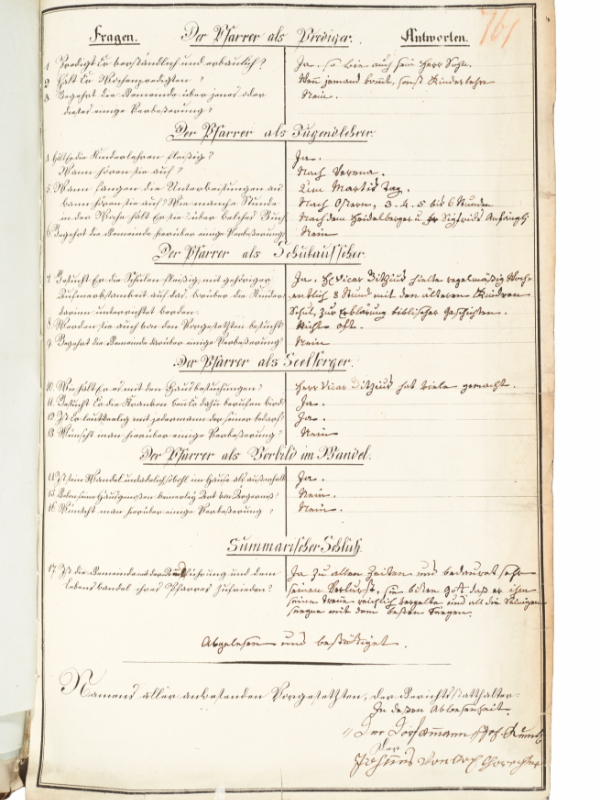
Around 1440, Johannes Gutenberg invented the printing press. What consequences did this have for writing in the German-speaking world?
Roland Reichen: Enormous consequences. At the beginning of the 16th century, the so‑called Fraktur script was developed from late Gothic manuscripts. You could therefore say that manuscripts influenced print typefaces. And this Fraktur typeface, in turn, had an impact on handwriting. The scribe Johann Neudörffer the Elder, who laid the foundations for an independent script in the German‑speaking world with his major work of 1538, based his writing models on Fraktur.
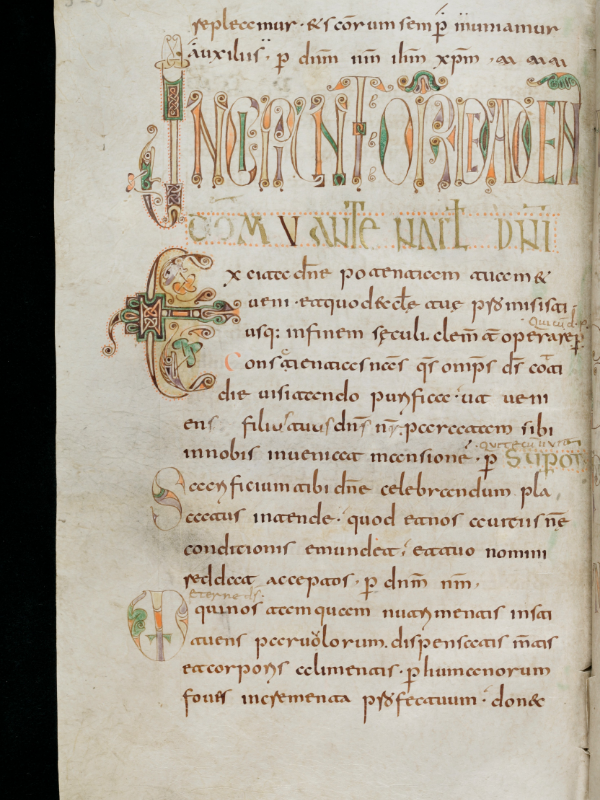
Compulsory education was introduced throughout Switzerland in 1874. What effect did this decision have on the reading and writing skills of the population?
Roland Reichen: Some cantons had already introduced compulsory schooling earlier, and it had an enormous impact. The data suggest that around 1900 only about one percent of the population was still considered illiterate.
Do you think that the computer will have as great an impact on writing as the printing press once did?
Hanne Griessmann: I think so, especially in combination with the internet and AI. The fact is that today, at least in highly digitised countries, we predominantly write digitally. But I don’t see the frequently cited looming threat of the end of handwriting becoming a reality.
“Almost all cultural techniques invented by humans will survive in one way or another.”
- Roland Reichen
Why?
Roland Reichen: At least for the span of my lifetime, I assume that specialists who are proficient in historical manuscripts will continue to be needed – if only to be able to check AI transcriptions. To this day, humanity’s knowledge is primarily preserved and communicated in writing; I can therefore hardly imagine that the end of written culture is just a few years away. Whether many people will still be writing by hand in 20 or 30 years is another question. However, a look at history shows that almost all cultural techniques invented by humans survive in one way or another.
Subscribe to the uniAKTUELL newsletter

Discover stories about the research at the University of Bern and the people behind it.