Trade in luxury goods and customs policy
"Luxury brands can handle losses well"
In Switzerland, people don't splurge, they usually treat themselves to things that only at second glance seem like they cost a lot. On the other hand, exports from the Swiss luxury goods industry are growing despite Trump's tariffs and the strong franc, says trade expert Manfred Elsig.
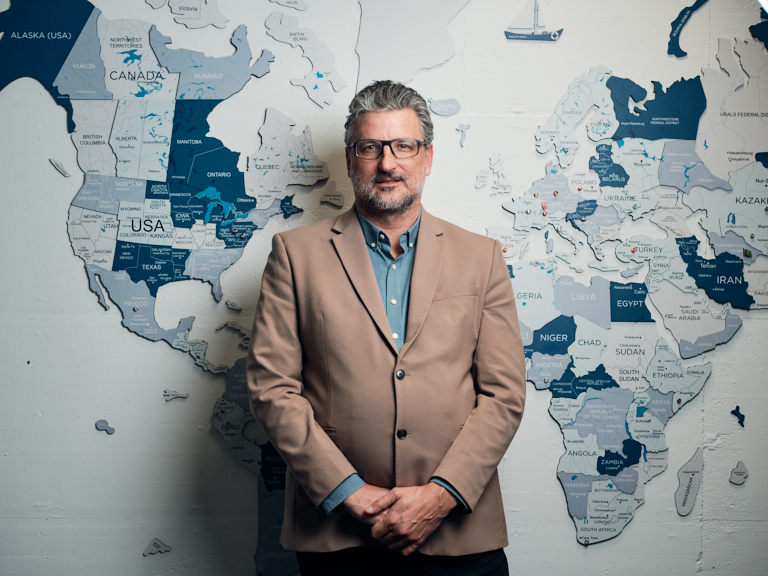
Mr. Elsig, at the time of our interview, only the pharmaceutical industry is still exempt from the special tariffs imposed by the USA. However, a court has now declared the 15 percent tariff illegal. How is the luxury goods industry reacting to the back and forth and the aggression in customs policy?
Manfred Elsig: Surprisingly, Switzerland's trade surplus in goods exports to the USA continued to grow in 2025 despite the ups and downs in US customs policy. In other words: Switzerland continues to export significantly more to the USA than vice versa. This has to do with the fact that it was already apparent at the beginning of last year that the USA would be raising new customs barriers. As a result, companies have moved goods to warehouses for storage in the US at lightning speed. This is no problem for accessories such as watches. After the 39% additional tariff came into force in August 2025, exports collapsed and companies simply used these pre-imports. Exports were then slightly positive on an annual average. Investment goods such as turbines can be exported less proactively. They also cannot be shipped overnight, which is why the slump in such products tended to be higher. And if there is uncertainty, investment goes down.
Trump wants to use the tariff to revitalise the industry in his own country and bring some money into the state coffers at the same time. Who pays the bill?
Studies show that US importers and, indirectly, American consumers pay up to 90% of the additional tariffs. This is becoming correspondingly more complicated if tariffs are to be refunded following the Supreme Court’s ruling. Who will receive the unlawfully levied difference? And how will the money be refunded to the injured parties? In the case of luxury watches, this may not even be an issue.
Why not?
Well, food has a short shelf life and goes on sale immediately. But a valuable watch has no expiration date and can be replaced. Who knows when a Rolex was imported into the USA and at what duty rate? And whether the seller really passed on all the additional tariff to the customer? The importers probably made a mixed price. I doubt whether many buyers will come back to the store and ask for a refund of the difference.
“Luxury brands can rest easy, and they are used to high customs barriers.”
Manfred Elsig
So the Swiss watch industry got off almost unscathed, regardless of whether the duty was refunded or not?
The mid-price segment is much more affected to competition. Luxury brands, on the other hand, can rest easy, and they are used to high customs barriers. China and Hong Kong, two important markets, impose higher tariffs than the USA. In addition, purchasers of luxury goods are less price-sensitive than people who want to spend a maximum of 200 francs on their watch. Anyone who is bothered by the new US tariffs on their Blancpain watch also has the options of treating themselves to a trip to Canada or Europe to buy it at a lower price.
In 2025, the additional tariff was compounded by the massive devaluation of the dollar. Was this also negligible for the luxury goods sector?
In fact, the strong franc led to a double crisis for the Swiss export industry. Here too, however, it was mainly SMEs that suffered, for example in the machinery sector. Luxury brands, on the other hand, were able to handle such losses more easily.
Is their profit margin so high?
The profit margin is certainly more generous for luxury goods than for everyday products. But the industry also benefits from the fact that globalisation is increasing the number of people who can afford luxury products. This is why the luxury industry's didn’t lament as loudly as one might have expected.
What actually is luxury?
I don't have a clear answer. It depends entirely on who you ask and where the person lives. For a billionaire, for example, a yacht is not a luxury, but something quite normal, like a car for us. And for a person in Switzerland, a piece of Gruyère may be something a bit classier, but it's in every second fridge in the country. In the USA, on the other hand, and certainly today with high tariffs, even Swiss raw milk cheese quickly becomes something that is not an everyday item. Drawing a clear distinction between everyday and luxury goods is difficult and depends on the individual situation.

Clothes from expensive labels are also just as non-vital as sports cars or wristwatches. You don't wear any yourself.
Well, I realised relatively early on that there are other ways to find out the time besides a wristwatch. When I'm skiing, for example, I often just need to look at the position of the sun. Sociologically, the question of why people treat themselves to a luxury item is of course interesting. 100 years ago, when mass production of watches began, the focus was on the functionality of timepieces. This role has changed completely. Today, expensive accessories are probably first and foremost a status symbol.
You yourself don't seem to be susceptible to this.
No, I'm not drawn to the idea of luxury as a possession. Buying things that are beyond my means is unthinkable to me.
Is that also a generational thing?
Definitely to some extent. The older generation, who could in principle afford visible luxury, often deliberately forego it. Putting material things on display is no longer that important to this generation. Instead, quiet luxury and authenticity are becoming more important. This type of consumption is also known as "experiential luxury."
And what does that mean, exactly?
People who already own a lot of things and have experienced a lot are looking for something unique. Everyone already knows what city trips or cruises with 2000 other holidaymakers are like, and everyone can afford these at any time. For this clientele, the travel industry tends to offer mountain hikes in small groups or even individually guided tours, visits to unknown, special locations off the beaten track or stays in exquisite accommodation. This luxury of experience opens a door through which you can leave your hectic everyday life behind for a few days. Though young people tend to find it "uncool."
What appeals to the younger clientele?
Part of the younger generation has a penchant for materialism. The economy also contributes to this, with social media and, more recently, AI providing a flood of stimuli. Dubai chocolate is one such idea that originated in the virtual world and has found its way onto supermarket shelves like in Migros. Advertising whispers in customers’ ears that there are things that they may not have known before, but that they cannot possibly do without. Companies and their marketing departments work hard to develop stories, narratives and images that create a certain bond between us and a consumer good.
Food seems particularly attractive to be marketed as a luxury item.
There is the wave of superfoods, from chia seeds to matcha powder. A new product is launched every few months. There are also, of course, "long sellers" such as Japanese Kobe beef that stick around for a while. Thanks to globalisation, such products can be bought anywhere and at any time, if you have the money for it. Times have changed: if you grew up in the GDR, bananas were a luxury item. This changed abruptly with the fall of the Berlin Wall. Salmon and Prosecco were also expensive delicacies in the 1970s. Today you can find them on special offer even in discount supermarkets.
Why are such goods ubiquitous today and therefore no longer special?
This is a direct consequence of globalisation. When goods flow more or less unhindered, they are available everywhere and their price tends to fall. The counter-trend is the move to the local: regionality is becoming a luxury again. This is because organic vegetables grown in our own village quickly become more expensive than imported mass-produced goods due to our high wage levels.
But a new smartphone, for example, is more eye-catching than a funny-looking vegetables in the kitchen. Apple has announced no fewer than seven new iPhone models by 2027. So is it becoming increasingly difficult to stand out from the crowd with your accessories and devices?
Manufacturers are doing everything they can to keep their existing customers on board and create brand loyalty. Electronic devices are ideal for this. Advertising tells us that we absolutely need this latest gadget. Technical innovation is an arena for particularly fierce competition. That's why the industry is constantly researching real or supposed innovation.
“This luxury of experience opens a door through which you can leave your hectic everyday life for a few days.”
Manfred Elsig
But this is only a quiet luxury to a certain extent.
That's right, by that I mean services rather than goods. This could be a personal coach for shopping, for furnishing your vacation home or for systematic tidying up. But the big markets of the future are well-being and health. Swiss private hospitals, for example, are successfully courting a well-heeled foreign clientele. The population around the world is getting older, and those who have the money are turning to medicine. Price elasticity in this sector is low, and providers hardly need to fear being undercut by the competition. Switzerland is well positioned in this regard. Even if customers move away, the demand for high-quality medical interventions in an attractive, politically stable environment is increasing internationally.
We enjoy excellent medical care in Switzerland and don't need to travel abroad for it. What luxury do you allow yourself?
I grew up in normal circumstances, so expensive goods mean little to me. Nevertheless, this winter I bought new touring equipment. It was off-the-peg equipment, not tailor-made, as is also offered. I prefer to treat myself to the luxury of experience. This can be a meal with family or friends – after all, eating out is not cheap in this country. A childhood friend recently visited me and brought a bottle of Pomerol from the nineties. I have no idea what the bottle is worth today and whether it really tasted better than a young wine. But the conversation and feeling of nostalgia that we shared, accompanied by the 30-year-old wine, were a wonderful experience; a luxury.
About the person

Manfred Elsig
studied political science and economics in Bern and Bordeaux. He completed his doctorate at the University of Zurich. After holding various positions in the private and public sectors, he worked from 2013 to 2017 as managing director of a national competence centre for global trade regulation. Elsig has been Professor of International Relations since 2009 and is currently Managing Director of the World Trade Institute (WTI) at the University of Bern.
What is luxury for you?
"I don't hoard goods. I get much more out of a good meal with family or friends."