University Alliance ENLIGHT
Food Systems: Practitioners meet Researchers at AIMday®
At the first Academic Industry Meeting Day (AIMday®) on food systems at the University of Bern, organizations will set the agenda. Researchers from Bern and across Europe will contribute their expertise to challenges from the field and jointly develop solutions.

The exceptionally hot summer of 2026 shows just how closely global challenges are linked to regional consequences. In the food sector, climate change affects small regional farms and multinational corporations alike. Meanwhile, the industry is under increasing pressure to produce food sustainably and fairly while keeping prices affordable.
Such complex challenges cannot be solved from a single perspective. Their solution requires dialogue among different stakeholders and the integration of practical, experiential knowledge with scientific expertise. These two aspects lie at the heart of the first Academic Industry Meeting day (AIMday®) on food systems at the University of Bern.
What is an AIMday®?
AIMday® (Academic Industry Meeting day) is an event format developed by Uppsala University in Sweden that promotes exchange between academia and industry and fosters new collaborations. The registered trademark of Uppsala University is now also used by other universities worldwide. The University of Bern hosts AIMday as part of the European University Alliance ENLIGHT, of which Uppsala University is also a member.
What makes it unique is that it is not the researchers, but organizations from the business sector, the public sector, and civil society that define the research questions. Under an overarching theme, they submit specific challenges drawn from their practical experience – so-called “challenges.” Researchers then sign up for the challenges to which they wish to contribute their expertise.
The day’s program is structured around this process: In one-hour workshops, researchers discuss the respective challenge with representatives from the organizations, exchange knowledge and ideas, and develop potential solutions. The goal is not to present finished solutions within an hour, but to open up new perspectives and lay the groundwork for further potential collaboration.
On 15 October, companies, nonprofit organizations, and public sector actors will present their concerns to discuss potential solutions and initiate research collaborations with researchers from the University of Bern, the Bern University of Applied Sciences, and the ENLIGHT University Alliance. Unlike in traditional research projects, researchers do not set the research questions at AIMday. Instead, the starting point is the specific needs and challenges of the participating organizations. At AIMday, these “challenges” will be examined from a scientific perspective across various disciplines.
The 26 challenges submitted cover a broad spectrum of topics related to food. They range from production and distribution to consumer behavior and the impact of these factors on the environment. These include ensuring fair working conditions for field workers in Swiss fruit and vegetable farming, developing regional value chains, and promoting plant-based menu options in cafeterias as a few examples. The first AIMday at the University of Bern is being organized jointly by the Innovation Office and Engaged UniBE.
International expertise for local challenges
Since climate change, biodiversity loss, and food security do not stop at national borders, researchers from the ENLIGHT University Alliance are also participating in AIMday. This event brings international expertise to Bern, which facilitates cross-border comparisons and generates new ideas for local solutions in food systems.
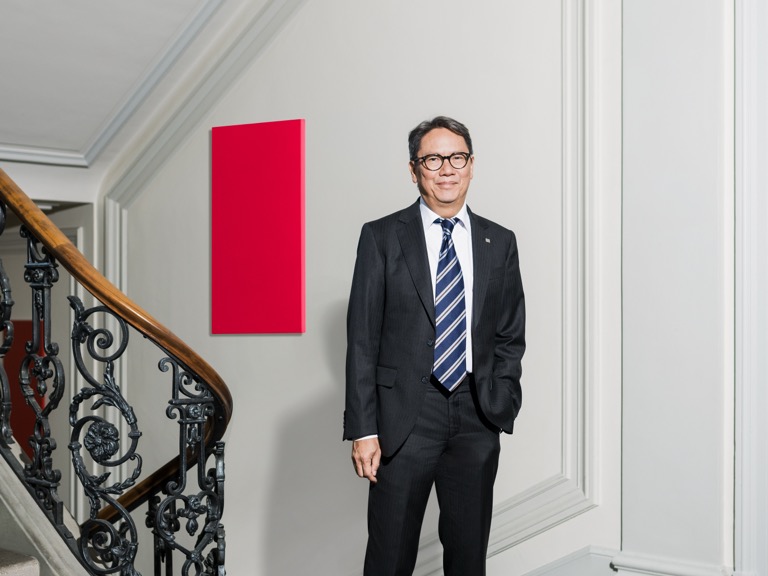
This connection between locally and internationally oriented research aligns with the University of Bern’s strategic focus. “We want to act locally and think internationally. The AIMday offers an ideal platform for that,” says Prof. Dr. Andrew Chan, Vice Rector International and Academic Careers at the University of Bern.
How AIMday came to Bern
Arno Ratzinger from the Innovation Office brought the AIMday format to the University of Bern. As head of the “Ideenlabor,” he advises on innovation projects in the areas of sustainability and social innovation. He is also active in the ENLIGHT University Alliance and works closely with Engaged UniBE. “During an ENLIGHT Staff Week in Uppsala focused on regional cooperation, I came across the AIMday format: I immediately thought we should introduce it in Bern as well,” he says. He is now leading the pilot project together with Felix Poelsma, a senior research scientist at the Centre for Development and Environment (CDE) who is researching how the transition to a more sustainable society can be shaped.
The pilot project is funded, among others, by the Swiss National Science Foundation (SNSF) as an Agora project and by the Office of Economic Affairs of the Canton of Bern. Over the next few years, the format is expected to be institutionalized, establishing the University of Bern as a key player in regionally rooted innovation in Bern.
Research in partnership with society
Since 2024, the University of Bern has been increasingly engaging with the current challenges faced by local businesses and organizations through the launch of Engaged UniBE. The goal of this initiative is to actively promote dialogue between academia and society. To this end, it brings together community stakeholders with researchers, faculty, and students at the University of Bern to jointly develop solutions for sustainability and climate protection.
“As a university, we have a responsibility to make our knowledge accessible to the region. Engaged UniBE is our response to this: a very concrete form of collaboration that demonstrates what happens when research and practice meet on equal footing,” says Vice Rector Prof. Dr. Heike Mayer. Through this collaboration, which has resulted in nine projects thus far, the University of Bern adds value locally. Examples include the collaboration with the City of Bern on the UrbanLab Viererfeld and various projects with associations, nature parks, and government agencies throughout the Canton of Bern.

Students working on local solutions
The AIMday is held at the University of Bern as a “Regional Academy” of the ENLIGHT University Alliance. This allows regional knowledge from all ten member universities of the alliance to be integrated into research and teaching. In the Challenge-Based Education approach supported by ENLIGHT, instruction is centered on solving specific local and international challenges, preparing students for the challenges of tomorrow.
Students at the University of Bern have many opportunities to contribute their ideas for promoting sustainability and social innovation. For example, the Innovation Office’s Ideenlabor recently hosted the Swiss final of the Sustainable Development Goals Olympiad, where students from various universities presented their innovation projects aimed at achieving the Sustainable Development Goals to a panel of experts. And at the Impact Winter School for innovation projects, held for the first time in February 2026, students in the humanities in particular were able to use their specialized knowledge to develop ideas for local solutions.
Arno Ratzinger believes that these programs are the way of the future. "It is crucial that universities provide added value to society and fulfill their responsibility for sustainable development."
Engaged UniBE
Engaged UniBE is a platform for research, teaching, and real-life situations outside the university: Researchers collaborate with people from community organizations, government, politics, and business to address the same questions: How does a neighborhood cope with heat? What does a functioning neighborhood need? Topics such as sustainability and social justice are often at the center of these efforts.
These questions are addressed in so-called “real-world labs”: at specific locations such as a school, a city district, or a corporate campus, where participants work together to test what actually works. Engaged UniBE provides the framework for this through funding, networking, and support. The goal: knowledge should be generated where it is needed, through genuine exchange between the university and society.
More information
About ENLIGHT
ENLIGHT is a European University Alliance of ten comprehensive, research-intensive universities with approximately 350,000 students, 75,000 employees, and over one million alumni. The alliance consists of the universities Ghent (Belgium), Tartu (Estonia), Bordeaux (France), Göttingen (Germany), Galway (Ireland), Groningen (Netherlands), Uppsala (Sweden), Bratislava (Slovakia), Basque Country (Spain) and since December 2022 includes Bern (Switzerland) as associated member. Together, they develop flexible international forms of exchange in research and teaching; in the long term, ENLIGHT members strive for common curricula and degrees. ENLIGHT focuses on societal challenges in the following areas: health and well-being, digital revolution and impact of digitization, climate change, energy transition and circular economy, equity, culture and creativity. The University of Bern's participation in ENLIGHT is financially supported by Movetia. Movetia promotes exchange, mobility and cooperation within the fields of education, training and youth work – in Switzerland, Europe and worldwide.