
New Internationalization Strategy
Internationalization: Much more than a “nice-to-have”
The University Executive Board has adopted a new Internationalization Strategy. Andrew Chan, Vice-Rector for International and Academic Careers, initiated and led the broad-based strategic process behind it. In this interview, he discusses the strategy’s background and objectives.

Andrew Chan, why does the University need to be internationally connected?
Andrew Chan: Despite the efforts of some countries to isolate themselves, we live in a highly internationalized world. Above all, the next generation—which is always our focus as a university—must be able to hold its own in international competition. Fundamentally, however, I believe that all members of the university community benefit from a perspective that transcends national and disciplinary boundaries.
As a university, we are part of the global knowledge community, where we play a leading role in research and teaching, which we want to maintain and strengthen. International exchange is essential for this. In my own field, biomedicine, it is very clear that cutting-edge achievements no longer emerge in isolation, but rather through large-scale, internationally connected projects.
Ultimately, international connectivity is also of global societal importance. It is becoming increasingly clear that complex challenges such as climate change or the fight against antibiotic resistance can only be tackled through both international and regional approaches.
«Internationalization is a dimension that we must take into account in all areas.»
Andrew Chan
What do you consider the most important aspect of the new Internationalization Strategy?
We want to make it clear, across all groups and at all levels of the university, just how important internationalization is to us. It is not just a “nice-to-have,” but a dimension that we must take into account in all areas. This is obvious for excellent research, but it also applies to teaching. For the University of Bern, it is essential to further strengthen its international reputation in order to remain attractive in the international competition for talent.
We want to get all stakeholders on board because we aim to communicate both the opportunities and the risks of internationalization, such as international sanctions, clearly and transparently to everyone involved. Througha broad-based strategy process, we have jointly developed objectives and areas of action. The Commission for International Relations, as well as representatives from all faculties, constituencies, and the strategic centers, were involved in the process.
Internationalization Strategy of the University of Bern
What is important to you when working with international partners?
In all our strategic partnerships, we want to uphold academic freedom, scientific integrity, partnerships on an equal footing, and ecological sustainability. A further dimension that has unfortunately become increasingly important in recent years is security. This includes the personal safety of members of our university, for example when traveling to crisis regions, but also the security of data and scientific findings.
One objective of the new strategy is to strengthen international networks, in particular the ENLIGHT university alliance and The Guild of European Research-Intensive Universities. How do these two networks differ?
In ENLIGHT, we have joined forces with nine other universities to create a shared, interconnected campus. Former Rector Christian Leumann once described it as creating a virtual eleventh university by combining the best parts of ten universities. This is intended to enable maximum mobility for students as well as for lecturers, researchers, and staff. ENLIGHT is therefore very operational in its orientation and is currently focused primarily on teaching.
The Guild is structured very differently. Here, we are talking about 23 research-intensive universities that engage in strategic exchange, jointly take positions on political developments in Europe, and play a decisive role in shaping them. Through our networks, we are not only participating in these discussions within the EU, but also ensuring that our voice is heard.
What comes next?
Many of our researchers are already very active internationally and work very successfully in international networks. Little will change for these existing collaborations. In the future, there will be exciting opportunities for new collaborations, particularly for teaching partnerships, doctoral candidates, and early-career researchers within the European university alliance ENLIGHT.
At the university-wide level, The Guild is also very important, as it gives us the opportunity to participate in current discussions on the future of the research and higher education landscape in the EU. These discussions also involve substantial funding: the European Commission has recently opened discussions on a major increase in research and education budgets.
«International exchange is a central element of my personal and professional biography.»
Andrew Chan
What is your personal motivation for advancing the internationalization of the University of Bern?
International exchange is a central element of my personal and professional biography. I am concerned that my children have fewer opportunities than I did to get to know new countries and cultures, because many regions have become significantly more closed off.
I want to help reduce barriers to international exchange, especially for students and early-career researchers, and create the best possible conditions for them to build international contacts and get to know other cultures from an early stage. This enriches their studies and research and supports their personal development.
About the person
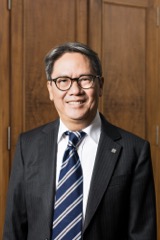
Prof. Dr. Andrew Chan
is Vice-Rector for International and Academic Careers at the University of Bern and Professor of Neurology, with a special focus on neuroimmunology. Having grown up in Germany, he spent extended periods in Canada, the United States, and the United Kingdom during his academic career. He has been working at the University of Bern’s Faculty of Medicine since 2016. He also serves as chief physician at the Department of Neurology at Inselspital Bern.
Subscribe to the uniAKTUELL newsletter

Discover stories about the research at the University of Bern and the people behind it.