Biosafety
"The next pandemic hopefully won't come from a laboratory in Bern"
Kathrin Summermatter, Head of the Bern Biosafety Center, was part of an expert panel on the origins of Covid. In the interview, she talks about the difficult collaboration with China and the importance of the University of Bern's commitment to the WHO.
You were a member of the Scientific Advisory Group for the Origins of Novel Pathogens (SAGO), which compiled a report on the origins of Covid for the WHO. What are the most important conclusions that your group came to?
Kathrin Summermatter: We still don't know for sure where SARS-CoV-2 came from, but there is a lot of evidence to suggest that its has an animal origin. We came to this conclusion by evaluating scientific studies that have, for example, made genetic comparisons with coronaviruses from animals. We also rely on the analysis of early cases of infection and on discussions with experts. Alternative hypotheses such as a laboratory origin were also examined. The overall picture that emerges from these various sources is that SARS-CoV-2 has most likely jumped from animals to humans.
You visited international laboratories, but of all places, you weren't allowed to see anything in China?
That's right, it wasn't possible during the pandemic. The SAGO committee made several attempts to put together an independent group of experts to inspect these laboratories, but we were refused.
In a commentary published by SAGO in the journal Nature, it says: "If the world really wants reliable answers, it needs to provide the information and data that will enable rigorous scientific research." That sounds pretty sobering.
Yes, we had only limited access to the data we would have needed to address the various topics. And there were also no independent analyses of certain data we received from China. That was certainly a challenge. The political situation during the pandemic was very tense. China closed itself off, and there was no longer any exchange of information.
“SARS-CoV-2 most likely jumped from animals to humans.”
Kathrin Summermatter
How was your group able to work at all in this politicized situation?
The 27 experts came from various fields of research and from different countries, including China. We also repeatedly conducted interviews with Chinese researchers, some of whom were very open and provided us with data. However, independent verification of this information was often not possible, for example in the case of statements that all animals on mink farms had tested negative. The lack of independent verification of individual data represents an important uncertainty. Nevertheless, the conclusion is based on a broad overall view of genetic and epidemiological evidence. An animal origin is therefore considered the most plausible explanation, even if there is no absolute certainty.
How did you deal with the conspiracy theories about the origin of Covid at SAGO?
We have often dealt with those claims. We examined relevant reports and analyzed interviews and presentations that were made available to us by representatives of such theories. Many of these presentations were speculative, resembling fictional scenarios more than scientifically robust hypotheses. However, it is important to note that we cannot rule out these theories entirely because the data could not be verified independently. What is crucial is that there is no reliable, verifiable evidence for these claims. In contrast, the assessment of an animal origin is based on a large body of consistent scientific evidence. Therefore, we have assessed this theory as significantly more plausible, though not absolutely certain.
Have you also been personally attacked by conspiracy theorists?
Not really. We all did receive emails, as our email addresses are public, but we simply gave a standard reply and referred them to the WHO.
What was your role in this committee of 27 members? You are not a Covid expert yourself...
...no, I am not. My expertise lies in biosafety. Of course, I've had a lot to do with viruses and other microorganisms over the course of my career. As biosafety experts, we ensure that work with dangerous pathogens is carried out safely by assessing risks and defining and reviewing suitable safety measures, laboratory standards and processes. This also includes monitoring laboratory infrastructures and processes to prevent accidents, releases or infections.
In the committee, we critically examined various original hypotheses and attempted to classify them in the overall context of the available evidence. Among other things, we looked at various laboratories and that's where my technical knowledge came into play.
Why was the WHO particularly interested in expertise from Bern?
Three people in the SAGO were professionally involved in biosafety, including me. Over the last six or seven years, we have built a strong scientific foundation in this area at the University of Bern by working closely with various research groups. At the Institute of Infectious Diseases, where I work, these professionals are virologists and bacteriologists. We also have close contact with the Institute of Virology and Immunology at the Vetsuisse Faculty of the University of Bern. Our expertise in biosafety, which was important to the WHO, is based on close interaction between safety experts and researchers.
You were already involved in WHO committees before Covid.
Yes, I have 15 years of experience conducting inspections, including those of smallpox laboratories, which are inspected every two years. I worked closely with a WHO scientific expert for a long time who eventually asked me to apply for the SAGO, and I was elected. A new SAGO team is currently being assembled, but I will not be part of it. I am now focusing on my area of expertise and working for a second expert commission: the Technical Advisory Group on Biosafety. In this role, we support the WHO on global biosafety issues.
Is your involvement in the WHO also helpful for the University of Bern?
Definitely. On the one hand, it brings international recognition, not least through the final report and the Nature publication. On the other hand, our good international contacts in the field of biosafety are invaluable. We are now very well-networked and have succeeded in showcasing the University of Bern's biosafety expertise worldwide.
“We make sure that people are protected from the pathogens that are used for research in the university's laboratories.”
Kathrin Summermatter
Does this visibility also count when recruiting employees?
We don't have that many staff changes at the Biosafety Center itself. But the University of Bern as a whole has to be attractive for good people. Such an international presence contributes to this attractiveness.
To what extent does the Biosafety Center protect Switzerland from future pandemics?
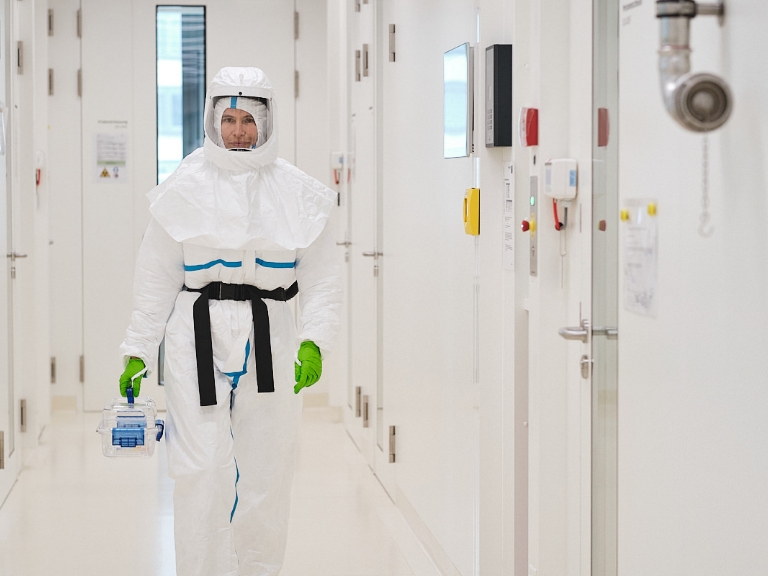
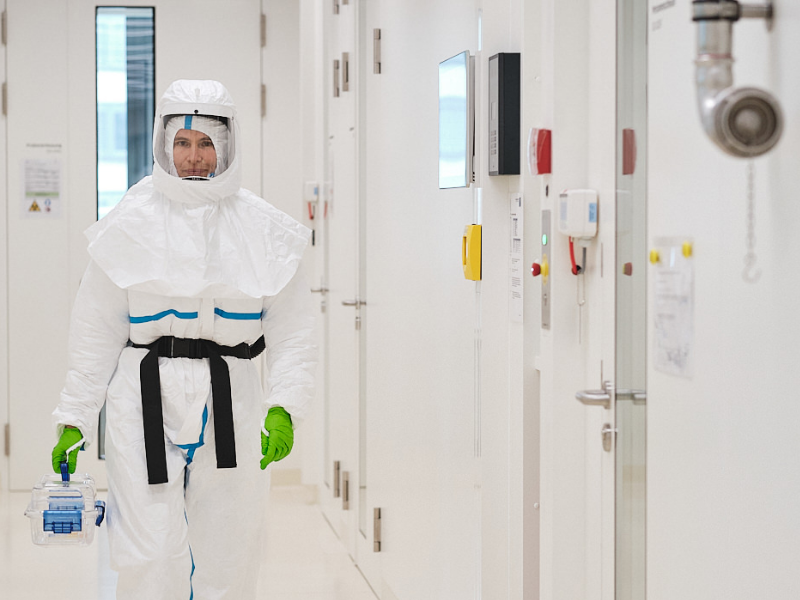
Saying that we protect the Swiss population from a pandemic might be a bit of a stretch. However, we ensure that people are protected from pathogens used for research in university laboratories. These pathogens, such as those that cause Covid, monkeypox, and tuberculosis, can have a significant impact on human health. We guarantee that this research is carried out under the necessary safety precautions.
So the trigger for the next pandemic won't come from a laboratory in Bern?
We certainly hope so!
Publication details:
Venter M et al. (2026) COVID's origins: what we do and don't know. Nature. 2026 Feb;650(8103):829-833. doi: 10.1038/d41586-026-00530-y. PMID: 41735634.
About the Biosafety Center at the Institute for Infectious Diseases of the University of Bern
The Biosafety Center (founded in 2019 at the IFIK of the University of Bern) bundles comprehensive expertise in all areas of biosafety and is closely linked to the operation of the BSL-3 laboratory at sitem-insel. It works on the basis of national laws and international guidelines (e.g. WHO, EU) and is well networked both nationally and internationally.
Its main tasks include providing advice and support for risk assessments, safety measures, disinfection and shipment of biological samples as well as laboratory construction projects. It also develops and implements biosafety concepts and conducts training courses and audits.
Further Information: https://www.ifik.unibe.ch/services/biosafety_center/index_eng.html
About the person
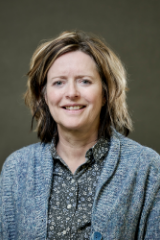
Kathrin Summermatter
is the director and founder of the Biosafety Center. She has decades of experience operating safety laboratories and has worked several times as a WHO expert inspecting laboratories in the US and Russia that work with highly contagious smallpox viruses. In 2021, the WHO appointed her as one of 27 experts on a panel on the emergence of new pathogens.
Subscribe to the uniAKTUELL newsletter

Discover stories about the research at the University of Bern and the people behind it.