Science Diplomacy
Building bridges between research and diplomacy
When researchers and diplomats work together to facilitate knowledge transfer, they can contribute to solutions for the pressing issues of our time. On August 17, the "Science Diplomacy in Practice" conference at the University of Bern put this on display.
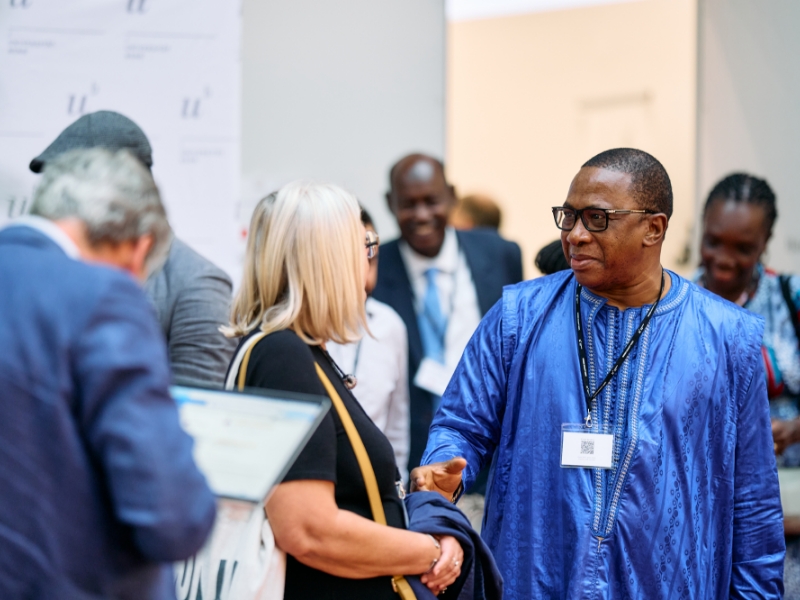
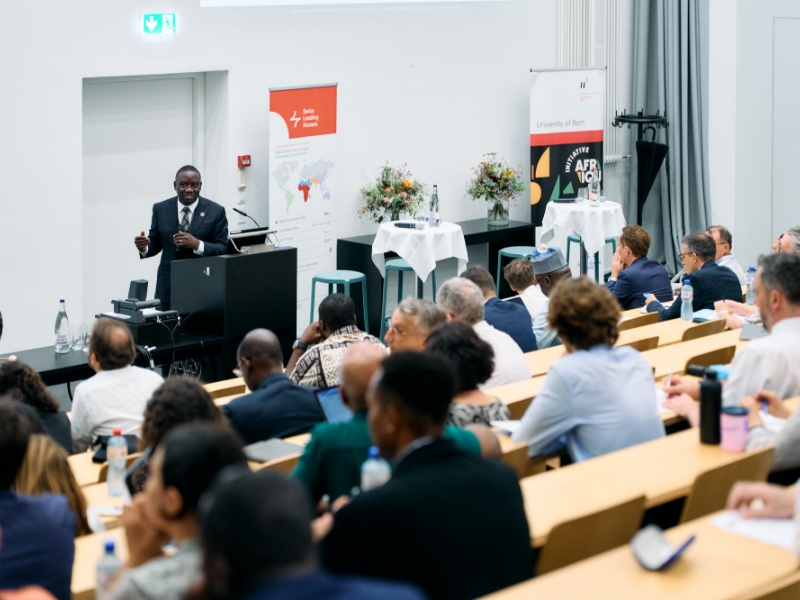
On August 17, black town cars with diplomatic license plates drew attention outside the UniS building at the University of Bern. And once inside, the variety of languages, cultures, and the great diversity among the participants made it clear that a special gathering was taking place. Andrew Chan, Vice-Rector for International and Academic Careers at the University of Bern, referred to it as an “outstanding event” in his welcoming remarks and emphasized the importance of “global academic partnerships.” As the host of the conference and as an academic institution, the University of Bern’s goal is to be a respected and trustworthy partner—especially in scientific exchange with African partners, which was the focus of the conference.
The workshop “Science Diplomacy in Practice,” attended by approximately 200 participants from the fields of diplomacy, education, research, and innovation, was jointly organized by the University of Bern and its Initiative Afrique, the Swiss Leading House Africa at the University of Basel, and the Federal Department of Foreign Affairs (FDFA).
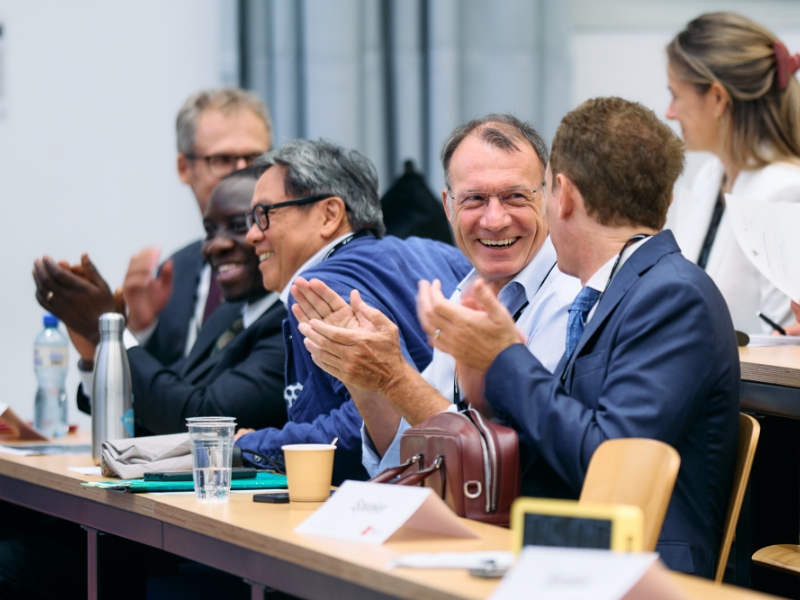
Opinions may have differed on exactly what science diplomacy is. Yet in the presentations and discussions, the same key phrases kept coming up: building bridges, connecting stakeholders, maintaining networks, and fostering communication. After all, knowledge is a public good and must be shared. Or, as Ambassador Philipp Stalder, Head of the Sub-Saharan Africa and Francophonie Division at the FDFA, explained: “Knowledge alone is not enough; only the exchange of knowledge helps us tackle global challenges such as climate change and digitalization together.”
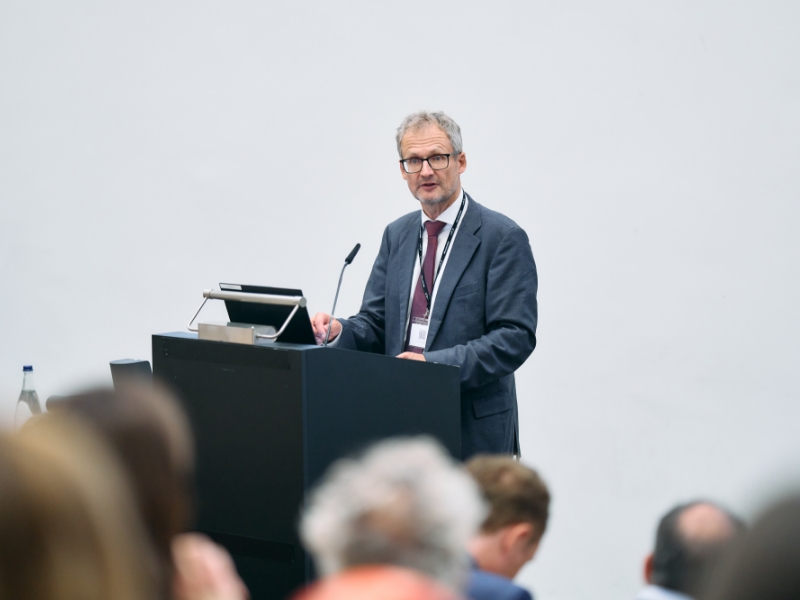
Ntuli Kapologwe, Director General of the East Central and Southern Africa Health Community, highlighted an additional aspect of science diplomacy from an African perspective. He noted that governments pay closer attention to scientific evidence when it is conveyed by diplomats. “Politicians are increasingly taking center stage when it comes to advancing science diplomacy and harnessing its potential.”
Untapped potential on the continent of youth
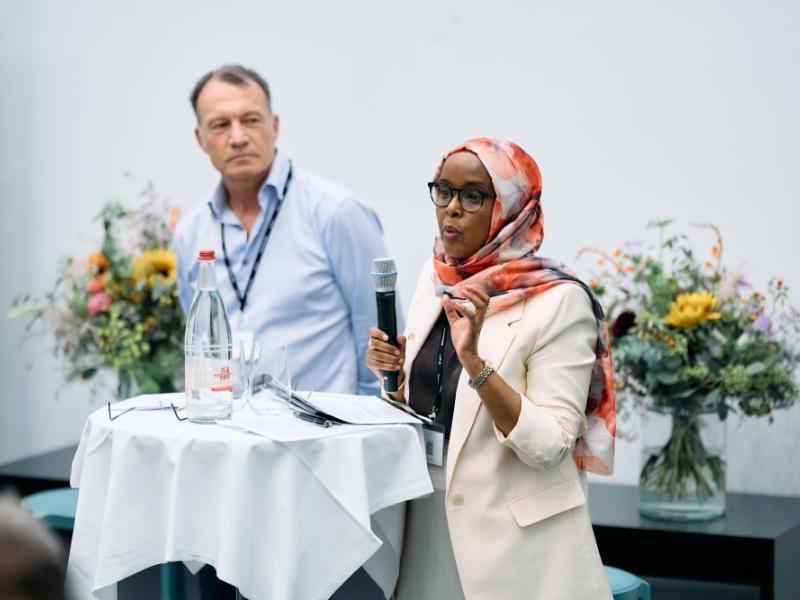
A few striking facts illustrated why the workshop focused specifically on science diplomacy in the African context: Africa is home to about 17 percent of the world’s population, yet only about three percent of global peer-reviewed scientific publications originate from Africa. The untapped potential for research is enormous. Added to this is the fact that Africa is the continent of youth. “Starting in 2030, four times as many children will be born in Africa as in Europe,” said Fouzia Abass, Kenya’s ambassador to Switzerland. She also emphasized that the political landscape has changed. Africa no longer wants to be a supplicant, but rather a full-fledged partner: “We’re not asking what Switzerland can do for us, but how we can work together. Your researchers should be willing to learn from our scientists as well.”
“We don’t ask what Switzerland can do for us, but how we can work together.”
Fouzia Abass, Ambassador of Kenya to Switzerland
As an example of a joint project on an equal footing, the ambassador cited the restoration of the ecosystem in the Gambella Wetlands in northern Kenya, where the Wyss Academy for Nature at the University of Bern is working closely with the local population and government to protect the area, carry out reforestation, and improve the water supply for people and livestock. “Where science meets local knowledge,” said Abass, “problems can be solved successfully and sustainably.”
This example shows how the University of Bern is not only involved in organizing conferences such as “Science Diplomacy in Practice,” but also maintains long-standing research collaborations with African partners and promotes the development of research networks, including through its “Initiative Afrique.” This includes, for example, the collaboration with the African Research Universities Alliance (ARUA). As part of this partnership, researchers from Bern and from various African countries jointly lead two “Africa-Europe Clusters of Research Excellence.” Strategic centers at the University of Bern—the Multidisciplinary Center for Infectious Diseases (MCID) and the Centre for Development and Environment (CDE)—are part of these clusters. In addition, there are other existing collaborations, such as with regional hubs through the Wyss Academy in Kenya and Madagascar, as well as long-standing programs run by the Centre for Development and Environment (CDE) and the Institute of Social and Preventive Medicine (ISPM).
The Initiative Afrique at the University of Bern
is a joint initiative of the Vice-Rectorate for Research and Innovation and the Vice-Rectorate for International and Academic Careers at the University of Bern. It brings together research activities related to various African countries and serves as a central hub for information on existing activities, partnerships, and resources in the Switzerland–Africa context. As part of its internationalization strategy, the University of Bern thus places a special emphasis on cooperation with African universities to jointly address global challenges.
More information: https://initiativeafrique.unibe.ch/index_eng.html
Clarifying misunderstandings
Another facet of science diplomacy, as became clear at the workshop, is improving mutual perceptions, for example regarding innovation. Many of his conversation partners, said Léo Trembley, Swiss ambassador to the Democratic Republic of the Congo, among other posts, believe that Switzerland owes its wealth to its banks. He often has to correct this perception and explain that Switzerland owes its prosperity to its innovative strength. It is no coincidence that, according to various rankings, it is the most innovative country in the world.
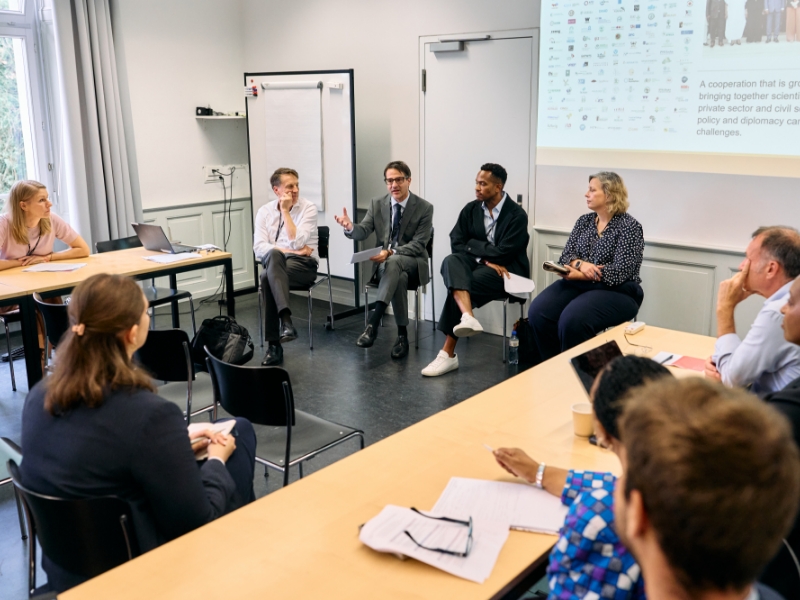
Conversely, Swiss investors rarely have African startups on their radar, as was evident in the breakout session “From Science to Innovation Diplomacy.” Pietro Mona, who represents Switzerland as an ambassador in various West African countries, said it was important to “clear up misunderstandings” and “show Swiss investors the reality on the ground.” Pascal Koenig, who runs a business in Kenya focused on obstetrics, agreed with this assessment. The goal of his company called Malaica is to reduce maternal mortality, which is a hundred times higher in sub-Saharan Africa than in Europe. “In Switzerland,” said the serial startup founder, “it is much more difficult to introduce innovations into the healthcare system than in Kenya.” Nathalie Morandini Siegrist from EPFL’s EssentialTech research center also demonstrated what innovations can achieve. Her goal: to use scientific and technical innovations to support sustainable development, humanitarian aid, and peacebuilding in disadvantaged regions. Among other things, EssentialTech has developed an X-ray machine that is extremely robust and functions reliably under difficult conditions. It is inexpensive to purchase, easy to operate, runs on solar power, and is being successfully marketed in South Africa, among other places. “What countries with limited resources need is neither low-tech nor low-cost,” says Morandini Siegrist. “On the contrary. What’s needed are high-performance and reliable solutions. Devices that can be repaired.”
“In Switzerland, it is much more difficult to introduce innovations in the healthcare system than in Kenya.”
Pascal Koenig, co-founder of Malaica AG
EssentialTech routinely maintains contact with Swiss embassies wherever the research center operates. “This allows us to benefit from the network of ambassadors,” explains Morandini Siegrist in an interview. It wasn’t until the workshop at the University of Bern that she also realized how science diplomacy plays an important role in Switzerland. For example, when it comes to convincing the Swiss Parliament of how important promoting research and innovation is for Switzerland’s image abroad and for international cooperation.
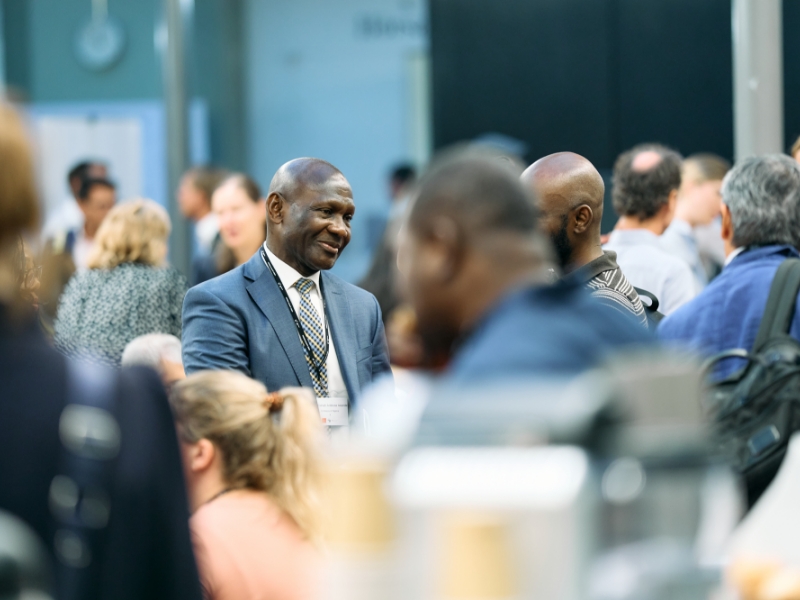
Diplomats and researchers have more in common than one might think, as Ambassador Philipp Stalder noted at the end of the workshop. After all, both fields deal with uncertainty, are driven by curiosity, and ask difficult questions. “That’s probably why we work together remarkably well.” Stalder also emphasized one more point in his closing remarks: The most important task of science diplomacy is to build bridges—both between people and between institutions. “Switzerland has the ability to forge connections. It’s part of our DNA, so to speak.”
Subscribe to the uniAKTUELL newsletter

Discover stories about the research at the University of Bern and the people behind it.