Symposium on Criminology and Diversity
“Without Data, All We Have Is Gut Feelings”
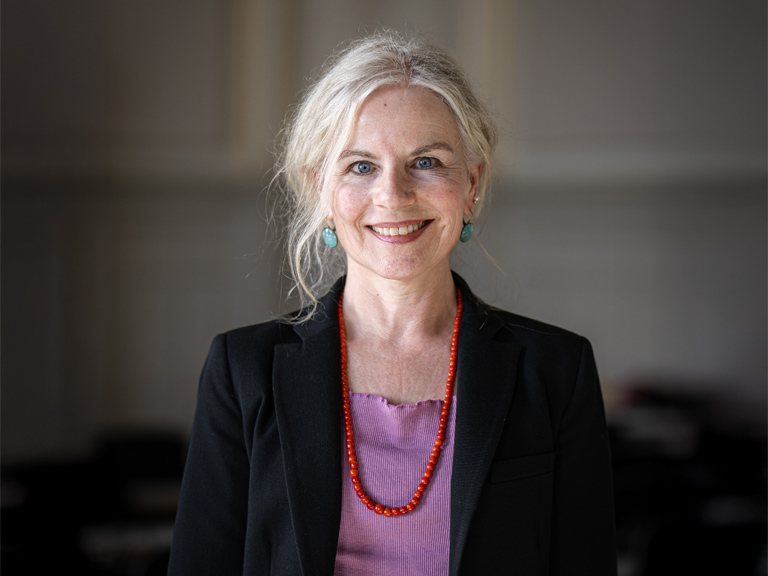
How does criminology address issues such as gender, migration, and mental health? Researcher Ineke Pruin explores these topics. In this interview, she discusses what motivates her and the things that need to improve when it comes to this issue.
In July 2026, two femicides occurred in Switzerland, one in the canton of Thurgau and one in Ticino. Experts told SRF and the NZZ that the situation surrounding domestic violence is increasingly alarming. Yet what data do their findings draw on?
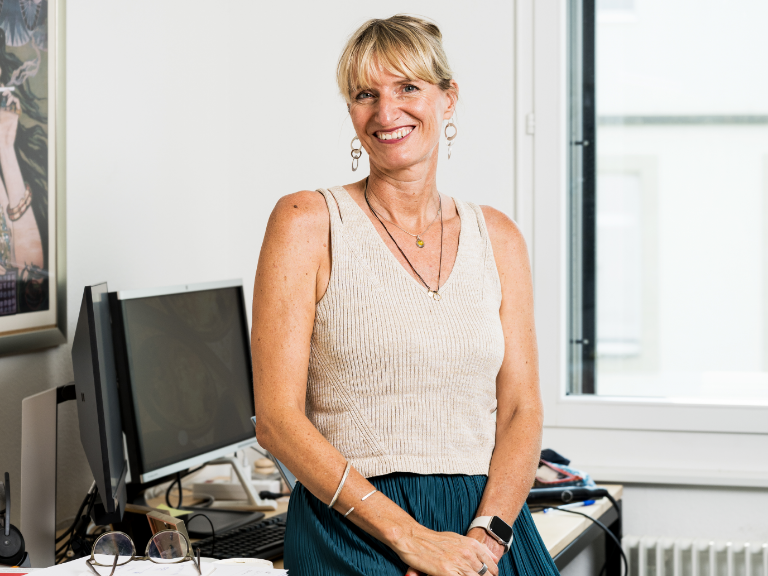
Ineke Pruin, professor of criminology at the University of Bern: “We increasingly need more nuanced data, as well as greater trust in science.”
19th Annual Conference of the Criminological Society
The 19th annual scientific conference of the Criminological Society takes place in Bern from 3 to 5 September 2026. The topic of this year’s conference is: “Criminology in a Diverse Society.” How do we, as an academic community, address this diversity? What new perspectives emerge when we examine crime through the lens of gender, migration, mental health, or structural inequalities? Experts from Switzerland and abroad will explore these topics in depth as part of a varied programme. “My goal is for the conference to inspire everyone interested and for us to show the public how young researchers, in particular, are engaging with the important issues of the future,” explains organiser Ineke Pruin. In addition to the keynote presentations, panel discussions will showcase insights from throughout the world of criminology.
uniAKTUELL: Why did you become a criminologist, Ms. Pruin?
Ineke Pruin: I first specialised in criminology long ago, while I was studying law in Germany. The interplay between psychology, sociology, philosophy and criminal law still fascinates me today. Criminology is an empirical and interdisciplinary science that examines, among other things, why people commit crimes and how they can leave a life of crime behind.
What does it take to be a good criminologist?
A good criminologist has a lot on her plate (laughs). We deal with incredibly sensitive data and a lot of emotions: for example, I study the social environment in the correctional system, where I often hear very personal stories. Above all else, we need one thing: trust. The conference will also be addressing the issue of racism in the police, which we can’t research if the police don’t trust us enough to interpret our findings correctly.
“I study the social environment in the correctional system, where I often hear very personal stories. Above all else, we need one thing: trust.”
Ineke Pruin
Criminology also needs additional resources. The extensive empirical research can’t be funded with the standard operating budgets, so we have to rely on third-party funding.
Does the way in which the media reports on crime concern you?
We are increasingly seeing researchers being mocked. From both a professional and political perspective, I find this very concerning. We criminologists have complex research findings that we want to – and must – present accurately: on the topic of migration and crime, for instance. Media formats, with their strong pressure to oversimplify, often fail to recognise this complexity. In most cases, criminologists can’t just simplify or summarise their findings in a single sentence. We will be discussing this on the panel with representatives from the media industry. For me, it’s about cooperation and mutual understanding. I want to know how our scientific communications can improve without creating division or assigning blame.
Are public opinion and research drifting apart?
Yes, in many ways. For example, when it comes to the topic of the “fear of crime”. Who is afraid of whom? An example here is the age-old fear of the white van pulling up in front of a school and kidnapping children. Yet there is virtually no empirical evidence for this scenario – it is a persistent narrative of a threat rooted in decades-old prejudice about itinerant people.
“Young men have almost no fear, but statistically they face the highest risk of becoming victims.”
Ineke Pruin
It’s always those with the lowest risk who fear the most: young men have almost no fear, but statistically they face the highest risk of being victims of crime. Conversely, older people are very fearful, yet statistically, they face the lowest degree of risk.
Another example is the link between migration and crime. In the statistics, people without citizenship are overrepresented. The public response to this usually falls short: those who only look at passport status choose to ignore the social, structural and legal factors that explain this overrepresentation. Criminology offers better answers in this respect because it understands the social, structural and legal contexts, draws on experience, and is interdisciplinary. In essence, the strength of us experts lies in our ability to contextualize.

Are you yourself afraid?
I have two daughters, and I certainly wouldn’t want violent, schizophrenic sex offenders anywhere near playgrounds either. At the same time, though, I know that this fear has no statistical basis. Thoughts like these, however, remind me of just how emotionally and politically charged my field is. Yet emotions should never drive policy: I’d like to see an evidence-based criminal justice policy. And I’d also like to see alternatives to the current laws on crime – regarding intimate partner violence, for example.
In what way?
In Switzerland as well as in Germany, the lack of data is the biggest problem. The statistics on crime don’t tell the whole story. Femicide is a current example. To determine whether a femicide has occurred, we need to know the nature of the relationship between the victim and the perpetrator. This data needs to be collected. And in terms of domestic violence, but also other crimes, we need annual surveys on unreported cases – so-called “dark figure” surveys.
What would a dark figure survey achieve?
In the U.S. and the U.K., the general public is surveyed every year on crime-related topics. After all, the statistics only include those cases that were reported to the police or investigated by the law enforcement agencies. There are likely reliable figures on car thefts because people need to file a report for insurance purposes.
“Surveys on unreported crime are indispensable for a reliable crime policy – and, for a country like Switzerland, they’re also financially feasible.”
Ineke Pruin
When it comes to domestic violence or sexual offences, though, we know that there are high rates of unreported crime, as many victims don’t want to file a report. To understand the true situation, we need to ask the public anonymous questions such as “Have you ever been a victim of crime?” or “Have you ever committed a crime?” Only then can we know whether a rise in sexual offences in the police crime statistics actually means an increase in offences, for example, or if it just means that more offences are being reported – which would ultimately be a good sign, as it means fewer offences are going unreported.
We don’t currently have sufficient data to answer these questions – the Swiss surveys on the rates of unreported crime are methodologically sound, but they aren’t funded on a regular basis. The fact that we lack this data is, in turn, held against us as criminologists in the public debate.
Surveys on unreported crime sound time-consuming and expensive.
Yet these surveys are indispensable for a reliable criminal justice policy, and for a prosperous country like Switzerland, they are also affordable. Crime is an emotional issue – which is precisely why we need more and more robust data. Otherwise, crime policy is based on individual cases and gut feelings
Prof. Dr. Ineke Pruin
co-directs the Institute for Criminal Law and Criminology at the University of Bern with Prof. Dr. Christof Riedo. She has been president of the Swiss Society of Criminology since 2024. She is currently conducting research funded by the Federal Office of Justice on the social environment in the correctional system, and with funding from the Swiss National Science Foundation (SNSF), on restorative justice in cases of intimate partner violence. She is chair of the continuing education program at the Institute for Penal Law and Criminology and a member of the editorial board of the journal Neue Kriminalpolitik.
Subscribe to the uniAKTUELL newsletter

Discover stories about the research at the University of Bern and the people behind it.