
Reproductive rights
Whose children are wanted?
Who receives support – and under what conditions – to fulfill their desire to have children? And who is prevented from doing so? The exhibition “Atlas of Reproduction” explores these questions by bringing together research, art, design, and the public in new formats for dialogue.
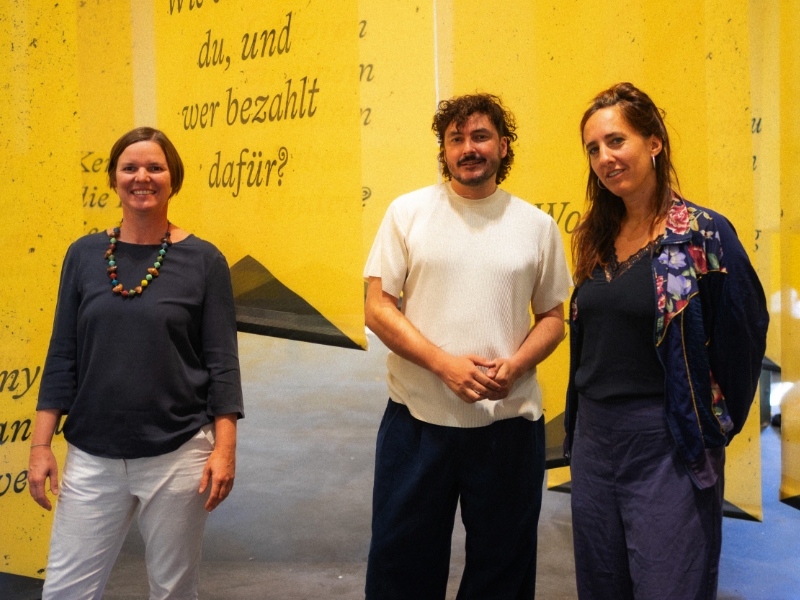
When we – Laura Perler, Mirko Winkel, and Carolin Schurr – began our adult lives in the 1990s and early 2000s, it seemed as though it was only a matter of time before reproductive rights became widespread throughout the world. Reproductive rights refer to human rights that guarantee all people the right to make free, self-determined decisions – without discrimination – about their bodies, their sexuality, and whether, when, and how many children they wish to have.
Today, however, we see that reproductive freedom – such as the right to abortion – have become the target of political attacks in many countries. Public debates on these issues in politics, the media, and society are becoming increasingly polarized. Through our research and our new exhibition and book project, “Atlas of Reproduction,” we aim to create a space for dialogue that facilitates nuanced, research-informed debates.
Researching reproductive inequities
It all actually began during those crazy weeks in the spring of 2020, when the Swiss Federal Council declared a state of emergency due to the COVID-19 pandemic. Businesses, schools, and universities were closed, and borders with all neighboring countries were subject to controls. The Swiss National Science Foundation (SNSF) extended the deadline for submitting project proposals in light of these extraordinary circumstances. We – members of the Social and Cultural Geography Group and the mLAB at the Institute of Geography at the University of Bern – were working on a research proposal titled “Reproductive Geopolitics.” The project focused on the question raised by Judith Butler – known worldwide for her influential works in the social sciences and philosophy – in the context of the global war on terror: “Whose life matters?” Or, looking to the future:
Whose future life matters? Who can hope for the support of society and the state in fulfilling their desire to have children? In short: Whose children are desired by society and the state? And whose are unwanted?
In this specific sociopolitical context, we had already developed the idea in our proposal to collaborate with artists within the research project in order to empirically capture the emotional and physical dimensions of intimate decisions beyond the spoken word. The proposal concluded with the prospect that we would present the results of the research and artistic work to the public in the form of an exhibition. But this seemed a long way off. First, the research had to be conducted in three different case studies in Switzerland, Spain, and Morocco, as well as in Mexico.
Reproductive Geopolitics
Our research project is situated within the field of feminist geopolitics, which examines how national and global policies affect people’s everyday lives.
Through the concept of “Reproductive Geopolitics,” we aim to demonstrate that the world of international politics and diplomatic relations between states is closely intertwined with the decisions made in bedrooms, delivery rooms, and hospitals; the supposedly intimate decisions regarding the desire to have children and childbirth, contraception and sterilization, pregnancy and abortion, birth, and family life.
Reproductive Geopolitics emphasizes the interplay between international and national policies in the areas of population, health, and migration and the intimate, everyday reproductive decisions. It examines which social groups are encouraged – and which are discouraged – to have children in the name of the future nation, and how much value is attributed to a (future) life within a nation. Reproductive geopolitics is negotiated at the borders of nation-states when it comes to the question of which people are allowed to cross those borders and which are not.
Exploring intimacy through multiple senses
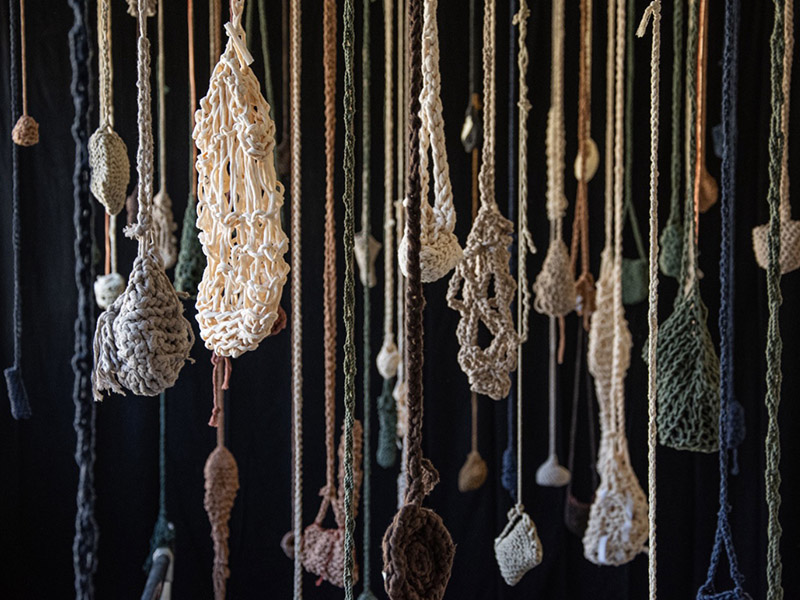
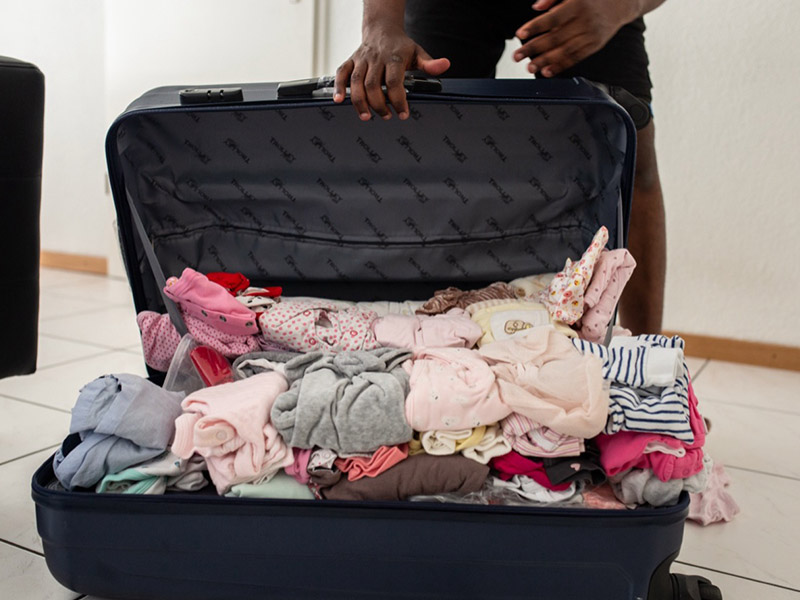
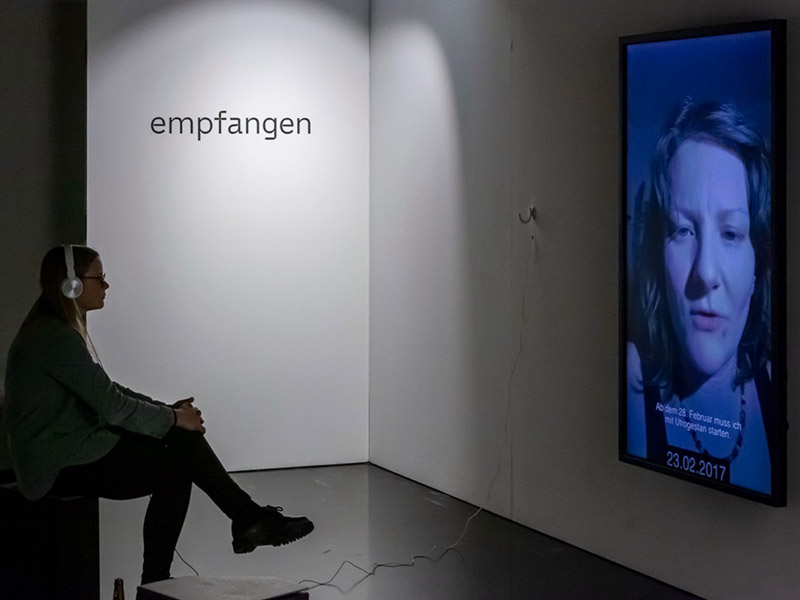
But how does one explore such intimate experiences as a long-awaited child, a sterilization, or an adopted person’s search for their birth mother? Over the past few years, we have established the mLAB at the Institute of Geography at the University of Bern, an experimental laboratory that brings together research, art, digital media, and science communication. Together, we have developed various methods at the intersection of feminist and participatory research and artistic practices. In Mexico, for example, women worked with artist Armando Zacarías in a workshop to crochet bags while discussing their experiences with sterilization; in Spain, Moroccan female farmworkers spoke in participatory workshops about their daily challenges of being able to care for their children only from a distance. And award-winning filmmaker Lisa Gerig has created a film installation based on interviews with refugee women who are housed in collective asylum shelters in Switzerland during their pregnancies.
The eight artistic installations on view in the exhibition bring the research findings to life in an immersive way. We hear the women’s voices, sighs, and breathing; see their living environments in photographs and videos; and follow them through the decision-making process leading to a termination of pregnancy.
Contributing to public debates on reproductive justice
The exhibition offers insights into the reproductive decisions and life stories of people in a wide variety of countries. Our research has much to contribute to current sociopolitical debates – regarding attacks on the right to abortion, the ethical limits of the global surrogacy industry, and bans on international adoptions.
Thanks to the Swiss National Science Foundation’s Agora funding program – designed specifically for science communication – as well as numerous other grants and a collaboration with the Institute of Design Research at the Bern University of the Arts and the Kornhausforum Bern, we have been able to bring the idea of an exhibition to life over the past few months. The exhibition combines photographs, videos, audio pieces, spatial installations, and maps to link personal stories with transnational politics.
It creates spaces for dialogue between research, art, and the public to facilitate a nuanced societal discussion on reproductive rights.
A diverse accompanying program featuring themed guided tours, workshops, a Living Library, a lecture-performance, a role-playing game, and a book launch delves deeper into the topics. A special school program is designed specifically for young people and has already been booked by numerous school classes from the city and canton of Bern. At the closing event at the Polit-Forum Bern, we will discuss the research findings on the situation of pregnant women who are refugees with representatives from politics, government, and civil society. The accompanying program will conclude with a short film program at the Rex Cinema in Bern as part of the Global Science Film Festival. The exhibition opening will also feature the launch of the book of the same name, which combines essays on the exhibition’s themes with photographs and maps and is published by Seismo Verlag in German and English. We look forward to welcoming students, researchers, and staff from the University of Bern to the exhibition!
Information about the exhibition and accompanying program
Exhibition at the Kornhausforum Bern
The exhibition will be on view at the Kornhausforum Bern from September 4 to October 25, 2026.
Further information about the exhibition and accompanying program: http://atlas-der-reproduktion.ch/en
Book: Atlas of Reproduction – Babies, Borders, Geopolitics
Perler, Laura, Carolin Schurr, and Mirko Winkel, eds. 2026. Atlas of Reproduction—Babies, Borders, Geopolitics. Zurich: Seismo Verlag - Éditions Seismo - Seismo Press.
For more information about the book: https://seismoverlag.ch/de/daten/atlas-der-reproduktion/
Subscribe to the uniAKTUELL newsletter

Discover stories about the research at the University of Bern and the people behind it.
