
Equal opportunities
Thinking together about racism at universities
Racism affects the whole of society – including universities. At a conference at the University of Bern, scholars took a critical look at research and teaching in academia and provided some strategies for combatting racism.

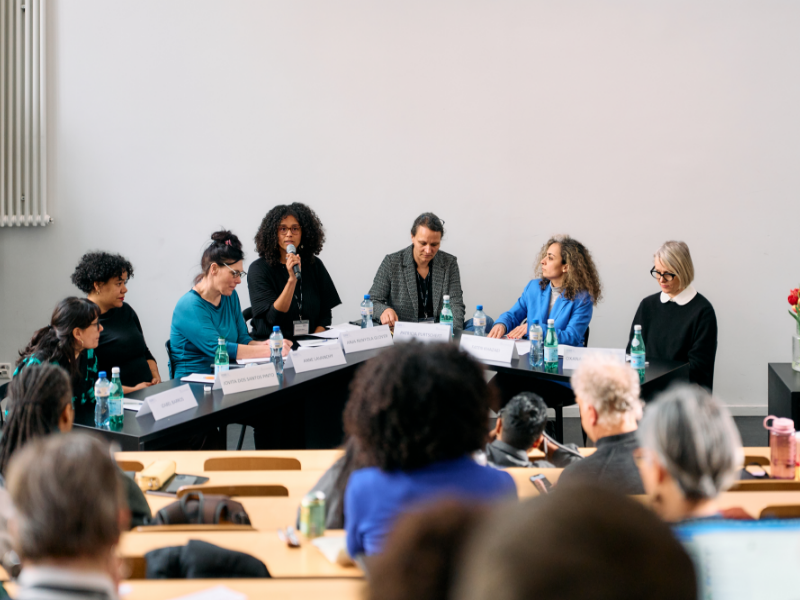
“Racism is a phenomenon that affects society as a whole, and educational institutions no exception,” Heike Mayer, Vice Rector of the University of Bern, made clear right at the start of the event. The Interdisciplinary Centre for Gender Studies (ICFG) at the University of Bern and its affiliated Gender Campus, together with various cooperation partners, hosted the “Racism and Higher Education” conference on March 27.
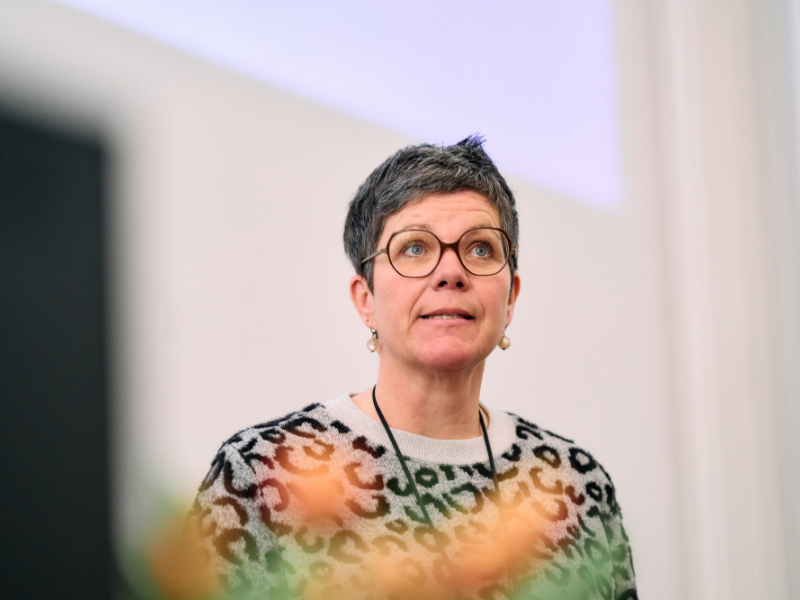
Over 200 people, many of them people of color, predominantly women, took the opportunity and attended the conference. “Science was and is always a place of criticism, countercurrents and calls to rethink the status quo, and the development of fairer, more equitable standards,” Heike Mayer continued to explain to the audience. She was therefore delighted that this conference was taking place at the University of Bern. It was one of the first universities to create a position explicitly for the topic of racism: for example, there is an established contact and advice center, prevention and awareness-raising measures. While these steps are important, they are not the goal but part of an ongoing process.
Patricia Purtschert, co-director of the ICFG, also placed the conference in a larger context. The conference is part of the cooperation project “Bildungsräume transformieren” (transforming educational spaces) (see box), which is funded by swissuniversities. There are many reasons why we are overdue an analysis and discussion on the historical continuities and strategies to combat racism at universities – and to take action.
Cooperation project “Bildungsräume transformieren” (transforming educational spaces)
The conference “Racism and Higher Education” is part of the cooperation project “Bildungsräume transformieren: Rassismus angehen, Intersektionalität verankern” (transforming educational spaces: tackling racism, anchoring intersectionality), which is funded by swissuniversities. Cooperation partners of the University of Bern are the University of Lucerne, the universities of applied sciences and arts Western Switzerland (HES-SO) and Northwestern Switzerland (FHNW) as well as the Bern University of Applied Sciences (BFH).
The aim of the project is to promote equal opportunities at Swiss universities by developing systematic approaches to combating racism and anchoring intersectionality (the equating of racism with other forms of discrimination and exclusion such as sexism, homophobia, classism or ablism) in teaching and everyday university life. The results of the conference will be published in the form of a booklet.
“For example, students repeatedly report lectures at Swiss universities in which racist examples are used,” says Patricia Purtschert. There are also numerous structural links between racism and universities, for example, racial research was carried out in Geneva and Zurich well into the 20th century. Also, in contrast to the population, the majority of teaching staff are white.
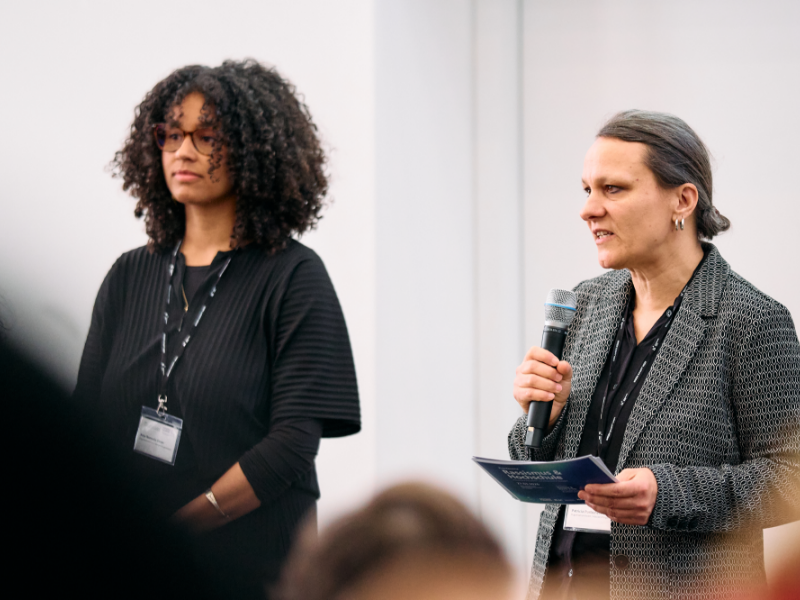
Historian Izabel Barros, a doctoral student at the University of Lausanne, kicked off the presentations by putting things in historical perspective. She presented her ongoing research on two enslaved women, Rosa and Teresa, on the Fazenda Victoria in Brazil, which belonged to two Bernese patricians, Gabriel von May and Ferdinand von Steiger, in the 19th century. Izabel Barros made explained that the after-effects of slavery are still visible today, for example in that enslaved people were given the surnames of their enslavers.
Izabel Barros' research is part of a larger project that demonstrates how the Eurocentric perspective can be broadened. This broadening of perspectives is based on the close collaboration between researchers from Switzerland, Brazil, India and Lesotho, which is a central aspect of the project. The project gives all participants – especially those from the Global South – access to sources on other continents.
Object instead of subject
Historian and cultural scientist Jovita dos Santos Pinto, a doctoral student at the University of Bern and research associate at the University of Lucerne, analyzed the production of knowledge in the “postcolonial moment”: The moment when the general public in this country acknowledged that Switzerland has a colonial history. This has led to numerous exhibitions on this topic in Switzerland in recent years.

Jovita dos Santos Pinto then used research and exhibition projects to show how colonial patterns such as epistemic silencing or dehumanization can continue to have an effect under new premises. She illustrated this with photographs, for example of a black man with scars on his naked back – the result of whipping. Nothing more was revealed about him; he did not tell his story. This and other examples showed that black people primarily appear as objects, while white people remain the protagonists.
Over-problematized and underrepresented
Faten Khazaei, Assistant Professor of Sociology at Northumbria University in England, highlighted the paradox of Muslim women in her presentation. “They are hyper-visible as a ‘problem’ for society, the public and politics – and invisible as producers of knowledge,” she said. She emphasized that she was speaking today as an academic who has been working on racism, migration and knowledge production for years, but also from personal experience in the academic world: as a migrant, labeled as a “Muslim woman,” who came to Switzerland from Iran in 2007 and now works in the UK.
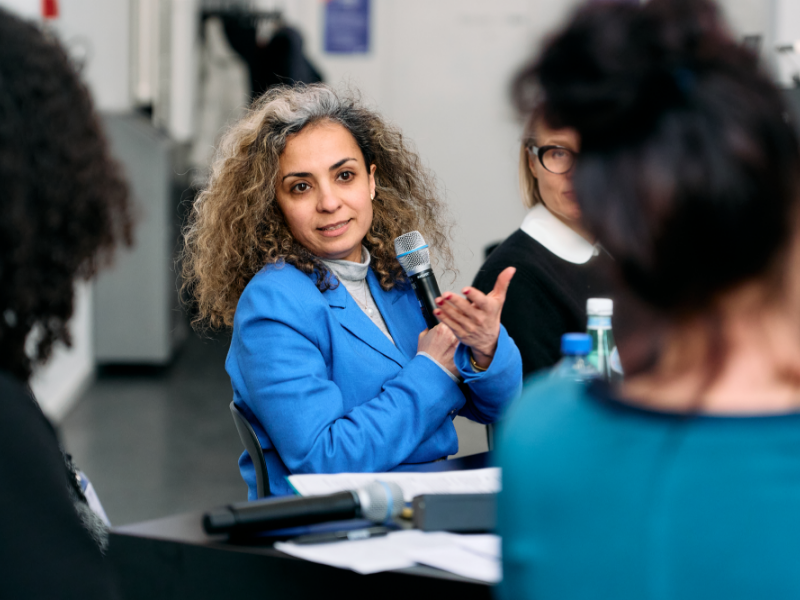
Faten Khazaei went on to show how universities do position Muslim women as case studies, for example, as representatives or symbols – but rarely as authors of theory or as agents of institutional transformation. The sociologist shed light on the background of the phenomenon and named various approaches for changing this; for example, the recognition of lived experience as theoretical knowledge, the fundamental revision of curricula or the critical reflection of institutional power structures.
Finally, Faten Khazaei returned to the question that had been a recurring theme throughout her presentation: “Am I a Muslim?” And she concluded: “I leave you with this question – as an invitation to think about what the implications of this category are, who it serves and what it would mean to think without it.”
Incorporating diverse perspectives
“Wer denkt die Schweiz?” (who thinks Switzerland?) This is the title of a book presented by Anne Lavanchy, Head of the Institute of Social Work at the HES-SO University of Applied Sciences and Arts Western Switzerland, which is due to be published in 2026. The starting point was the think tank “Die Schweiz denken” (thinking Switzerland), whose goal it is to inform political and institutional decision-makers about findings from social science research.
When Anne Lavanchy joined, she realized that the think tank's perspective was very dominantly “white.” This gave rise to the motivation to write a collective manuscript – a joint discussion between academics with different professional and personal experiences in terms of skin color, nationality or academic career. “This enables critical reflection on the role of whiteness in academia,” said Lavanchy. The authors also develop concrete recommendations to initiating institutional transformation processes.
The struggle for legitimate knowledge
Oxana Ivanova-Chessex, senior researcher and lecturer at the Zurich University of Teacher Education, shed light on the special role of universities of teacher education, which have to orient themselves more strongly than other universities to the expectations and needs of the cantons and where it is decided what should actually be taught in schools. “Universities of teacher education can be read as places of struggle over what constitutes legitimate knowledge and over hegemonic orders of knowledge,” said Oxana Ivanova-Chessex. This struggle is condensed in the question of what knowledge can be considered pedagogically legitimate, practical and scientific.
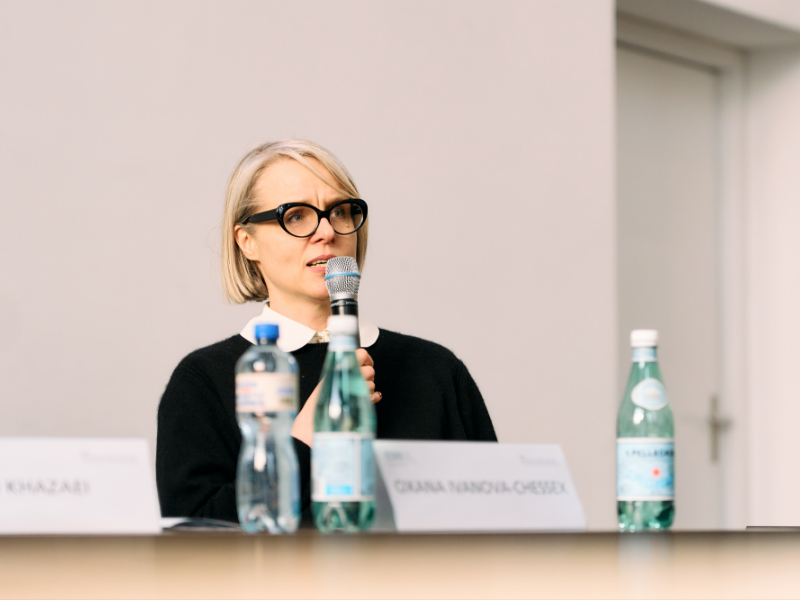
She illustrated this struggle, for example, with an open letter from the "Kollektiv Kritische Lehrpersonen" (Critical Teachers Collective), which is addressed to twelve universities of teacher education and calls for a racism-critical curriculum, among other things. Using the Zurich University of Teacher Education as an example, she analyzed the reactions to this open letter. The institution has not yet officially commented on the letter in detail. The open letter could be read as an intervention that upsets the existing knowledge systems and damages the institutional reputation. The management and some lecturers responded to this destabilization with stabilizing practices; this is a recurring pattern. “Perspectives that criticize racism are often devalued as threatening to the organization, as being incompatible with practice or as not being sufficiently scientific knowledge.”
A painful topic
The event ended with a panel discussion in which the speakers discussed questions from the audience, looked back on what they had heard and looked to the future.
At the end of the event, the two co-organizers Patricia Purtschert and Anja Glover also took stock and summed up the event, very positively: “This is the first time in Switzerland that such a large conference has been held in this form to think specifically about racism and universities,” emphasized Anja Glover, project manager at the ICFG.
Patricia Purtschert also saw the conference as an important step. “The conference showed that we in Switzerland have now also developed an approach and a language to talk about the topic of racism that we can use to ask questions about science in a very complex and precise way even from within science.” It is about how we teach, who can research which topics, who is the subject of science and who is only ever seen as the object of research, as Faten Khazaei shows with the example of Muslim women.
Anja Glover added: “The topic is deeply embedded in social and institutional contexts – and that is precisely why it is so painful.” Many of those present today have been directly and negatively affected by racism. It was therefore all the more important to be able to create and maintain a space in which this debate was possible and complexity was not hidden, but rather addressed. “We did not stop at a superficial discussion about diversity at universities, but were able to focus on questions of power, structure and responsibility–- and thus were able to take a step towards actual transformation.”
About the person

Anja Glover
has a master's degree in sociology and cultural studies and has been working as a project manager at the Interdisciplinary Centre for Gender Studies (ICFG) at the University of Bern since 2025.
About the person
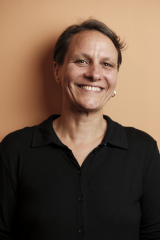
Prof. Dr. Patricia Purtschert
is professor of gender studies and Head of the Interdisciplinary Centre for Gender Studies (ICFG).
Podcast Missing Chapters
The podcast “Missing Chapters” is available on all platforms where podcasts are available and accompanies the cooperation project “Bildungsräume transformieren: Rassismus angehen, Intersektionalität verankern“ (transforming educational spaces: tackling racism, anchoring intersectionality). Each episode is dedicated to a certain topic related to racism-critical knowledge production, institutional responsibility and opportunities for change.
More information: https://www.gendercampus.ch/en/news/news/podcast-missing-chapters
Subscribe to the uniAKTUELL newsletter

Discover stories about the research at the University of Bern and the people behind it.