
Prix Lux 2026
Pursuing inclusive excellence
The Institute of Ecology and Evolution has received the University of Bern’s Prix Lux 2026. The prize recognizes its inclusive recruitment process, which brings a wider range of perspectives into the selection and aims to ensure that all candidates have equal access and fair opportunities, regardless of any privileges they may have.
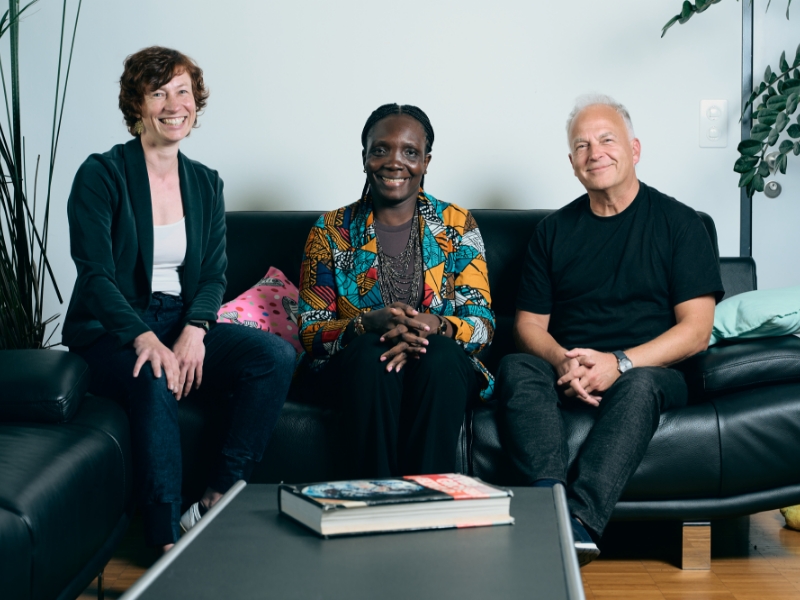
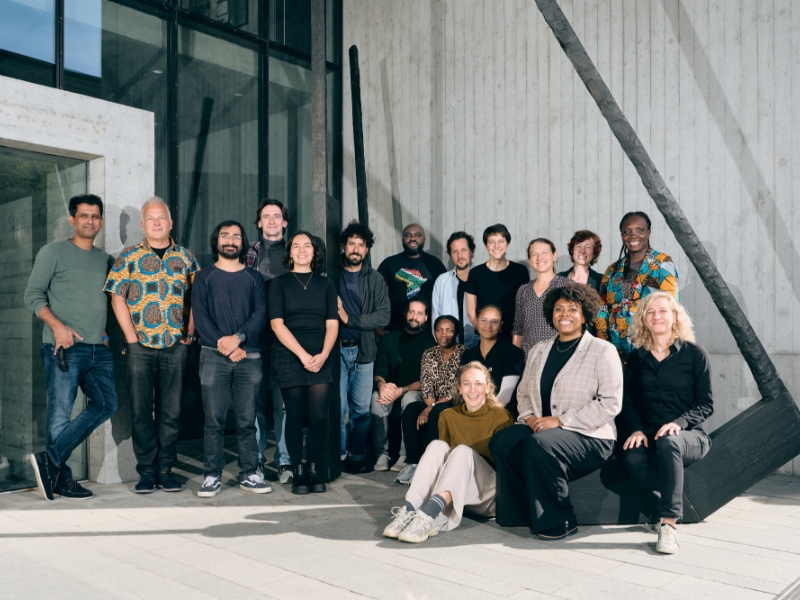
For two professorships, the Institute of Ecology and Evolution (IEE) at the University of Bern redesigned its appointment procedure. The Institute used a wide range of instruments to make the appointment procedures more participatory and inclusive, from bias training for committee members and additional assessment criteria to externally moderated selection meetings in which, alongside professors, several early-career researchers also took part, with the same decision-making and voting rights.
The result is a toolbox (see box) from which other institutes or faculties can adopt and adapt individual elements or all of them. This was only possible thanks to the collaboration within the six-member core team and with many supporters at the Institute. Prix Lux winners Claudia Bank, Margaret Owuor and Ole Seehausen from the IEE talk about their experiences with these tools.
Congratulations on winning the Prix Lux equal opportunities prize! What made you redesign the appointment procedure for two professorships?
Ole Seehausen: We realized that we are not particularly good at hiring inclusively and representatively. We all tend to have unconscious biases, which is why women’s chances of being appointed to a professorship are still not the same as men’s. And the chances of people who are not white are even lower. There are so many filters through which we look at candidates. We are not very good at removing these filters and arriving at a fair comparison between candidates. The tools we have introduced are steps in an ongoing learning process to become fairer and more inclusive.
Which of the instruments in your toolbox do you consider the most effective?
Margaret Owuor: What stood out for me was the willingness of those involved to engage seriously with discrimination and inclusion and to attend a two-day training course for this purpose. Because it is not an easy topic. This training was central and gave us the skills we needed to assess the candidates as free from bias as possible. That is why we decided that only members of our Institute who had attended the training could take part in the appointment procedure. It was not an easy decision, but a necessary one.
“This prize is an opportunity to start a conversation about how appointment procedures should be carried out or improved.”
Margaret Owuor
Claudia Bank: In my view, a small change in wording was also decisive: Normally, you look for the person who “fits” best. Instead, we looked for the best “addition”. This can take the form of experience, personality, scientific approaches or cultural background, for example. And this change in wording makes an enormous difference, because an addition can and should expand what already exists. I would recommend this wording to every appointment committee.
Ole Seehausen: Another key element for me was the new, third category of candidates. In the so-called Lausanne model, applications from women and men are evaluated separately in a first selection round in order to counteract unconscious bias and to do more justice to different life experiences. In addition, we looked separately at a third group of women and men with far fewer economic and academic privileges, in order to compensate for structural distortions that would otherwise be almost unavoidable. Because you cannot directly compare the careers of scientists in Central Africa, for example, with those in Western Europe or North America. Fewer privileges lead, for example, to less research funding, less research time and fewer publications, and that has to be taken into account.
What difference did this third, opportunity-based category make?
Ole Seehausen: A very big one! On our shortlist, we had highly qualified people with very different backgrounds and a similar number of top candidates from the three groups, without a quota being applied after the first selection round. We had never achieved that in any of the many other appointment committees I have been involved in.
“We are hiring people we will be working with for up to 30 years. Where in academic self-governance would our time be better invested?”
Claudia Bank
Claudia Bank: The assessment sheet, which included many different categories, certainly contributed to this as well. In most appointment procedures, the discussion focuses mainly on “scientific excellence” as the hiring criterion; indicators for this include scientific output or success in acquiring third-party funding, both of which are very strongly influenced by differences in privilege. In addition, a professorship is such a multifaceted job that skills such as teaching expertise are also very important. If you take these into account as well, other candidates automatically come into focus. For example, women, who in my experience are more often active in science communication, or researchers from less privileged backgrounds, who seem to be more frequently involved in supporting early-career researchers, for example through mentoring programs. If we look at potential holistically, we find the people we want to hire as professors and who will enrich our working environment.
What would you recommend to other institutes that want to take a similar path?
Ole Seehausen: I believe that we would not have implemented this recruitment procedure so consistently without an external evaluation of our department a few years ago. One member of the evaluation team had personal experience of racism and was able to talk with staff affected by racism in a safe space meeting. The participants in this meeting were able to speak openly about their experiences of racism in the department. We held another safe space meeting for women and members of the LGBTQ community. The resulting recommendations from the evaluation team to the department prompted the formation of a DEI committee, which developed the foundations for more inclusive hiring processes. So my recommendation would be: Have yourselves evaluated by people who know different forms of discrimination, such as racism, homophobia or sexism, from their own experience, and provide safe space meetings for this, which only those affected may attend.
Claudia Bank: “That’s a lot of work,” we were told. But my thinking is: We are hiring people we will be working with for up to 30 years. Where in academic self-governance would our time be better invested?
Margaret Owuor: I don’t want to give advice, but rather share an observation: Issues around discrimination and inclusion are emotional and sensitive, and you cannot force them on anyone. It takes the willingness of each individual to engage with them.
Where could your toolbox be improved further?
Claudia Bank: I would like the Executive Board of the University to take a look at our toolbox and make it available to recruitment committees, so that, for example, the DEI training, the standardized assessment sheet or the external moderation of committee meetings can be incorporated into future recruitment processes.
“Have yourselves evaluated by people who know different forms of discrimination, such as racism, homophobia or sexism, from their own experience, and provide safe space meetings for this, which only those affected may attend.”
Ole Seehausen
Margaret Owuor: I think committee members who themselves belong to a marginalized group need more support. I was often the only Black person on the appointment committee. At times it was distressing to listen to discussions among colleagues when they talked about candidates from the Global South and, for example, questioned their qualifications. If you have experienced racism and discrimination yourself, this is triggering. At the same time, there is no one to talk to who knows racism from their own experience. So some form of counseling or psychological support for those affected would be needed.
What does this award mean – for you and for the University as a whole?
Ole Seehausen: It’s nice to receive this recognition – especially because it was a difficult process. At the University, diverse lived experiences are still underrepresented at leadership levels. I therefore hope that this recognition will give fresh impetus to more inclusive hiring processes.
Margaret Owuor: This recognition is great for the Institute and the University as a whole, as a way to learn and integrate new things. Because it is an opportunity for colleagues to approach us and so start a conversation about how appointment procedures should be carried out or improved.
Claudia Bank: I also see the prize as an opportunity to make our toolbox known at the University of Bern. But the main reward for our efforts is that we were able to fill the professorships with two fantastic new colleagues. I’m very much looking forward to them joining us next February!
Prix Lux

The University of Bern’s “Prix Lux” is being awarded for the 10th time this year. It recognizes commitment to equal opportunities in the areas of racism, gender, social origin, sexual harassment, disability and chronic illness, sexual orientation, migration experience or age. The measures recognized should stimulate discussion on gender equality and equal opportunities issues, be innovative, original and sustainable, and have transfer potential. This year’s Prix Lux will be presented to the winners on December 16 at 6:15 p.m. in the Main Building of the University of Bern. The next call for nominations for the prize will be in April 2027. Groups and smaller or larger units committed to equal opportunities at the University of Bern can be nominated for the prize.
Toolbox for inclusive recruitment
Assessment criteria and scoring:
e.g. Explicit question about the “addition” (culture add) to the Institute: What additional perspective, skills or experience does the candidate bring?
e.g. Extended assessment criteria such as scientific contribution and impact, commitment to the institution, potential to enrich the Institute’s community and culture, contribution to diversity, equity and inclusion (DEI) through research, teaching, engagement or personal experience, teaching potential and mentoring.
Proactive search:
Active search for potential candidates from underrepresented groups. Job advertisements also published on channels for and by minorities and underrepresented groups.
First selection:
e.g. Separate categories for candidates who grew up in regions with comparatively few academic and economic opportunities, as well as one category each for women and for men from academically and economically relatively privileged regions. In the first selection round, candidates were assessed separately within these groups. Each committee member was assigned applications from each of these categories for assessment.
Committees:
e.g. The Institute committee, which initially evaluated the roughly 200 applications, was made up of professors, mid-level academic staff and early-career researchers. All had equal voting rights.
e.g. All Institute members of the various committees completed a two-day DEI/anti-bias training course. The members of the faculty committees were also invited, and many took part.
e.g. The full-day decision-making discussion in the first evaluation round was led by a trained, neutral moderator, with the aim of ensuring that every voice was heard.
Interviews:
e.g. The interviewers used a pre-agreed set of structured questions that was identical for all candidates.
Support for candidates:
e.g. Name tags showed names and roles to help all participants find their way, especially those unfamiliar with our university system.
e.g. Candidates could view the interview rooms the day before.
e.g. Travel, accommodation and visa costs were covered; international candidates were met in person on arrival.
Prof. Dr. Margaret Owuor
About
Prof. Dr. Margaret Owuor is Professor of Integrative Biodiversity and Conservation Science. She is a conservation ecologist with a strong background in freshwater, coastal and marine ecosystems. Her professorship at the Wyss Academy for Nature is affiliated with the Institute of Ecology and Evolution at the University of Bern. In her research, Prof. Dr. Margaret Owuor focuses on nature’s benefits to people and the conservation of biodiversity.
Prof. Dr. Ole Seehausen

About
Prof. Dr. Ole Seehausen is Professor of Aquatic Ecology and Evolution at the University of Bern, Institute of Ecology and Evolution (IEE), and at Eawag, Department of Fish Ecology and Evolution. He studies how biodiversity arises, is maintained and is lost. His research group investigates this mainly in fish in Africa and the Alpine region, combining methods from ecology, behavioral biology, genetics and genomics. For many years, Ole Seehausen has been committed in research, teaching and institutional work to greater inclusivity, better representation and the fight against structural discrimination.
Prof. Dr. Claudia Bank
About
Prof. Dr. Claudia Bank is Professor of Theoretical Ecology and Evolution at the University of Bern. Using theoretical models and genetic analyses, she investigates how ecological and evolutionary processes are linked. Her focus is on the role genetic interactions play in speciation and in the adaptation of organisms to a changing environment. Since arriving at the University of Bern in 2020, she has been committed to equal opportunities and the Better Science Initiative.
Subscribe to the uniAKTUELL newsletter

Discover stories about the research at the University of Bern and the people behind it.