
Political science
Pre-franked voting envelopes as a nudge
Voting by post is a popular choice, and pre-paid postage makes it even more convenient. However, a study by Alina Zumbrunn and Pierre Lüssi from the Institute of Political Science at the University of Bern shows that having enough letterboxes is just as important.
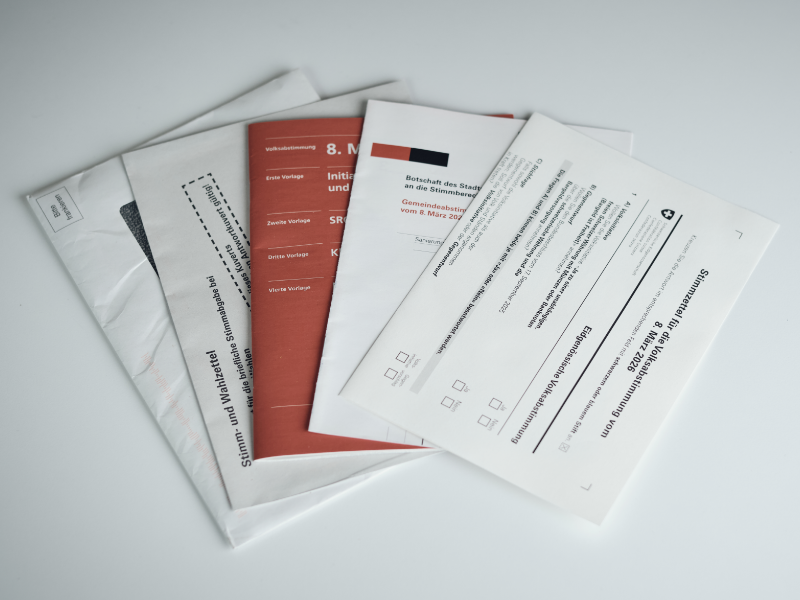
Whether at the federal, cantonal or municipal level, Switzerland is in a permanent election and voting campaign. Every year, the Federal Council sets aside four Sundays to decide on national initiatives and referendums. In addition, there are countless proposals to be voted on at the cantonal and communal level and, of course, elections that affect the executive and legislative branches as well as the courts, school authorities and the management of local civic communities.
Eight years ago, French political scientist Laurence Morel discovered that between a quarter and half of all direct democratic ballots worldwide to date have taken place in Switzerland.
Documents also end up in waste paper
However, participation in votes often leaves at lot to be desired. A rate of 78.7 per cent, as in the memorable EEA referendum on December 6th, 1992, is an absolute rarity. Ten per cent of voters consistently throw their voting papers to the bin, while on average only 45 per cent of the electorate cast their ballot. "This figure belies the fact that the vast majority of people who are eligible to vote do go to the polls and vote," says Alina Zumbrunn, adding that ten per cent miss not even a single chance to case their vote. "This means that 90 per cent take part in the votes, even if not every time," explains the scientific collaborator at the Institute of Political Science at the University of Bern.
Together with her colleague Pierre Lüssi, she published a paper in 2025 in which they investigated how the pre-franking of election documents influences participation in the ballot. It quickly became clear that it helps if voters don't have to buy a stamp themselves. However, the free postage does not appear to always be enough.
A patchwork federation
Do all cantons have such pre-franked envelopes? No, today 15 cantons regulate pre-paid postage themselves; eleven prescribe it and four prohibit it. In the eleven remaining cantons, it is up to the municipalities to decide for themselves whether they want to pay for the postage of election mail – federalism in its purest form.
Zumbrunn and Lüssi' therefore had a lot of work to do for their study: they enquired with 2131 Swiss municipalities. 89 per cent gave answers about postage. The duo combined this information with data from the Federal Statistical Office on voting statistics for national proposals that were put to the vote between 2005 and 2023.

The bottom line of the evaluation was that up to three per cent more people take part in the democratic process if the state or municipality pays the postage. "However, the increase doesn't happen overnight. It takes four or five years for the increased participation rate to become stable," explains Pierre Lüssi. The political scientist became aware of the issue when he was preparing a teaching seminar on direct democracy and realised that there were hardly any studies on the issue of pre-postage.
More about the study
The study analyses all national direct-democratic votes in 1893 Swiss municipalities from 2005 to 2023 and shows that prepaid postage increases voter participation, though with a time delay. The effect is reversed when pre-franking is abolished and is stronger in municipalities with more letterboxes and greater distance from the municipal centre. Prepaid postage thus proves to be a context-dependent, not universally effective measure.
However, the increase in participation is not the same in every municipality. "We find particularly striking effects in large, sparsely populated municipalities. The distance to the municipal centre in such municipalities is great, so the incentive to hand-deliver the envelope is correspondingly small. Pre-franked envelopes, on the other hand, are convenient to post," explains Alina Zumbrunn.
The effect of prepaid postage is also more clearly recognisable in cities with a population of 25,000 or more. "Here, there is a post box at every street corner, which makes posting easy thanks to the free postage." The city of Bern is expected to reintroduce pre-postage from the vote in November 2026.
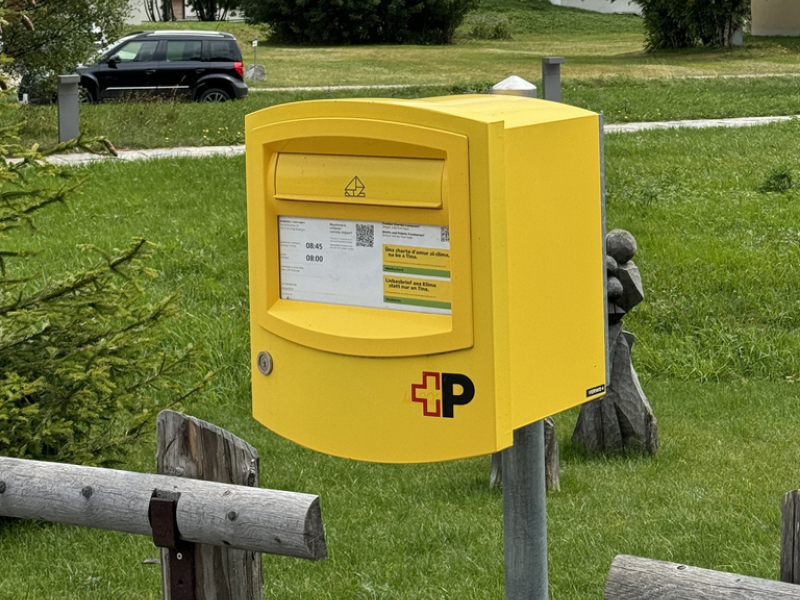
Hardly any effect can be demonstrated in small communities. This is because the distance to the municipal letterbox is generally short here. Zumbrunn: "Such municipalities probably ask themselves whether the additional costs for the pre-franking would be better spent on other measures to increase voter turnout." Example of such measures could be political education programmes in schools or public debates before voting and election dates.
Lower hurdle for political participation
Having the state cover the postage for returning the completed voting documents saves voters only a few francs per year. According to Alina Zumbrunn, financial considerations are therefore hardly the deciding factor for casting a vote, but rather convenience. In any case, pre-franking should not just be a cost-benefit discussion, but also a question of what the state sees as its contribution to strengthening democratic participation, says Pierre Lüssi.
Subscribe to the uniAKTUELL newsletter

Discover stories about the research at the University of Bern and the people behind it.
In the early days of the introduction of postal voting, which Ticino was the last canton to introduce across the board in 2005, the focus was on enabling sick people and those with limited mobility to vote. "Originally, you often had to apply for a postal vote. Only later was this made possible for everyone across the board."
Pre-paid postage also acts as a nudge: anyone who is hesitant to cast their vote on a proposal that is less important to them will find it easier to decide to vote thanks to the postage paid.
Pre-paid postage is a public service
Pre-paid postage is therefore a kind of public service that makes it easier for voters to participate in the democratic process. It is also a sign of appreciation towards the politically interested population. Even before this convenience has been introduced across the board, the first municipalities and cantons are already working on e-voting trials to make it even more convenient.
Reliable figures on the impact of e-voting on the response rate are still lacking. "But even this simplification will not boost voter turnout to 90 per cent," Lüssi is certain. This is because it requires trust in the technology and a period of familiarisation. And more important than any technical assistance is understanding the political processes and taking the time to follow the debates. Lüssi: "Someone who is not interested in politics will simply not bother voting."
About the person

Dr Alina Zumbrunn
is a scientific collaborator at the Professorship of Political Sociology at the Institute of Political Science, University of Bern.
About the person

Dr Pierre Lüssi
is a scientific collaborator and lecturer at the Professorship of Swiss Politics at the Institute of Political Science at the University of Bern.