Universe
“I believe we can all be proud of the NCCR PlanetS”
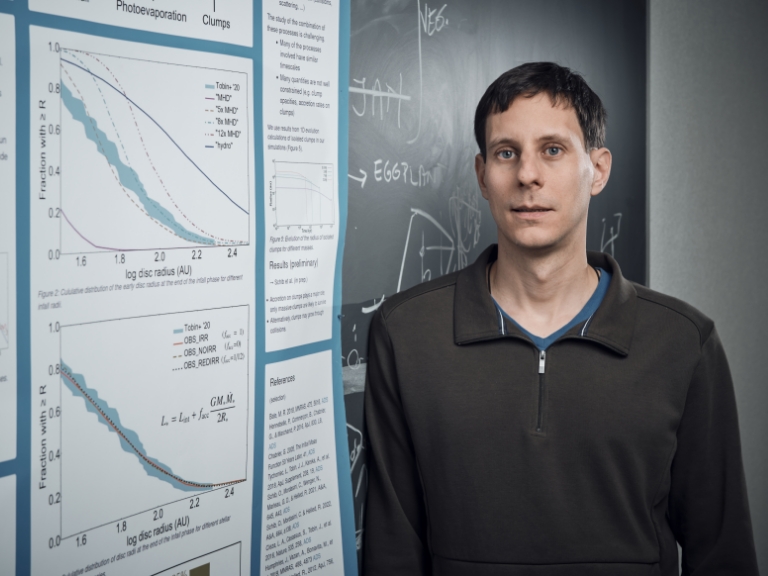
After twelve years, the National Center of Competence in Research (NCCR) PlanetS came to a close at the end of May. Its director, Nicolas Thomas, looks back on the internationally acclaimed planetary research conducted at the Universities of Bern, Geneva, and Zurich, as well as at ETH Zurich, and introduces the follow-up project, SIPS.

Nicolas Thomas: What do you consider to be the greatest success of the NCCR PlanetS?
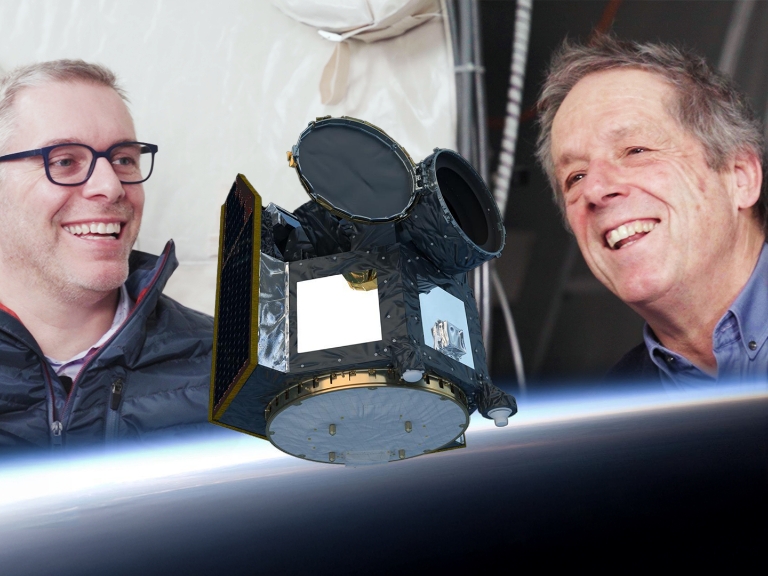
Nicolas Thomas: That’s hard to say, because the overall project has gone very smoothly. Over the past twelve years, we’ve published over 1,200 scientific papers. Picking just one or two would not only be difficult but also a bit unfair. One huge success, however, is definitely the CHEOPS space telescope, a mission of the European Space Agency (ESA) led by the Universities of Bern and Geneva in collaboration with ESA.
“Over the past twelve years, we have published over 1,200 scientific papers.”
- Nicolas Thomas
CHEOPS, short for CHaracterising ExOPlanet Satellite, was launched in 2019 and observes planets outside our solar system. What is the current status of the mission?
CHEOPS is still operational – a remarkable highlight for the NCCR, Switzerland, and European science. Furthermore, CHEOPS is influencing upcoming projects. For instance, we are involved in a proposal for a new ESA space telescope initiated by the Institute of Space Research in Graz, called WALTzER. We in Bern, together with Geneva, reached an agreement to collaborate with Graz relatively quickly. This was only possible thanks to the experience we gained with CHEOPS and the networks that emerged as a result.

Switzerland is among the world leaders in planetary research. Is there a recipe for success?
There have been extraordinary achievements throughout the NCCR PlanetS. One example is the fantastic numerical calculations and new models of planetary collisions from the University of Zurich. When we talk about highlights, however, it’s often not about a single scientific paper. Significant progress is often made when a new instrument is put into operation, such as the high-resolution ESPRESSO spectrometer in 2017, which was built under the leadership of the University of Geneva for the Very Large Telescope (VLT) in Chile. This made it possible to observe exoplanets with increasingly smaller masses. What particularly amazes me about this is that although progress often surges with new equipment, scientific improvements have generally followed an almost linear, steady trajectory through the history of the NCCR PlanetS. I suspect the recipe is a combination of talented researchers, carefully directed funding, institutional support, and emphasis on combining expertise across Switzerland.
A key objective of the National Research Priorities is to promote collaboration among the participating institutions. How is that going at the NCCR PlanetS?
It works extremely well. For example, here in Bern we’re supplying components for the next instrument being developed in Geneva for the new Extremely Large Telescope (ELT). And here in Bern we’re discussing new instruments for a Uranus mission – a project led by the University of Zurich. But it’s not just external partnerships that matter. The NCCR also facilitates collaboration within a university.

How does this internal collaboration work?
One example is the selection of the camera for the RAMSES space probe, which will observe the asteroid Apophis in 2029. It will fly past Earth at a distance of just 32,000 kilometers – right under our noses. We’ll be there, because the main scientific camera (CHANCES) is being developed at the University of Bern. The project is jointly led by an instrument specialist and a theorist who creates numerical simulations. Thanks to the NCCR, there are new connections, even locally, between the fields of numerical modeling, instrument engineering, and scientific data analysis.
Another camera built under your leadership at the University of Bern is delivering spectacular images of Mars. Is that also an NCCR PlanetS highlight?
We didn’t use much NCCR funding for the construction of the Mars camera CaSSIS, but we were glad to have the collaboration of NCCR doctoral students. CaSSIS is a huge success: over 60,000 images after eight years in orbit, and the camera is still working. We garnered particular attention when one of our images was re-tweeted by Elon Musk, and with a publication that attempts to explain why Mars is red. In addition to the CaSSIS data, we have used a laboratory at the University of Bern for this latter topic, which we had been able to upgrade with NCCR funds.

So part of the total 48.7 million Swiss francs that the Swiss National Science Foundation made available to the NCCR PlanetS was used for new equipment?
Yes, at ETH Zurich, SNSF funding enabled the purchase of a new mass spectrometer. This is used, for example, to analyze samples that space probes have brought back to Earth from asteroids. The study of this extraterrestrial matter is also a highlight of the NCCR PlanetS. The SNSF has also supported work at ETH Zurich on a concept for a giant interferometer in space. It is intended to eventually image Earth-like exoplanets – a very challenging project.
“It is important to me that our doctoral students and postdocs find the right place after completing their work.”
- Nicolas Thomas
What were the NCCR funds used for most?
Thanks to this financial support, we were able to hire a total of 112 doctoral students and 145 postdocs who are now working around the world – 76 percent of them in academia. Others have chosen to go into industry, and that’s a good thing. It’s important to me that our doctoral students and postdocs find the right place after completing their work. To that end, we’ve created a platform within NCCR PlanetS to provide the tools needed for job hunting. Another platform focuses on technology transfer and shows, for example, how to proceed if you want to further develop a device for the market and eventually start a company.
What about gender equality within the NCCR PlanetS?
We’ve created a platform for that as well and made progress. Among doctoral students, by the end of the NCCR 42 percent were women. Among postdocs and in leadership positions, the proportion is smaller. So we still have this leaky pipeline. Moreover, it’s not enough to simply improve gender quotas. The culture has to be right, and that requires constant, active attention.
“We’ve performed well in terms of research, finances, and personnel.”
- Nicolas Thomas
The NCCR PlanetS was initiated in 2014 by Willy Benz, then a professor at the University of Bern, and led by him over two phases spanning eight years. You took over the third phase – a difficult task?
The NCCR PlanetS was Willy Benz’s brainchild. The challenge of taking over the final phase of an NCCR is that you immediately have 30 to 40 percent less funding and must wrap everything up. Together, we tried to make the best of the available budget, even taking some risks with project funding. I think we did a good job. We’ve performed well in terms of research, finances, and personnel. I think we can all be a little proud of that. But of course, the end is also a bit sad.

The newly founded “Swiss Institute for Planetary Sciences”, or SIPS for short, is set to replace the NCCR. The universities of Bern, Geneva, and Zurich, as well as ETH Zurich, are again involved. What will change?
SIPS is an association. The bylaws have been drafted, and the board of directors and executive board have been appointed. SIPS is intended to maintain the key supporting infrastructures and networks. We need the platforms that were created within the framework of the NCCR PlanetS, and we hope that we will be able to find the funding for them – a few hundred thousand francs per annum is needed. However, SIPS cannot finance scientific projects. The funding for these should come from the usual sources, such as the Swiss National Science Foundation or the European Research Council (ERC). The current staff at the institutions are well placed to obtain these funds. We hope that with SIPS, we can continue the work of the NCCR PlanetS even without the resources we used to have.
About the person:
Nicolas Thomas has been a professor of physics at the University of Bern since 2003; from 2015 to 2022, he served as director of the Physics Institute. From June 2022 through the end of May 2026, he served as director of the National Center of Competence in Research PlanetS alongside co-director Stéphane Udry of the University of Geneva. Nicolas Thomas specializes in the study of objects in the solar system – such as Mars, Mercury, comets, asteroids, and the moons of Jupiter – using space probes.
Bernese space exploration: With the world’s elite since the first moon landing
When the second man, "Buzz" Aldrin, stepped out of the lunar module on July 21, 1969, the first task he did was to set up the Bernese Solar Wind Composition experiment (SWC) also known as the “solar wind sail” by planting it in the ground of the moon, even before the American flag. This experiment, which was planned, built and the results analyzed by Prof. Dr. Johannes Geiss and his team from the Physics Institute of the University of Bern, was the first great highlight in the history of Bernese space exploration.
Ever since Bernese space exploration has been among the world’s elite, and the University of Bern has been participating in space missions of the major space organizations, such as ESA, NASA, and JAXA. With CHEOPS the University of Bern shares responsibility with ESA for a whole mission. In addition, Bernese researchers are among the world leaders when it comes to models and simulations of the formation and development of planets.
The successful work of the Department of Space Research and Planetary Sciences (WP) from the Physics Institute of the University of Bern was consolidated by the foundation of a university competence center, the Center for Space and Habitability (CSH). The Swiss National Fund also awarded the University of Bern the National Center of Competence in Research (NCCR) PlanetS, which it manages together with the University of Geneva.
Swiss Institute for Planetary Sciences (SIPS)
The Swiss Institute for Planetary Sciences (SIPS) promotes and coordinates research, education and technology development in planetary sciences, covering the exploration of our Solar System and the expanding field of exoplanets. SIPS furthers the successful networking and community building activities of the National Center for Competence in Research (NCCR) PlanetS which was sponsored by the Swiss National Science Foundation.
The main bodies of SIPS act to coordinate the scientific activities across the association members, while 5 “technical platforms” (Science, Education and Equity, Technology and Innovation, Data and Computing, and Communication and Outreach) provide a range of high-level services to its User Community. The User community comprises over 250 users including scientists, students, engineers and support staff.
The activities of SIPS are aimed at having a strong societal and academic impact at the level of its institutional members, at national level, and at international level where a united Swiss position will provide a coordinated voice at the forefront of planetary sciences in one of the most exciting periods in the history of space exploration.
The SIPS association founding members will be the University of Bern, the University of Geneva, the University of Zurich and ETH Zurich.
Subscribe to the uniAKTUELL newsletter

Discover stories about the research at the University of Bern and the people behind it.