
Luxury tourism
"Gstaad needs luxury tourism"
Gstaad has a reputation as an alpine oasis for the rich. Ordinary mortals watch the goings-on with fascination and wonder. Tourism researcher Monika Bandi Tanner explains how Gstaad strives to strike a balance between luxury and accessibility.
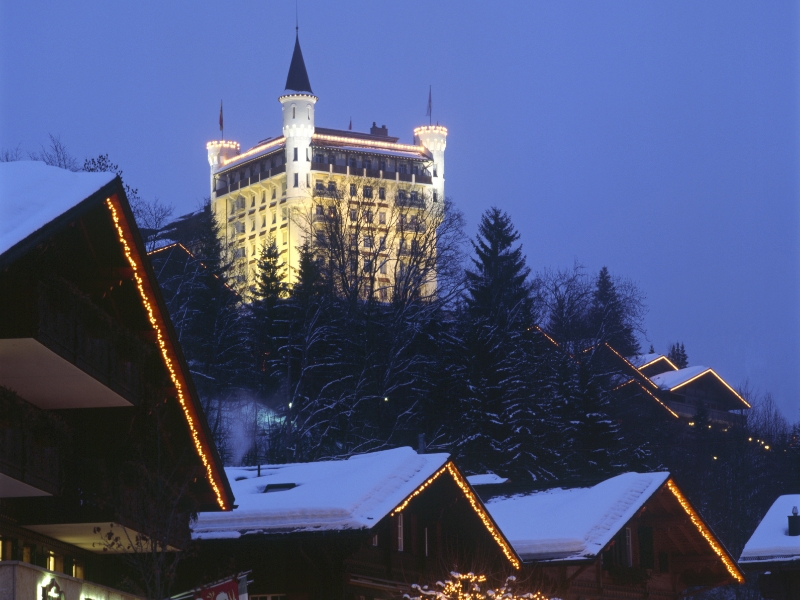
It would be an understatement to call some of the guests' wishes at the Hotel Gstaad Palace outlandish: a couple planning their wedding would like to feast on sinfully expensive caviar – but spread on pork sausage in batter, please. And the dog traveling with them is to be provided with only the tenderest fillet mignon is allowed. Cost: 1000 francs per week.
It's scenes like these in the documentary series "Inside Gstaad Palace" that leave you shaking your head. Despite all the strangeness, the world of the rich and famous in Gstaad still exerts a great fascination on ordinary people: the four-part series on Swiss television broadcasting corporation SRF about the famous five-star hotel in Gstaad reliably found its audience.
Monika Bandi Tanner took a closer look at the luxury destination of Gstaad from a scientific perspective. With the "Event Performance Index", the Bernese tourism researcher provided the Gstaad municipality of Saanen with a tool in 2016 for assessing the financial impact of cultural and sporting events and which became very respected throughout Switzerland. She has since become a member of the Board of Directors of Gstaad Mountain Railways and is now involved in the development of the popular location as a tourist destination.
Monika Bandi Tanner, media reports about Gstaad's high society in their chic hotel suites are popular. Why are we so fascinated by this?
Monika Bandi Tanner: This kind of tourism is a kind of counter-image of everyday life. Most people can hardly imagine, let alone afford, a world of luxury like the one in Gstaad. Those responsible for tourism in Gstaad know how to exploit this interest. They position Gstaad skillfuly. Media glimpses behind the scenes, such as in the SRF documentary "Inside Gstaad Palace", are helpful in this respect.
Would Gstaad prefer to only serve this luxury tourism segment?
No, this segment of guests is too small. Although Gstaad cultivates its image as a luxury holiday destination, those responsible for tourism are aware that the destination will only prosper if it remains affordable and attractive to a broad public. If this public no longer comes, the tourist infrastructure will also be used less – empty lifts and pistes are also a horror for tourism managers. It only costs money and brings little benefit.
Gstaad has the highest density of five-star hotels in Switzerland. Where can less well-off guests stay?
In 2014, a modern youth hostel opened its doors in the village. However, there is an increasing lack of three-star hotels. Efforts are being made to remedy this shortage with new construction projects. However, it is sometimes difficult to find operators with ideas for sustainable business models. Many holidaymakers are now moving to less glamorous neighbouring resorts such as Saanenmöser, Rougemont or Zweisimmen.
"Gstaad will only prosper if it remains affordable for a broad public."
Monika Bandi Tanner
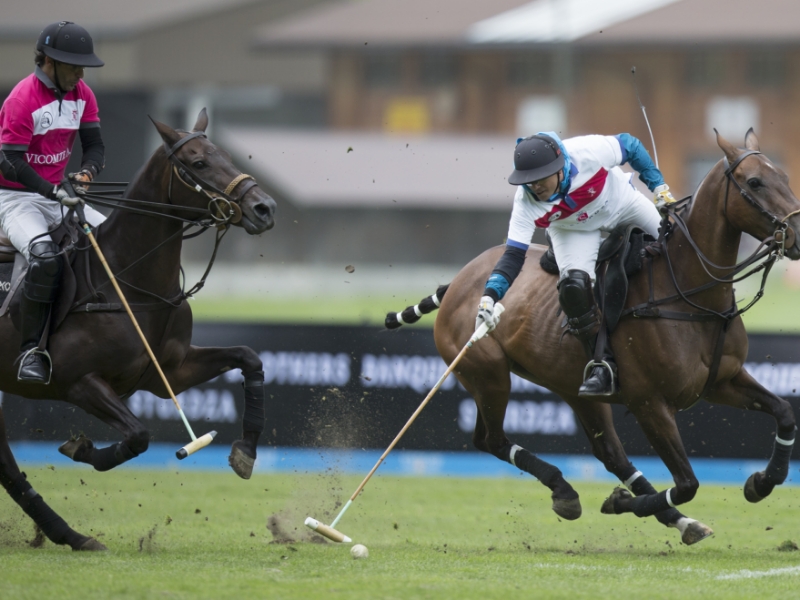
You have researched the impact of major events in Gstaad. It feels like luxury dominates here too, with events such as the Hublot Polo Gold Cup.
That's a one-sided view. There are some events that are aimed at the general public: there is an annual international volleyball tournament in July and a country music festival in September. The latter mainly attracts older country music fans from the region, while the volleyball tournament attracts a younger audience. The Polo Cup, on the other hand, is indeed aimed primarily at well-heeled spectators. At the same time, admission is free. The organisers do wish to have a mixed audience.
Why?
The population would not accept the wealthy guests walling themselves off from the rest for long, either at the Polo Cup or elsewhere. Tourism is a "people business". It doesn't work without different groups mixing and talking to one another. Before the start of the polo tournament, the riders and their horses parade through the village. The locals join in and accompany the procession with village music and schoolchildren.
How do the locals feel about this luxury tourism?
The relationship is ambivalent: on the one hand, people are critical about some of the excesses. Over the festive period, for example, there are regular traffic jams in Gstaad because the rich vacationers drive their car every metre rather then simply walking. This gets on the locals' nerves. On the other hand, they have always interacted with the rich guests as equals. The locals try to preserve and celebrate the regional identity of the Saanenland: they have a say, they are part of the organising committees of major events, for example.
Can ordinary people still afford to live in Gstaad?
Gentrification has long been an issue in Gstaad. The Gstaad Hoteliers' Association has been investing in affordable housing since the 1980s. Employees in tourism in particular would otherwise no longer be able to afford to live here. Unfortunately, people are still being forced out: anyone who works in Gstaad today and whose family does not already own a house often lives in the neighbouring village.
Would Gstaad be economically viable without luxury tourism?
No. Gstaad is too far away from the large population centres for major industries to settle there. Tourism with its specific positioning, on the other hand, brings numerous jobs to the village: 300 people work in the Hotel Gstaad Palace alone. Finally, the municipality of Saanen also benefits financially from the wealthy guests and the flat-rate tax on newcomers.
Magazine uniFOKUS

What do we really need?
This article first appeared in uniFOKUS, the University of Bern print magazine. Four times a year, uniFOKUS focuses on one specialist area from different points of view. Current focus topic: Luxury
What does that mean in figures?
The municipality's annual budget is around 100 million francs. Compared to other mountain regions, it is in a comfortable financial position. It has sufficient funds to renovate its airport or to improve the mountain railroad together with shareholders. At the same time, wealthy individuals and companies are very willing to co-finance such major projects. In this way, they create goodwill in the region and show their appreciation. At the same time, they themselves benefit from the good infrastructure.
Speaking of the airport: the polo tournament, for instance, sees horses being flown in from Argentina. Isn't luxury tourism incredibly wasteful from a sustainability perspective?
That is indeed a sore point, and not just in Gstaad. Cable cars, snow-making facilities, hotels – tourism is very resource-intensive. There are attempts to minimise the ecological footprint with initiatives such as the "Solarexpress" – a series of alpine solar plants in the Bernese Oberland. The challenge, however, is to translate sustainable awareness into sustainable action. There is a great danger of greenwashing when you make exaggerated promises.
Why don't other mountain regions simply copy the Gstaad model as a luxury destination?
Gstaad is a special case that cannot be transferred to other tourist destinations. The Saanenland has been marketing itself to the narrow luxury guest segment for around 100 years. The destination has the money to continue doing so, but also the image to match it.
You have been on the Board of Directors of Gstaad Mountain Railways since 2021. How do you differentiate yourself as a tourism researcher?
Since I became a member of the Board of Directors, I have no longer started any research projects with Gstaad alone. I'm no longer neutral enough to do research there. In order to maintain my credibility as a researcher, it is also important to have clear compliance rules: I do not undertake any contract research for the Mountain Railways. I also stay out of board business regarding which I could be biased because I know the people involved well from previous projects.
What is actually considered luxury in tourism?
There is no standard definition. What is considered luxury depends on the destination and its target groups. What can be said is that tourism is a phenomenon of prosperity and requires economic growth. In the past, only wealthy aristocrats and members of the military could afford to travel. This changed fundamentally with the advent of mass mobility in the 19th and 20th centuries. Suddenly, broad sections of the population had the financial means to travel far away by train, plane or car.
During the Covid pandemic, the tourism industry collapsed worldwide. Could travel become impossible for the general population again?
Tourism needs security, otherwise it won't work. As long as uncertainties remain local, this is not a problem from a global perspective. Then tourism simply shifts to other regions. Only when the uncertainty is global, as was the case during the pandemic five years ago, will there be a slump everywhere. In retrospect, however, even Covid was only a short-term dip. The need of modern people to travel is simply too great. Tourism will therefore remain a growth market in the long term.
About the person

Monika Bandi Tanner
has headed the Research Center for Tourism (FFT) at the Department of Economics at the University of Bern since 2012. She researches and teaches sustainable development, inter-company business models and tourism policy. The Executive Board of the University has appointed her titular professor with effect from 1 August 2026.
What is luxury for you?
"For me, luxury is enjoying the peace and beauty of an alpine hut in nature – all by myself."