Women in Leadership Roles
First Women & Leadership Conference at UniBE
On November 12, 2026, an international conference will be held for the first time, focusing on the challenges of leadership roles — especially for women. In an interview, initiator and co-organizer Kellie Gonçalves discusses the background and relevance of the event.
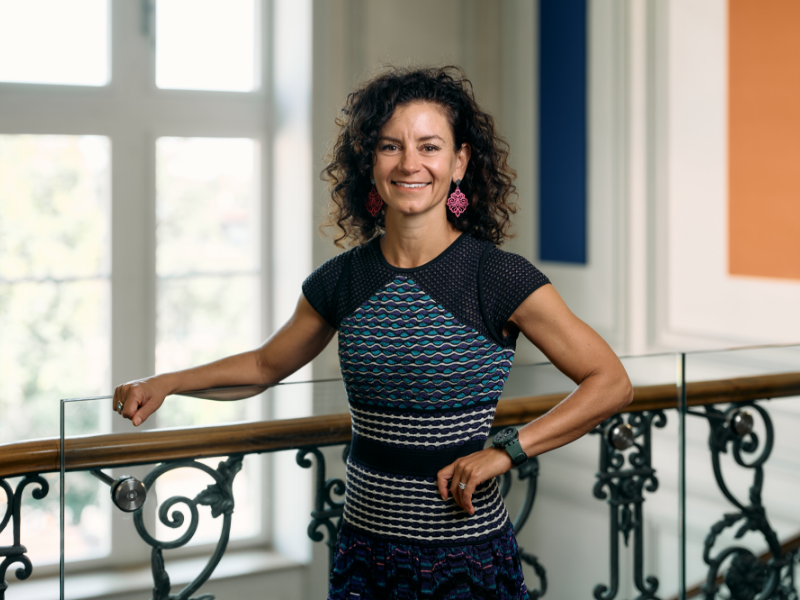
Kellie Gonçalves: Do we still need an event on the topic of “Women & Leadership” at the UniBE in 2026?
Unfortunately, yes. The numbers speak for themselves: in general, men still earn more than women, and in the academic context, despite the progress made in recent years, women remain in the minority among professors. Phenomena like “leaky pipeline” and “glass cliff” describe these structural inequalities: “Leaky pipeline” refers to the declining number of women as they advance further along the academic career path; “glass cliff” refers to the tendency to appoint women to leadership positions—specifically during times of crisis—where there is an increased risk of failure, which may consequently have a negative impact on their careers. Additionally, there is the challenge of balancing one’s career with family. With this conference, we want to encourage younger female scholars that motherhood and a successful career are possible and can be combined. There are in fact diverse paths to an academic career, and it doesn’t have to be an either/or situation.
What initially motivated you to organize a conference on the topic of “Women & Leadership”?
In addition to my research and teaching in sociolinguistics, I have been advocating for gender equality in academia for quite some time, particularly for the advancement of women into leadership positions. From 2017 to 2020, I conducted research as a postdoctoral fellow at a Center of Excellence at the University of Oslo. My workplace there was predominantly made up of women. Most of them held leadership positions, especially the senior female colleagues. I learned a great deal from them. I believe it’s important for early-career researchers to learn from more experienced colleagues about leadership and what it takes to become a successful leader. That was the impetus for two international workshops on the topic of “Women and Leadership,” which I organized at the University of Oslo in 2018 and 2019.
How did the idea come about of bringing the Oslo format to UniBE?
As part of UniBE’s “Coffee with Virginia Richter” event series, I met Elsa Callini, who works at the Innovation Office as a senior consultant for innovation and startups and founded an initiative there to promote diversity in the field of academic entrepreneurship. I saw her as the perfect co-organizer. Through her work in the Office of the Vice Rector for Research and Innovation, she brings a wealth of experience and knowledge in working with women in startups and entrepreneurship. I asked her if she’d be interested in working together on this and she was very enthusiastic: “Let’s do it.”
Going forward, should the conference take place every year?
We view this first edition as a pilot project and hope that the format will be welcomed at UniBE and held annually.
The “Emilie Jäger Prize” from the Faculty of Philosophy and Natural Sciences will be awarded at the conference. What is the significance of this award?
The “Emilie Jäger Prize” honours exceptional commitment to gender equality in science, academia, and education. The award ceremony links our conference to the University of Bern’s long-standing commitment to equal opportunities.
About the first Women & Leadership Conference
The conference will take place on November 12, 2026, at the University of Bern. This internationally oriented event brings together academics and the interested public to address the challenges faced by people of various gender identities—but particularly by women in leadership roles. Leaders from academia, business, tech, and entrepreneurship will share their experiences and reflect on gender hierarchies and equality. The conference promotes dialogue and offers networking and mentoring opportunities, particularly for the next generation of female and male researchers.
Visit the website: https://womenleadership.unibe.ch/
To register: Registration Women & Leadership Conference 2026
In your opinion, what are the biggest challenges women face today on their path to leadership positions at universities?
First of all, it is important that the support services available at universities become more visible and better known. Postdocs, in particular, are focused on their next position — conducting research, teaching, writing grant proposals, attending conferences, and publishing studies in international, peer-reviewed journals — which often leaves little time for actual career development. Yet there are excellent programs and initiatives at UniBE such as COMET or FELS. Many women aren’t even aware of them. Anyone aspiring to a leadership role should therefore actively seek out information and support; I believe that good leadership is something that needs be learned.
“Make yourselves visible!”
Kellie Gonçalves
Academic achievement lays the foundation, but it isn’t enough for a successful career. Equally important are aspects such as networking and mentoring, as well as a willingness to develop one’s own leadership skills. This is precisely where the conference aims to make a difference: by sharing knowledge, facilitating networking, and thereby supporting women on their path to leadership positions.
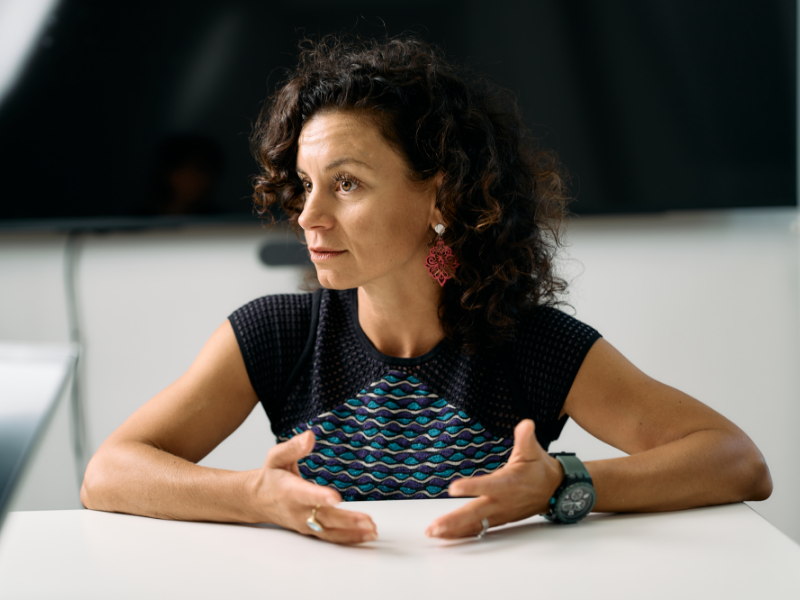
What message would you like to share with the conference participants?
Make yourselves visible! When it comes to job applications: Apply, because you never know what a hiring committee is actually looking for. Studies show that women often interpret the requirements in job postings more strictly than men and are more likely to refrain from applying if they don’t fully meet the profile. I would therefore like to encourage women to believe in their abilities, set boundaries, develop their skills and promote their competencies. Visibility, the will to lead, and excellent training are essential prerequisites for taking on responsibility and actively shaping leadership.
So far, no men are represented in the conference program. Is the conference open to men?
The event is aimed at anyone interested in the topic — regardless of gender. The focus is particularly on postdocs and those in the early stages of their careers. For this year’s pilot edition, we have deliberately focused on women as speakers. This may, of course, change in future editions. The format is intended to evolve from year to year, and we want to learn from our experiences.
Equal Opportunity Programs at UniBE
The COMET program uses coaching, mentoring, and training to strengthen the skills and motivation of female postdocs and habilitation candidates across all faculties, enabling them to successfully pursue their desired academic careers.
The Generational Tandem promotes the mutual exchange of knowledge and experience between experienced and younger staff members. The younger staff benefit from the expertise, mentoring, and networks of their more experienced counterparts, while the more experienced staff benefit from the new knowledge and skills of the younger staff.
The University of Bern also participates in the H.I.T. program, which supports tenured and non-tenured female professors from various partner universities with workshops and networking activities to prepare them for leadership roles in higher education.
The 120%-Care Grant enables early-career researchers with caregiving responsibilities and a workload of 80 to 100 percent to reduce their workload to at least 60 percent for a maximum of twelve months and hire a support person at UniBE whose workload may generally overlap with their own by up to 20 percent.
Learn more:
https://www.vereinbarkeit.unibe.ch/flex_working_time_models/index_eng.html
Information on supporting young talent
About the «Emilie Jäger Prize»
Emilie Jäger (1926–2011) was a geologist and the first female professor at the Faculty of Arts and Sciences at the University of Bern. Each year, the faculty’s Gender Equality Commission awards the “Emilie Jäger Prize” to individuals who have made an exceptional contribution to gender equality policies in the context of science, academia, and education.
About the Person
Dr. Kellie Gonçalves
is the initiator and co-organizer of the “Women & Leadership Conference” and a senior lecturer in sociolinguistics and discourse studies in the Department of English at the Faculty of Humanities at the University of Bern. Contact: kellie.goncalves@unibe.ch