
Field research on Bernese dialects
Feelings of belonging through language
Conversations in Bern's old town, Bümpliz and Frutigen reveal the differences in the canton's dialects. Sociolinguist Adrian Leemann places the differentiating features in their historical and cultural context and emphasises what unites them.
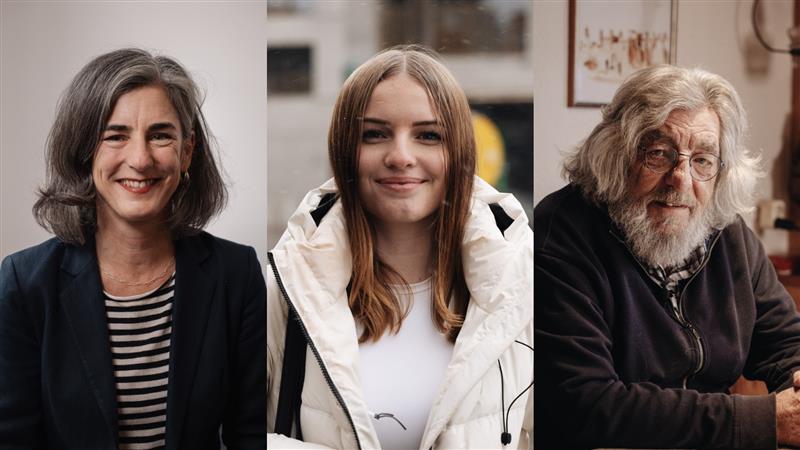
"In German-speaking Switzerland, there is an increasing trend towards the development of regional dialects. Language trends are carried from the cities to the countryside, where the language is harmonised over decades - often starting with vocabulary," explains sociolinguist Adrian Leemann. In the past, the linguistic map of Switzerland was a patchwork quilt. As people were much less mobile, among other things, many villages cultivated their own local dialects. "You could often hear after just a few kilometres that someone wasn't from your own village. This extreme small-scale character is increasingly disappearing today," continues Leemann.
“Inclusion instead of exclusion is the current zeitgeist.”
- Adrian Leemann
"Inclusion instead of exclusion is the current zeitgeist, so social differentiation via dialect cultivation, as used to be the case in upper-class circles in Bern or Basel, for example, is outdated," says the sociolinguist. "Young people find a sense of belonging to a group in youth language, and it typically continues to have an effect into their early to mid-20s." However, youth language can be formative for the sustainable development of language change. One example of this is the amplifier "mega". What began as an exaggeration in youth language has replaced words such as "very" or "extraordinary" in the everyday language of many adults.
Magazine uniFOKUS

Language
This article first appeared in uniFOKUS, the University of Bern print magazine. Four times a year, uniFOKUS focuses on one specialist area from different points of view. Current focus topic: Language.
"There is still a form of pride in one's own dialect, for example in Valais." But there are changes here too: The older generation still say "Niif(fa)" for "Schnupfen", whereas the younger generation already use the Germanised form "Schnupfe".
"Cultivating the dialect was a tacit obligation in our family."
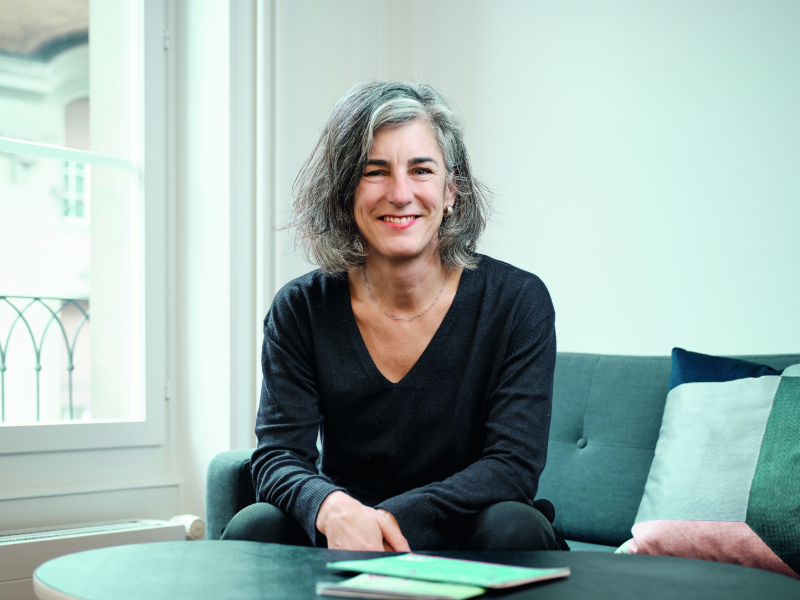
Nicola von Greyerz grew up in a family that emphasised the careful use of language. It is striking that the communications consultant pronounces an "L" where the people of Berne normally use the typical "U", for example in "Wächsu". Von Greyerz, however, says "Wächsel". This is partly because her mother speaks a Zurich dialect, but also because of her Burger sociolect, a dialect form of a social class, explains Leemann. "Pronouncing the L as a U originally comes from the Emmental. The people of Burger wanted to distance themselves from this rural characteristic."
Von Greyerz's language also has French influences. She says: "dr Salat fatigiere". This comes from "fatiguer la salade", which means to dress the salad, she explains. It is clear that the way she speaks reveals a lot about her family background.
"We all talk the same way at school."

Elin Votruba says that she grew up in a village near Bümpliz and that her mother has Slovenian roots and her father Czech. It is noticeable that she says "anderes" instead of "anders", and "Monate" instead of "Mönet". Leemann explains that this shows the influence of High German from school or TV, which is stronger in young people with mother tongues other than Swiss German.
He refers to this way of speaking as ethnolect. This differs not only in vocabulary, but also in rhythm. "While traditional dialect speech sounds like a melodic up and down, the different languages of origin have different rhythms. In the group, these influences mix to form a rhythmic compromise, which then sounds more even, choppy and syllable-based - similar to French."
"The language connects me with my homeland."
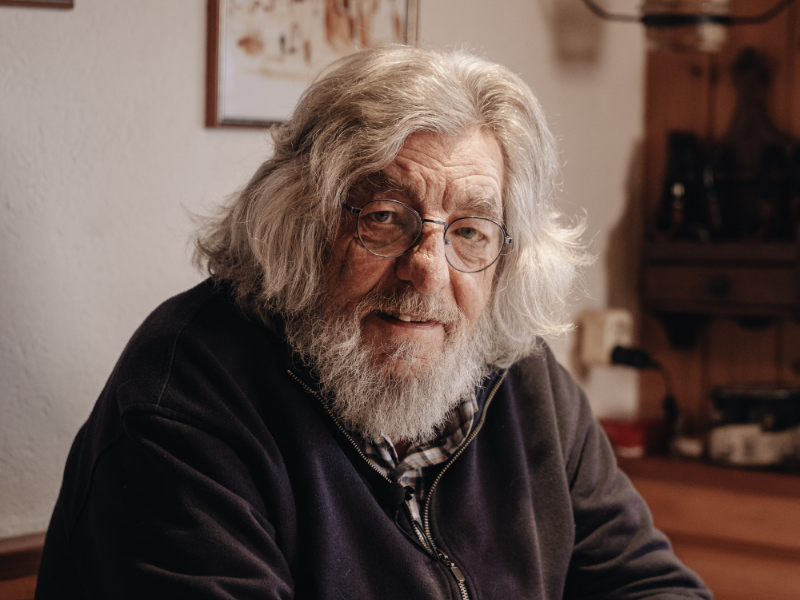
The dialect writer Ueli Schmid grew up in Engstligtal and later lived with his family in Africa for several years. "When I wrote letters home from Tschad, they were censored. That's why I started writing them in dialect," says Schmid.
In his way of speaking, you can still recognise monophthongs that are disappearing, Leemann explains. Examples of this are "ees" instead of "eis", as is more common today, and "Urloob" instead of "Urloub". Leemann explains: "Because Ueli Schmid lived in Africa for several years, his dialect has probably been preserved to a certain extent and therefore shows older phenomena than those of people who have spent their entire lives here in the valley." A certain pride in the dialect is evident, as Schmid admits: "I can't rule out the possibility that the Lowland dialect has rubbed off on me, but I make an effort to cultivate my language."
About the person
Prof. Dr. Adrian Leemann
Subscribe to the uniAKTUELL newsletter

Discover stories about the research at the University of Bern and the people behind it.