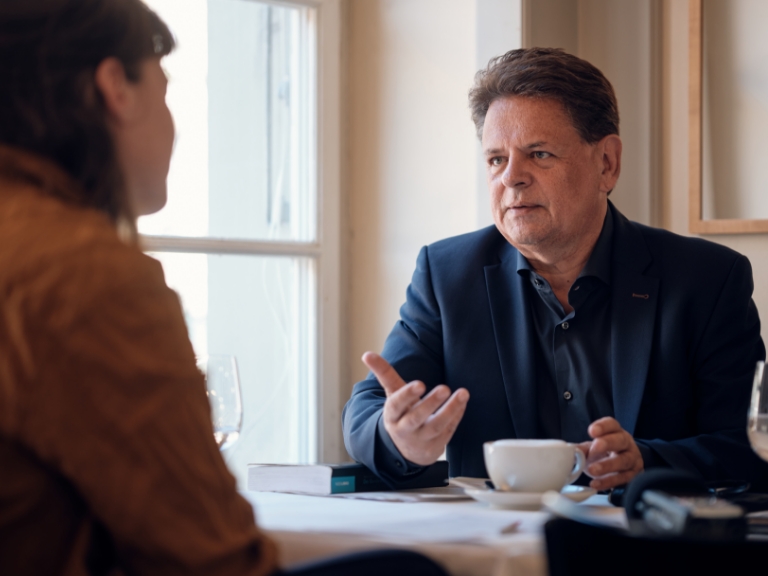
Visit by Federal Councillor
Beat Jans on the “most Swiss of all jobs”
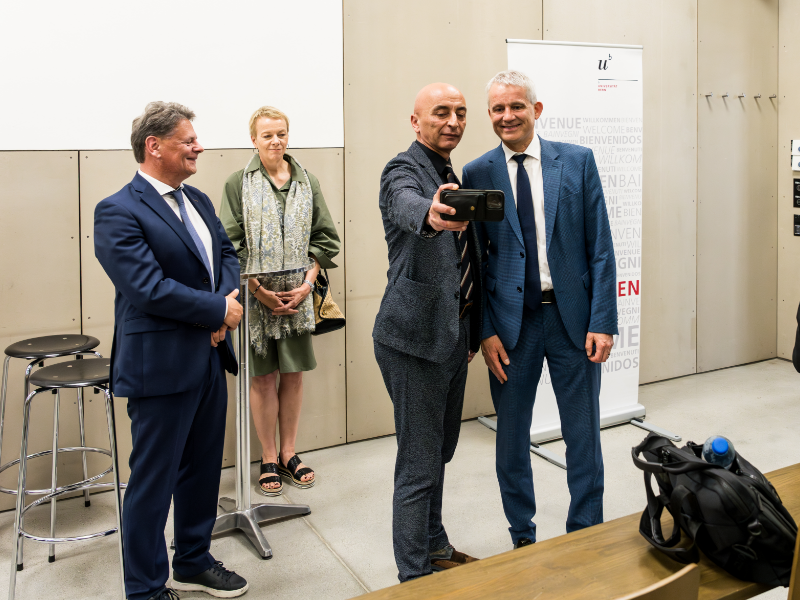
Political scientist Adrian Vatter recently welcomed Beat Jans to his lecture on “The Political System of Switzerland.” In a discussion with the students, the Federal Councillor described himself as being someone who serves in the Federal Council with complete conviction.
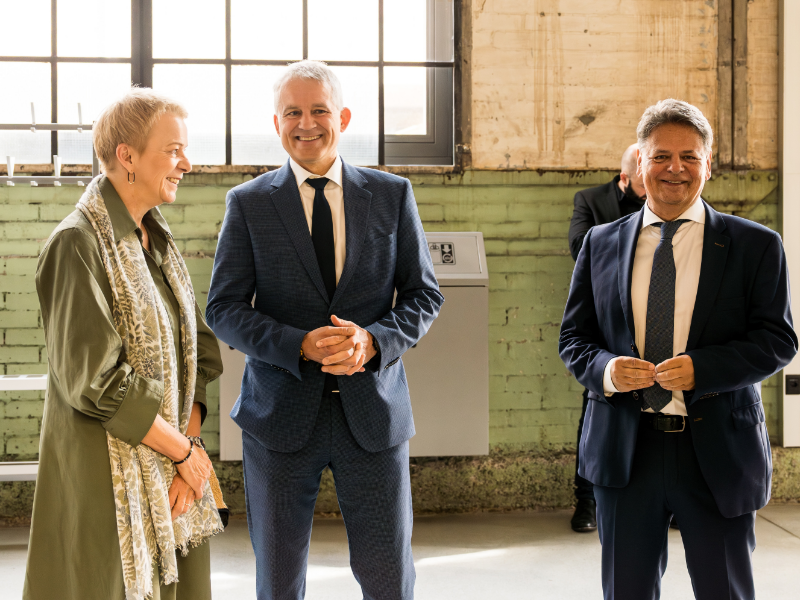
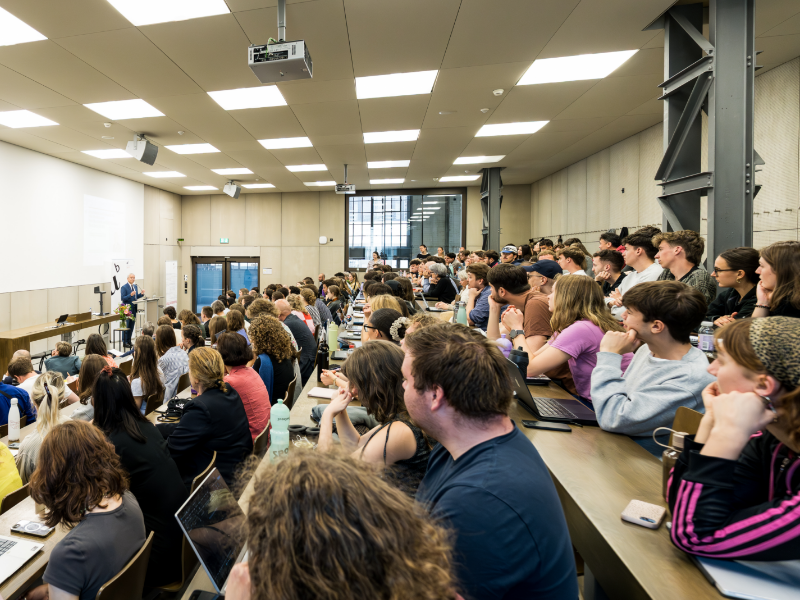
Each year, in his lecture on “The Political System of Switzerland.” Bern-based professor of political science Adrian Vatter succeeds in arranging for a Federal Councillor to visit and take the time to answer questions from his students. And when Federal Councillor Beat Jans enters the lecture hall with Adrian Vatter, the students fall silent instantly. They wait almost reverently until the bell sounds that signals the start of the lecture.
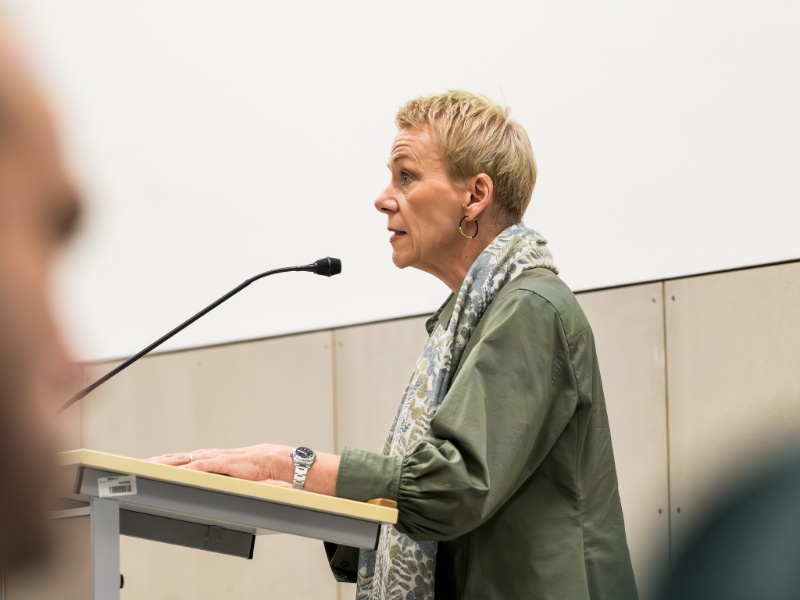
After Adrian Vatter’s welcome, Rector Virginia Richter takes the floor first: she highlights the international character of the University of Bern at its home in the federal capital, to which Jans’ invitation fits perfectly. After all, he stands for an open Switzerland.
It is then Jans’ turn to address the students and to discuss his work as a Federal Councillor. He starts by saying: “Anyone who promises simple solutions fails to understand our political system.”
Time and again, the Swiss spirit of canton-based democracy is being called into question with a recurring theme: is this system fit for purpose in the world today? This is a question to which Jans a clear answer: yes – he is a self-declared fan of federalism. Yet federalism isn’t for the faint of heart. According to Jans, the principles according to which Switzerland is organized as a nation shouldn’t be understood as being static, but as a working method. One in which consensus is sought so as to balance differing viewpoints. “And this is especially true in our times, when powerful figures worldwide are behaving increasingly imperiously, and in a world that is becoming smaller, more complex, and more interconnected,” explains Jans.
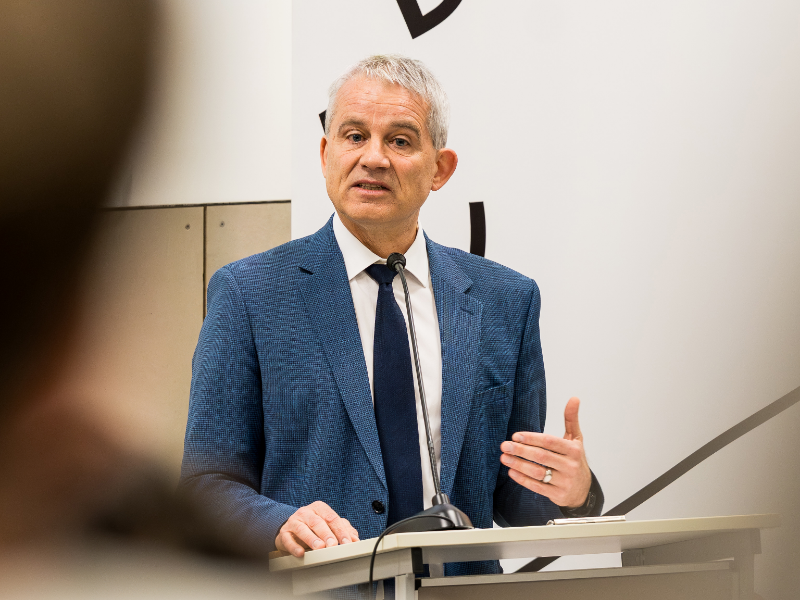
The Basel politician considers the general public to be his boss. To ensure voters have the best possible basis for their decisions in referendums and elections, they need to be comprehensively informed – and to take as many different perspectives into account as possible. “The role of Federal Councillor is perhaps the most Swiss of all jobs,” explains Jans.
The Federal Council committee rooms as escape rooms
Jans’ values are the rule of law, knowledge, equal opportunities, freedom, solidarity, and sustainability, and he consistently studies the agenda items that are presented to him in terms of these values. And if a key value is absent from discussions, he makes sure that he raises it with his six colleagues. “Are you familiar with escape rooms? That’s what it sometimes feels like in a Federal Council committee room,” says Jans. “You can’t leave until you’ve found a solution together”.
«Capping the population at 10 million won’t free up a single seat on the train, make rents any cheaper, or get rid of any traffic jams.»
Beat Jans
For Jans, raising awareness about the SVP initiative “No to a Switzerland with 10 million!” is currently a top priority. He seizes every opportunity to educate people about the serious consequences of a “yes” vote – in terms of the agreement on the free movement of people with the EU, for example. “And I’ll take this opportunity to say that that’s something everyone here needs to think about.” A particularly drastic outcome of such a vote would be the inability of students, such as those here, to partake in international research programs, for example.
According to Jans, the proposal shifts the cause of specific problems to a false premise, and presents itself as an overly simplistic solution, because, as he puts it: “Capping the population at 10 million won’t free up a seat on the train, make rents any cheaper, or get rid of any traffic jams.”
The world would benefit from a little Swissification
The Federal Councillor comes across as approachable – especially since he starts his address by saying that he’s a little nervous about speaking. It is clear he takes the view that respect isn’t automatically due to him just because he is a Federal Councillor. He also comes across as responsible and in touch with the latest research findings – but he also makes his arguments based on his own experiences. After all, he says, everyone is shaped by the world in which they live.
He concludes his speech with a rephrased quote from Friedrich Dürrenmatt: “The world won’t end, but it might do it some good to become a little more Swiss.”
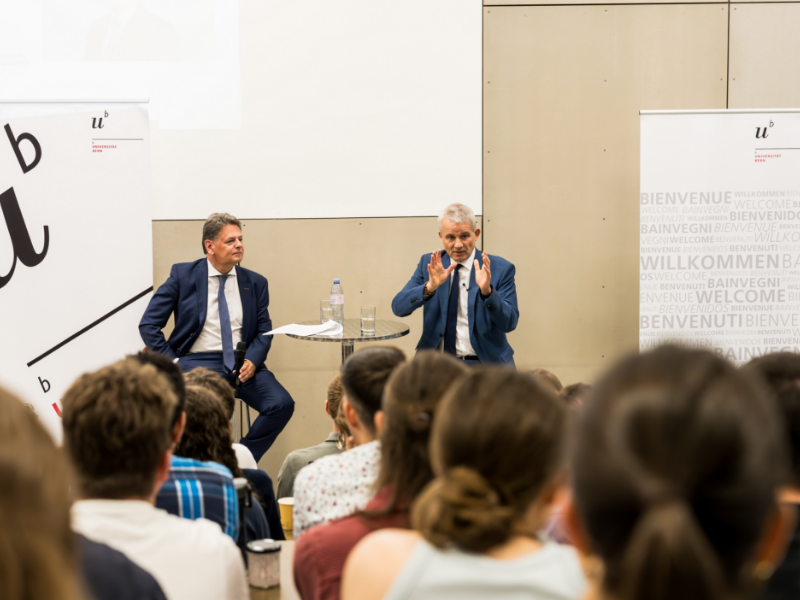
Before Adrian Vatter starts the Q&A session, he asks his guest: "What surprised you most when you took up your post in the Federal Council?" Jans replies that the cooperation with the media hasn’t gone so well, which has surprised him. However, he makes a point of ignoring unfounded attacks and those directed at him personally. His predecessor at the Federal Department of Justice and Police (FDJP) warned him that it wouldn't be easy to withstand the unfair criticism, and many interior ministers in other countries have also had to face the accusation that they are doing everything much too slowly.
«Are you familiar with escape rooms? That’s what it sometimes feels like in a Federal Council committee room.»
Beat Jans
Along with their professor, Rahel Freiburghaus, students from the University of Lausanne are also present – and ask their questions in French. Beat Jans’ answers in fluent French send a message to all the aspiring political scientists in the room: those who want to succeed in Swiss politics should make sure they master the language of the fifth republic.
Occasionally, questions are asked on more sensitive topics: some students, for instance, raise concerns about the pro-Palestine demonstrations and the prosecution of the participants, as well as the pursuit of people through their personal data. Jans takes these concern seriously, but justifies the authorities’ actions by arguing that violence, such as that seen at the demonstration in Bern, cannot be tolerated.
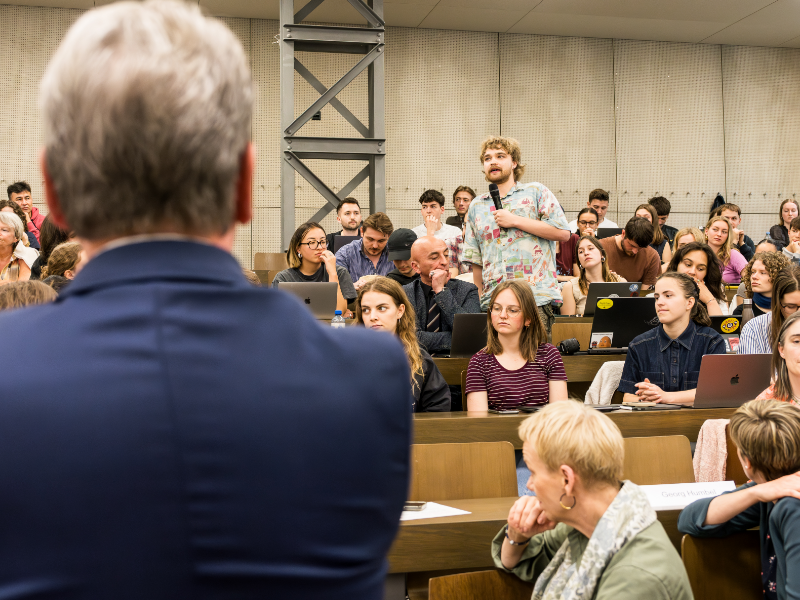
The issue of data protection also extends further, all the way to the topic of organized crime. According to Jans, under certain circumstances, the state should be allowed to use the same methods as organized criminals. The crucial difference, he notes, is that the public is transparently informed about measures of this kind.
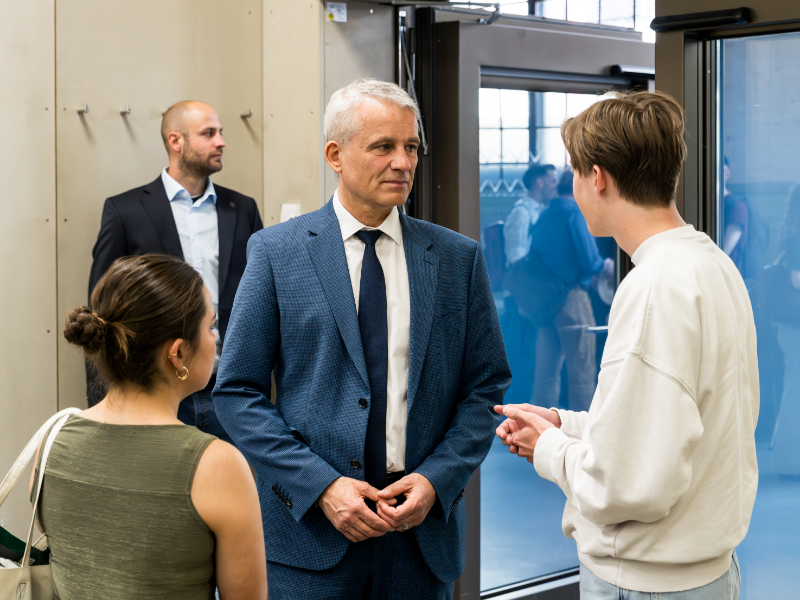
During the Q&A session, Beat Jans comes across as someone who always gives his counterpart a chance to be right with his or her argument. “If I didn’t consider things like that, I’d be in the wrong job.”
About the Institute of Political Science (IPW) at the University of Bern
The IPW is one of Switzerland’s leading institutes for political science, and according to the CHE Excellence Ranking, ranks among the top institutes in Europe. It conducts basic research and practice-oriented commissioned research. Its core messages also form integral components of the degree courses it offers: the Bachelor’s in “Social Sciences,” the Master’s in “Political Science,” and the Master’s in “Swiss Politics and Comparative Politics.” Its key areas of teaching and research include Swiss politics, comparative political science, European politics, policy analysis, climate, energy and environmental policy, as well as attitude and behavioural research within the framework of political sociology. The IPW also offers services to the public, such as the Année Politique Suisse.
New: Bachelor’s degree in Political and Administrative Science
The BA in Political and Administrative Science offers comprehensive instruction on political systems, institutions and administrative management. The benefits of this combination include an in-depth understanding of political-administrative structures; the development of analytical skills for political issues and administrative management; wide-ranging career opportunities in the executive, legislative, and judicial branches of government, as well as in companies, non-governmental organizations, non-profit organizations, and the media; and preparation for international careers with an understanding of global political dynamics. The inter-faculty programme is a collaboration between the Faculty of Economics and Social Sciences and the Faculty of Law.
Subscribe to the uniAKTUELL newsletter

Discover stories about the research at the University of Bern and the people behind it.