
Sustainable water management
Humans and environment exacerbate drought in southern Spain
The Axarquía region in southern Spain experienced an extreme water crisis between 2019 and 2024. Victoria Junquera from the University of Bern sheds light on the causes.
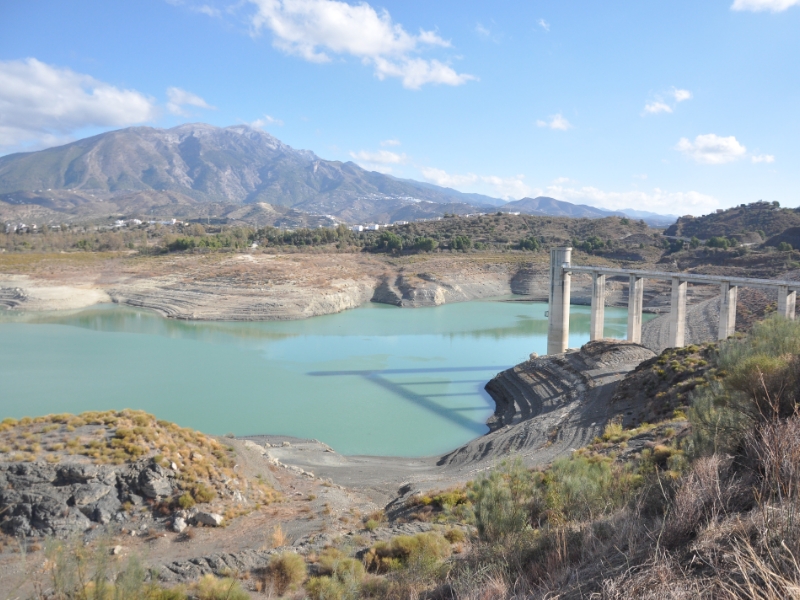
Axarquía is a major center for avocado and mango production in Europe. Between 2019 and 2024, the southern Spanish region faced an unprecedented water crisis. This led to the almost complete depletion of the large reservoir in Axarquía. In addition, the aquifer level dropped to sea level in large parts of the main aquifer.
This situation had serious economic consequences for the region. “The water shortage led to crop failures of up to 80 percent for mangoes and 50 percent for avocados in 2022/23 compared to the previous year,” explains Victoria Junquera.
A research group led by Junquera – now a postdoctoral researcher at the Institute of Plant Sciences at the University of Bern – investigated the causes of this crisis. The University of Málaga and Princeton University were also involved in the project.
Human influence on water scarcity
The researchers analyzed the water crisis from a coupled human-natural systems perspective. “Water crises and other extreme events such as floods or wildfires are almost always the combined result of human-environment interactions and responses”, explains Junquera. “It is therefore important to analyze them from a multidisciplinary perspective.”
To understand the main factors influencing the crisis, the researchers conducted a detailed analysis of land and water governance, hydrological and meteorological time series data, and spatial data. Their findings show that the main causes of the crisis were a combination of shorter and long-term dynamics. On the one hand, there was an unusually severe multi-year meteorological drought. On the other hand, there was a long-term structural imbalance between water consumption and available water resources.
Over the past 20 years, irrigated agriculture in Axarquía has been steadily expanding. This has led to a steady increase in water demand. Combined with a lack of control by the authorities, this has contributed significantly to the water shortage. Victoria Junquera and colleagues therefore refer to the drought in the region as an “anthropogenic drought,” i.e., a drought where human factors, and interactions between human and natural processes, play a central role.

Demand for reforms
Based on their findings, the researchers recommend joint planning of land and water use across the entire region. They propose introducing stricter controls on irrigated areas and better monitoring water availability and use through real-time measurements. Furthermore, “flexible permits based on available water resources could help avert future crises,” says Victoria Junquera. Droughts are likely to become more severe in the future due to climate change. The researchers therefore emphasize that adapting to such extreme events requires not only technical solutions, but also effective regulatory measures and effective governance.
About the person
Victoria Junquera is a postdoctoral researcher at the Institute of Plant Sciences at the University of Bern and a member of the Plant Ecology research group.
Subscribe to the uniAKTUELL newsletter

Discover stories about the research at the University of Bern and the people behind it.