National Centre of Competence in Research CLIM+
Kick-off for a more climate-resilient Switzerland
At the opening event of the National Centre of Competence in Research CLIM+ at ETH Zurich last week, participants showed how research and society could work together to develop solutions for dealing with climate extremes. CLIM+ is co-led by ETH Zurich and the University of Bern.
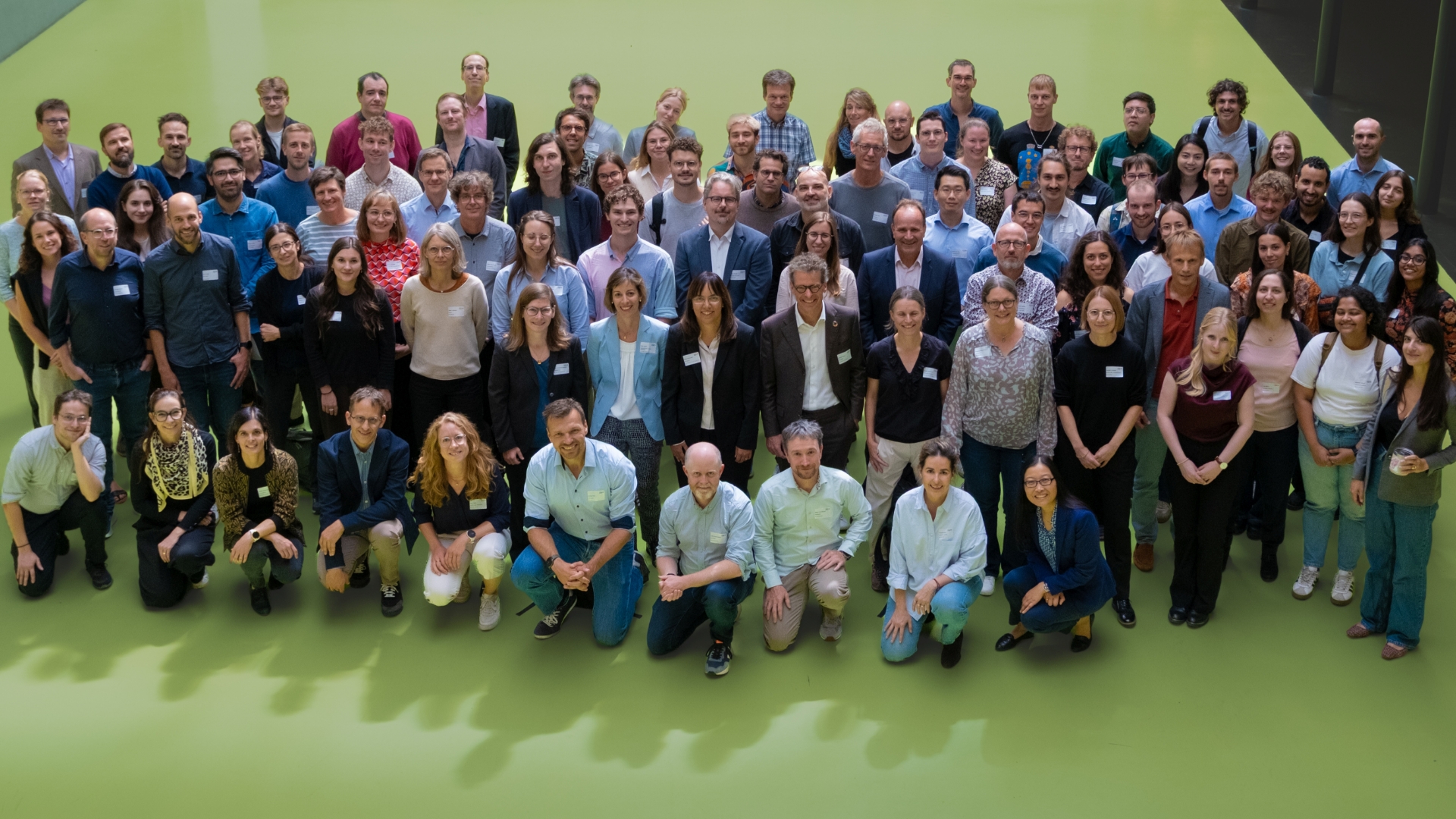
A cool 13 degrees Celsius is measured in Zurich on this September morning. The ban on fires in and near forests was lifted that day. Yet the summer, which broke a series of heat and drought records, still resonates – especially here in the Audi Max, the largest lecture hall in ETH Zurich’s Main Building, which is almost filled to capacity with representatives from Swiss climate research, cantonal and federal government, industry, associations and consulting firms.

Together, they are launching a large-scale research project co-funded by the Swiss National Science Foundation and the State Secretariat for Education, Research and Innovation – the National Centre of Competence in Research CLIM+ (“Climplus”). The 47 participating research groups from 13 Swiss research institutions aim not only to better understand climate extremes, but also to develop strategies for advancing climate adaptation and climate mitigation in Switzerland and thereby making the country more resilient.
Together with society
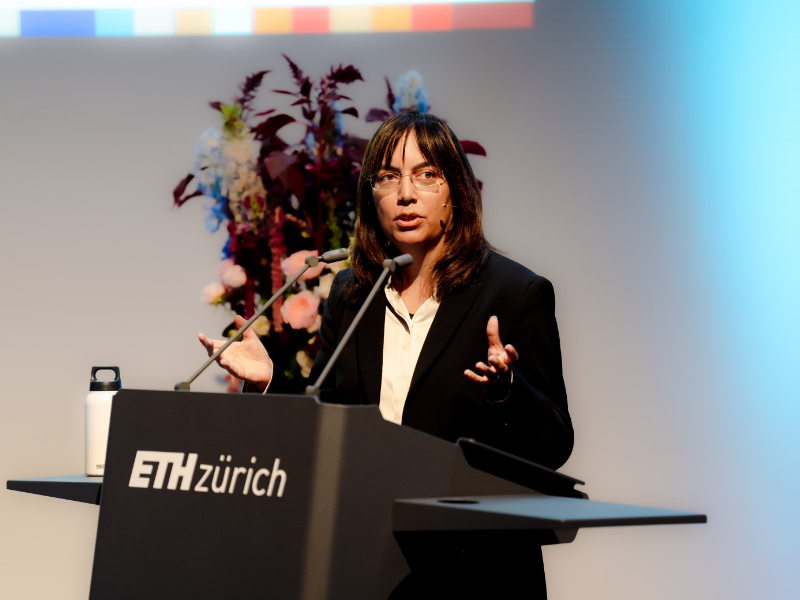
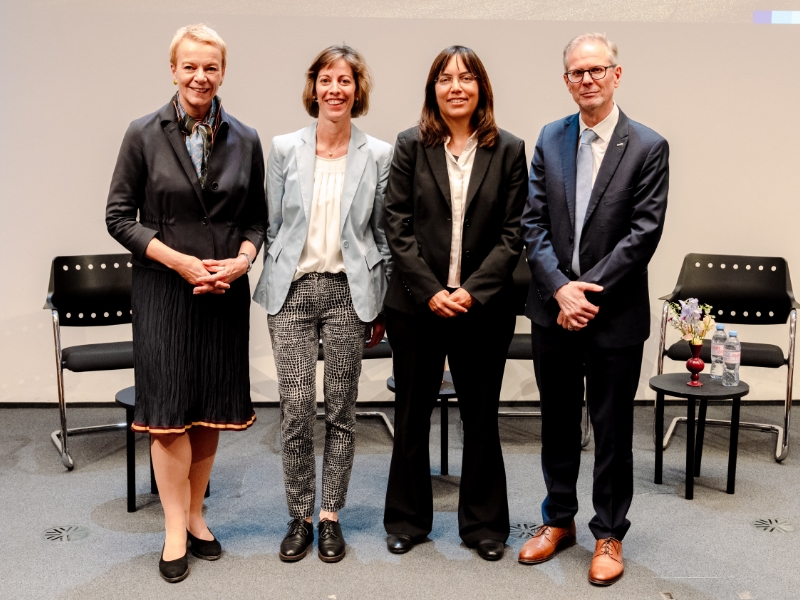
At the start of the event, the two co-directors, Karin Ingold, Professor at the Institute of Political Science at the University of Bern, and Sonia Seneviratne, Professor and Head of the Institute for Atmospheric and Climate Science at ETH Zurich, explain how they intend to do this. “Our vision is to investigate the main challenges Switzerland faces with increasing global warming, and to help develop solutions for both climate change mitigation and adaptation. This is only possible together with society”, Seneviratne explains. That is why they are “happy and proud”, Ingold says, “that we have not only brought together very different research groups from the natural and social sciences, but have also been able to involve many partners from business and public administration in our endeavour.” This interdisciplinary community is intended to give rise to the Centre for Climate Extremes and Resilience in Swiss Society (“CERESS”), which is to continue the collaboration in the long term.
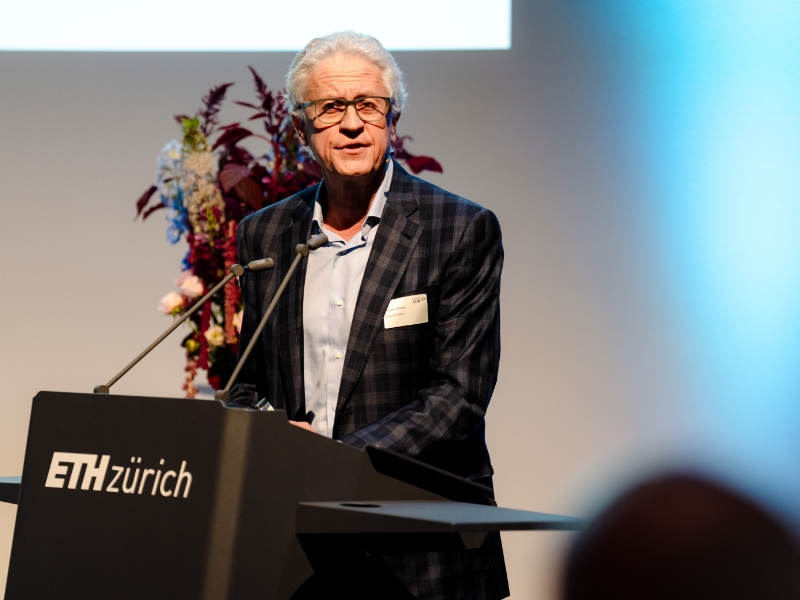
This close connection with society is also important at the political level, Thomas Stocker stressed in his address. “Be present where decisions are made!” said the emeritus Professor of Climate Physics at the University of Bern. At the same time, he warned against relying too heavily on adaptation measures to climate change. “With weak climate policy, summers like this year’s will become the norm in a few decades. Even a climate-resilient Switzerland will then reach its limits.”
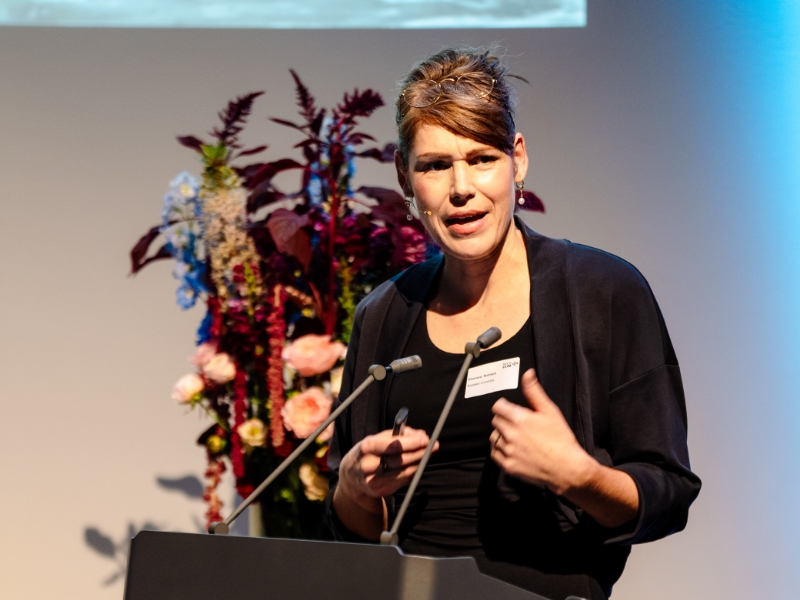
Bringing in the perspective of the humanities and social sciences, Eleonora Rohland drew on lessons learned from climate extremes and societies of the past, while also reminding us that “resilience and adaptation alone are not enough” and that “mitigation is the other half of the equation”. Referring to two hurricanes in the US over the past 60 years, the professor at Bielefeld University also raised the question of whether there are “limits to societal resilience” as climate change accelerates and irreversible tipping points draw closer.
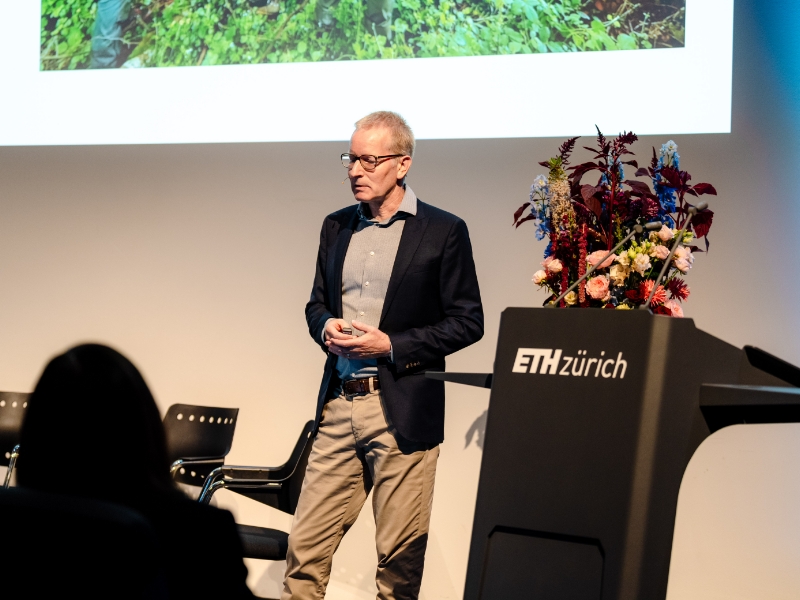
Jürgen Ragaller from the Canton of Lucerne showed how important scientific findings are for the concrete implementation of adaptation and climate protection measures. As examples, he cited the greening and unsealing of Bahnhofstrasse in Lucerne and the revitalisation of the Kleine Emme river. The canton is also responding to the increasing threat to drinking-water supplies by linking different supply sources. “For these and other solutions, we depend on science,” Ragaller said.
Every conversation counts
In the subsequent panel discussion, David Bresch, Professor of Weather and Climate Risks and Deputy Co-Director of CLIM+ at ETH Zurich, highlighted the power of social tipping points. “Only a few decades ago, half the compartments on public transport were smoking compartments. Today, we can hardly imagine that. Conversely, a sufficiently large part of society only needs to imagine a more sustainable future for it to become reality.” Everyday conversations in people’s own surroundings are particularly important for this, he said.
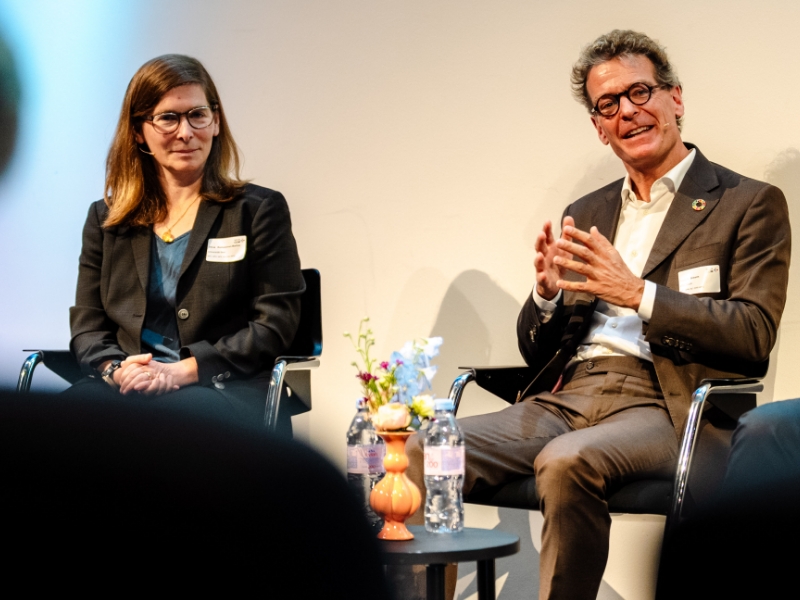
Olivia Romppainen-Martius, Professor of Climate Impact Research and Deputy Co-Director of CLIM+ at the University of Bern, emphasised that this requires not only adapting infrastructure, but also, for example, adapting the training of emergency personnel.
Emotions matter too
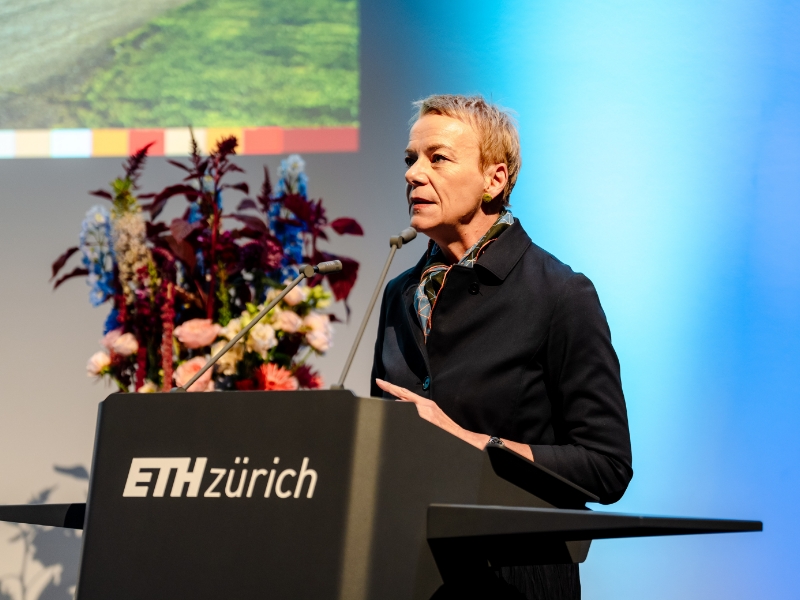
Virginia Richter, Rector of the University of Bern, said in her speech that the past summer had reminded her of the novel “A Tide Went Out” by the English writer Charles Eric Maine, in which the world’s oceans drain into a fissure in the Earth’s crust caused by nuclear weapons tests, leaving the planet without water. “Do not forget that the climate crisis can trigger fear. Emotions are an important part of the climate discourse,” Richter said. These emotions must be taken seriously, particularly in view of anti-scientific developments in politics and society.
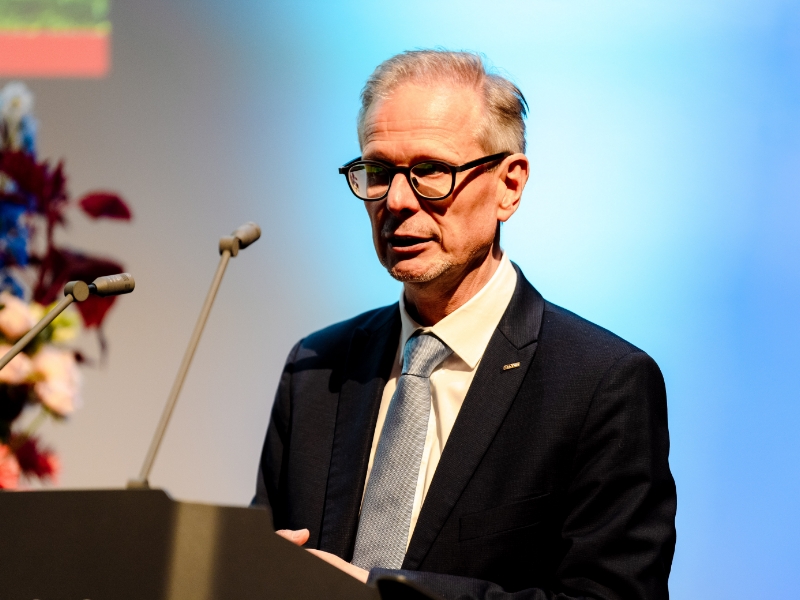
For the necessary behavioural changes and adaptation measures, greater awareness of the climate crisis is still needed in many places, explained ETH Rector Günther Dissertori, who will take over as President in January 2027. The impacts of climate change are not only visible in distant parts of the world: a severe hailstorm in his municipality at the end of August had shown that extreme weather events can also directly affect local communities. Together with events such as the flooding in Nepal, this underlines the need to communicate challenges and possible solutions in an understandable way. Dissertori therefore called on those present to “find a common language” in order to communicate effectively across disciplines and in dialogue with society.
Moderator Bettina Walch echoed this appeal at the end and wished those present every success – there is still much to be done.