Bridge-builder
From the research lab to “Dr. Mum”– and back again
When the funding for her research ran out, Tiziana Cremona found a new way to share and spread her knowledge: She wrote a children’s book about a rare disease. Today, she is back in research at the University of Bern where, as “Dr. Mum®,” she continues to build bridges between science and society.

Tiziana Cremona was sitting in a plane, preparing her presentation for the scientific conference she was flying to. Sitting beside her was her eight-year-old son. Fascinated by the illustrations on her screen, he began asking questions: “Mom, what is alpha-1? Why do people get sick with this? Can you fix it?” As simple as these questions were, Cremona couldn’t answer him using the scientific language she normally uses in the lab. That moment sparked the idea for a children’s book about alpha-1 antitrypsin deficiency – and for “Dr. Mum®,” the pen name under which Cremona authored her book to make science accessible to a younger audience. The pen name is also a callback to a special moment in her life: Her son was born just four hours after she completed the defense of her doctoral dissertation at the University of Bern.
A minor mutation, major repercussions
Tiziana Cremona’s career brings together scientific research and family life, rare diseases and the courage to break new ground. During an internship at the Children’s Hospital in Zurich, where she was researching rare brain tumors in children, she developed an interest in rare diseases. At the same time, she witnessed first-hand how profoundly a rare disease can affect children and their families. When it then came time for her to write her dissertation, she decided to focus on alpha-1 antitrypsin deficiency (AATD), a rare hereditary metabolic disorder. “In AATD, a single mutation can cause the malfunction of a protective mechanism in the body. As a result, people affected by the condition may develop severe lung or liver disease,” she explains.
As Bern is an important center for pulmonary research in Switzerland, it offered ideal conditions for further investigating this rare genetic disorder. At the University Clinic for Pulmonology at Inselspital Bern University Hospital, Cremona worked with animal models, although she did also ensure that she stayed close to clinical practice and maintained contact with people living with alpha-1 antitrypsin deficiency. She also met patients at conferences and events organized by patient organizations, asking questions to gain a better understanding of the condition and its impact.
“Even though I could no longer work in the lab, I could still listen, educate and connect people.”
An ending that became a new beginning
When the funding for her research came to an end after three years, it initially marked the end of Cremona’s work in the laboratory, but the many encounters she had had with people living with the disease – and everything she had learned from them – stayed with her. “My work as a researcher was always driven by curiosity and by the desire to improve the lives of people with AATD. I didn’t want that hope to fade because of rejected grant applications,” she says. “Even though I could no longer work in the lab, I could still listen, educate and connect people.”
She began applying what she knew in a different way. This led to the creation of a children’s book about alpha-1 antitrypsin deficiency, intended to provide children suffering from this disorder and their families with knowledge and guidance. In the book, the alpha-1 protein is presented as a superhero, he protects our lungs from damage during inflammation and infection – but sometimes he does not function properly. Everyone involved is portrayed as a hero: parents who support their children; healthcare professionals who care for those affected; researchers who continue searching for answers despite setbacks; and the children themselves, who live with the disease.

“A rare watch or a rare painting is considered particularly valuable. Why not rare diseases?”
Rare doesn’t mean less important
For many people, the defining feature of a rare disease is that it affects only a small number of people. For Cremona, however, this view is too narrow to truly encompass what these diseases truly are. While individual rare diseases affect relatively small groups, rare diseases as a whole represent a significant societal challenge. “Rare must not mean invisible,” she says. “Rare diseases can teach us things that ultimately benefit everyone.” Rare diseases can, for example, provide particularly clear insights into how the human body works. A single genetic mutation can reveal the role played by a specific protein, cell or biological process – and may therefore also offer clues relevant to more common diseases. Cremona finds the contrast difficult to accept: “A rare watch or a rare painting is considered particularly valuable. Why not rare diseases?” These diseases often attract less attention and funding. As a result, people living with rare diseases can feel isolated or overlooked. She is convinced that research should not only generate new knowledge but also help ensure that people with rare diseases feel seen and taken seriously.
Research needs contact with patients
Cremona found her way back into research through courage, confidence in her experience and expertise – and with the support of Paola Luciani, head of a research group in pharmaceutical technology at the Department of Chemistry, Biochemistry and Pharmaceutical Sciences (DCBP). Her return to research also took her in a new direction: She now works as a research associate at the DCBP studying endometriosis. She investigates how the different cells involved within the tissue alterations associated with endometriosis communicate with one another, how they contribute to the growth of lesions, and how new medicines could help treat the condition. “Although endometriosis is widespread, often it takes a long time for it’s symptoms to be taken seriously – much like the symptoms of rare diseases,” Cremona says. It can take years for the disease to be correctly diagnosed. This is why Cremona sees engaging with patients as particularly important. Their experiences help researchers identify relevant questions, focus on what matters most to those affected and determine the most effective approaches to developing new medicines. Listening to patients can also help to identify connections that are not obvious in a laboratory such as – for example, the influence of stress, diet or environmental factors, all of which can play an important role in many diseases. “Ultimately, biomedical research is always about people. The laboratory shows me the biological mechanisms behind a disease. Patients’ experiences often provide valuable pieces of the puzzle that help me better understand the underlying biological connections,” says Cremona.
“My goal has remained the same: to help people with diseases. Only the path to achieving that goal has changed.”
Science is rarely a straight path
The University of Bern has supported Cremona’s scientific career at various stages. As a single mother, she knows how demanding a career in research can be. “Organization is key,” she says. “The University of Bern’s childcare offers were invaluable in this respect.” Flexible working conditions and supervisors who do not see parents reductively only in their family roles are equally important, she adds. Cremona’s career is testament to the fact that scientific careers do not always follow a straight path and that setbacks are part of the journey. Grant applications can be rejected, positions can come to an end and research fields can change. That does not mean that knowledge and experience are lost. Sometimes, something new emerges from all this : a children’s book, a dialogue with patients – or a move into a different field of research. “My goal has remained the same: to help people with illness. Only the path to achieving that goal has changed.”
Looking ahead, Cremona can also imagine writing a book about endometriosis for young women and girls. She wants to continue bridging the gap between research and everyday life. For her, behind every research project are patients who are hoping for a treatment, a diagnosis or simply an explanation. “Science can make a real difference,” she says. “You never know whom it might reach: perhaps someone living with the condition, a parent, a future researcher – or someone who will go on to make a difference in the future.”
About the person

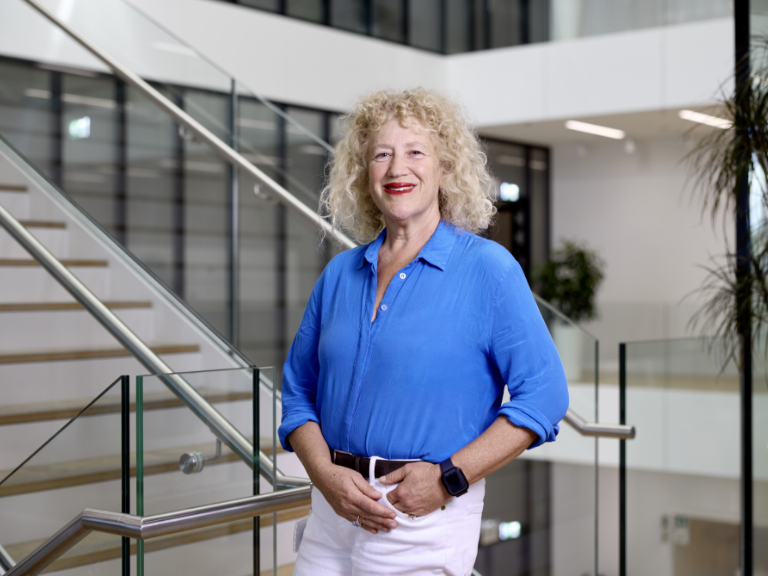
Tiziana Cremona is a research associate in Professor Paola Luciani’s research group at the Department of Chemistry, Biochemistry and Pharmaceutical Sciences at the University of Bern.
About the Department of Chemistry, Biochemistry and Pharmaceutical Sciences: from molecules to materials and medicines
The Department of Chemistry, Biochemistry and Pharmaceutical Sciences (DCBP) at the University of Bern has more than 20 professors with research groups exploring the full spectrum of the molecular sciences. The DCBP brings together chemistry, biochemistry and pharmaceutical sciences, creating bridges between closely interconnected disciplines. Its research covers areas including molecular synthesis, catalysis and materials science, as well as the study of biological processes. These researchers in Bern are also developing innovative technologies for the targeted and controlled release of active substances. exploring new applications for bioinformatics methods and developing more sustainable processes for synthesizing active pharmaceutical ingredients.
Pharmaceutical sciences underwent a fundamental restructuring at the DCBP in 2019 and have since become a major focus. This development is reflected in rising student enrolment, rapidly expanding research groups and the University of Bern’s growing international visibility in the field. The department’s activities include participation in renowned scientific organizations such as the Swiss Academy of Pharmaceutical Sciences, collaborations with pharmaceutical companies, patent applications, the founding of start-ups and the successful acquisition of ERC grants. With its expertise, the DCBP makes an important contribution to the University of Bern’s research landscape at the intersection of molecules, materials, life sciences and pharmaceuticals.