Digital medicine
AI warning system identifies infection risk immediately after surgery
The surgery is over and the wound has been sutured – but the critical phase for patients is not over. Researchers in Bern have developed an AI-based model that can calculate the risk of postoperative infection immediately after surgery.

Between a successful surgery and full recovery lies a critical phase for doctors and nursing staff, during which complications such as wound infections, pneumonia, and blood poisoning (sepsis) must be detected early. Such complications can prolong the hospital stay, necessitate further treatment, and hinder recovery. Until now, the assessment of the risk of complications has relied primarily on simple factors known before surgery, such as age, pre-existing conditions, or, in some cases, genetic predispositions. But what clues do the body’s reactions during the procedure provide regarding the risk of complications?
Valuable, previously untapped information from the operating room
This question has been investigated by an interdisciplinary team of clinical researchers, data scientists, and infectious disease specialists from Bern. “The body sends out numerous signals during surgery: vital signs such as e.g. blood pressure, heart rate, oxygen saturation. We wanted to find out whether by using these signals we could better identify which patients might develop complications later on,” explains co-lead of the study Hugo Guillen-Ramirez. He is researcher at the Department of Biomedical Research and the University Clinic for Visceral Surgery and Medicine at Inselspital, Bern University Hospital. “Our goal is to anticipate complications as early as possible, not just identify them as they occur,” says Guillen-Ramirez. “The sooner we know who is at increased risk, the more targeted the response can be.”
About the person
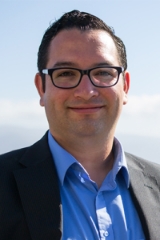
Dr. Hugo Guillen-Ramirez
is a postdoctoral researcher at the University Clinic for Visceral Surgery and Medicine at Inselspital, University Hospital of Bern and the Department for BioMedical Research at the University of Bern.
Over 10,000 surgeries analyzed
For the study, the research team analyzed data from more than 10,000 surgeries at Inselspital. They combined information routinely collected in clinical practice, such as patients’ age and pre-existing conditions, or the type and duration of surgery, with vital signs continuously monitored during the surgery. This different type of data was fed CARESCORE, a new AI model developed by the research team in Bern. This allowed the model to identify complex patterns and associations that would be otherwise too difficult to recognize.
“The result was astonishing,” says Guillen-Ramirez: “The model can calculate the individual risk of postoperative infection just a few seconds after surgery ends, and with significantly greater accuracy than previous models, which only considered preoperative data.” By incorporating vital signs data collected during surgery, it is indeed possible to identify an increased risk of infection immediately after the procedure and to monitor and treat at-risk patients early and in a targeted manner, according to the study authors. Thus, the body can provide valuable clues during surgery regarding other complications that may arise later. “For example, we have found that specific patterns of blood oxygen saturation or changes in heart rate are associated with more complications”, says Co-study leader Prof. Dr. Guido Beldi, chief of visceral surgery at Inselspital, Bern University Hospital.
About the person

Prof. Dr. Guido Beldi
is Chief Physician at the University Clinic for Visceral Surgery and Medicine at Inselspital, University Hospital Bern, and research group leader at the Department for BioMedical Research at the University of Bern.
Unlocking the full potential of health data
The study shows that health data can only reach its full potential different data sources can, so to say, exchange information with one another. “‘I was surprised by how large and complex the volume of data that can be collected by today's devices is,” explains Dr Tobias Blatter, first author of the study and postdoctoral researcher at the University Clinic for Visceral Surgery and Medicine at Inselspital, Bern University Hospital. Guido Beldi emphasises: ‘This AI model is by no means a replacement for doctors. However, it can identify complex correlations and provide analyses that are helpful for medical care.”
Next step: Testing in other hospitals
So far, the model has been developed and tested exclusively using data from Inselspital Bern. Before it can be used in routine clinical practice, it must therefore also be tested in other hospitals and under different surgical conditions.
Publication details
Blatter, T.U., Wintsch, Y., Triep, K. et al. End-of-surgery prediction of postoperative infectious complications from intraoperative vital-sign dynamics. npj Digit. Med. (2026). https://doi.org/10.1038/s41746-026-02707-1
About the person

Dr. Tobias Blatter
is a postdoctoral researcher at the University Clinic for Visceral Surgery and Medicine at Inselspital Bern.
Subscribe to the uniAKTUELL newsletter

Discover stories about the research at the University of Bern and the people behind it.