
Successful search for the oldest ice
Traveling back 1.2 million years with Antarctic ice
A team from twelve European research institutions in Antarctica has succeeded in retrieving ice cores containing climate information from the past 1.2 million years and more. The University of Bern played an important role in this scientific breakthrough.
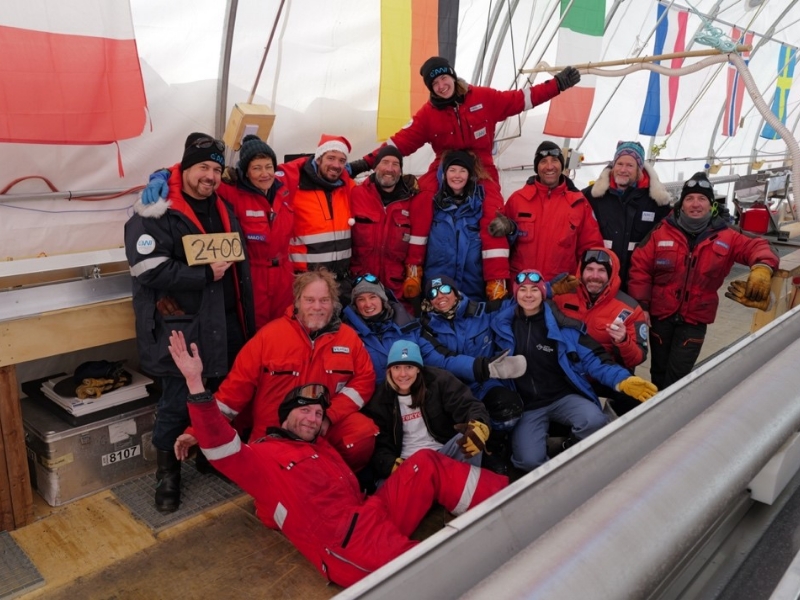
After four drilling seasons, the team reached its goal at the beginning of January 2025. At Camp Little Dome C, the Antarctic ice sheet was completely penetrated and at a depth of 2,800 meters the drilling team struck the transition rock bed. The oldest ice on Earth is located above this, containing information dating back at least 1.2 million years and representing a unique archive of past climate and environmental conditions. Reason enough for the 16-member team on site, including two researchers from Bern, to pop the corks.
Uncharted scientific territory
"Only ice contains air from the past trapped in bubbles, which makes it possible to directly measure greenhouse gas concentrations from the past," says Hubertus Fischer, Professor of Experimental Climate Physics and member of the Oeschger Center for Climate Research at the University of Bern. He is one of the driving forces behind the EU project "Beyond EPICA - Oldest Ice", which has just achieved a crucial breakthrough.
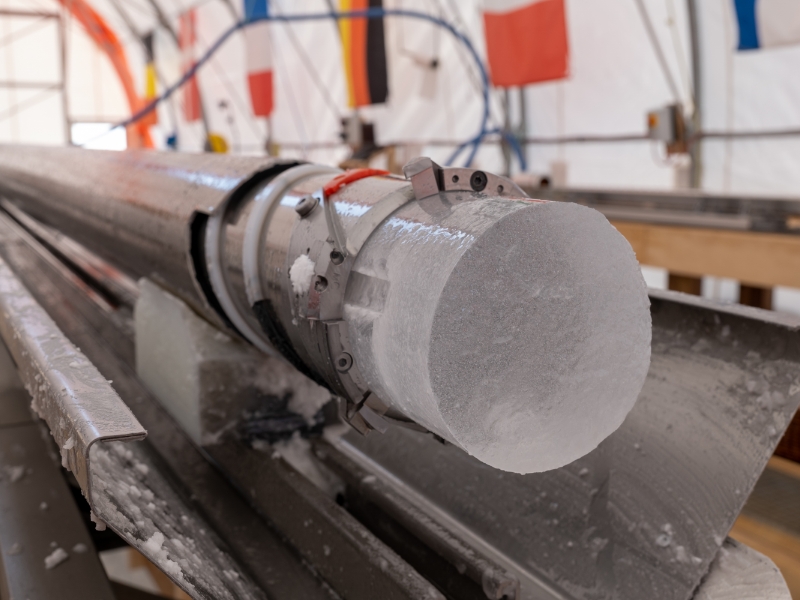
In the three previous drilling campaigns, a depth of over 1,800 meters has already been reached. "In this drilling season, we have now reached the bedrock at a depth of 2,800 meters - and have thus definitely entered new scientific territory," emphasizes Fischer. "When we began preparations more than ten years ago, it was still highly uncertain where and in what quality we would find such old ice. Now we have achieved all our goals."
Extreme conditions for field research
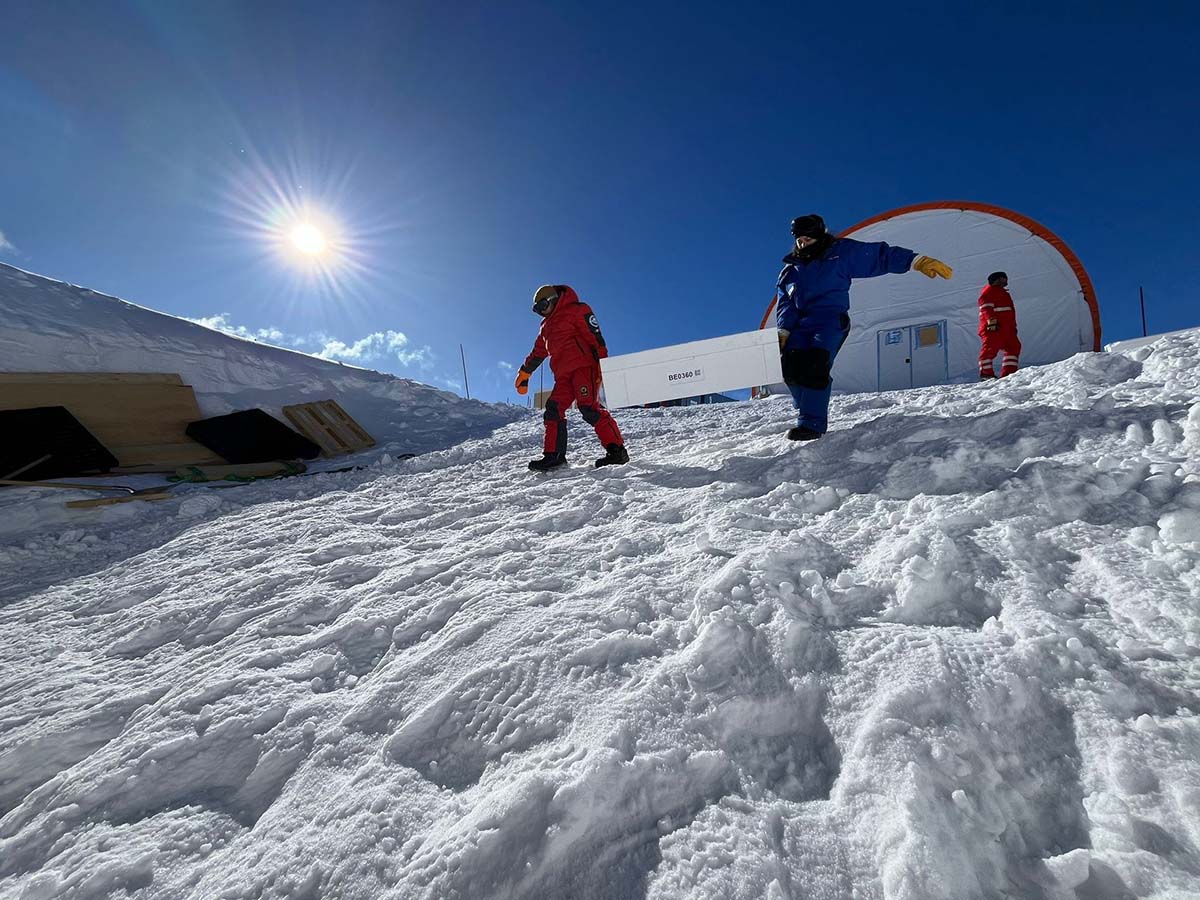
Drilling ice cores in Antarctica is not only logistically very demanding but also scientifically challenging. Drilling is only possible during two months of the Antarctic summer, and even then, the researchers in the field are pushed to their limits. At the drilling site on the central Antarctic plateau, at an altitude of 3,200 meters above sea level and an average temperature of minus 35 degrees Celsius, extreme weather conditions prevail.
Answers to the mystery of warm and cold periods
The current project in Antarctica builds on the European Project for Ice Coring in Antarctica (EPICA), which drilled an 800,000-year-old ice core at the turn of the millennium and was subsequently analyzed at the University of Bern and other institutions. At that time, researchers in Bern succeeded in reconstructing the CO2 concentration over the last 800,000 years – a world record that has now been extended by 400,000 years. The new ice core is expected to contribute to a better understanding of the interplay between warm and cold periods. About a million years ago – as studies of marine sediments show – the rhythm of these glacial-interglacial cycles changed. Why this change occurred remains a mystery, but climate researchers suspect that greenhouse gases, among other things, played a decisive role. This assumption is now being tested using the oldest ice.
Central role in ice analysis
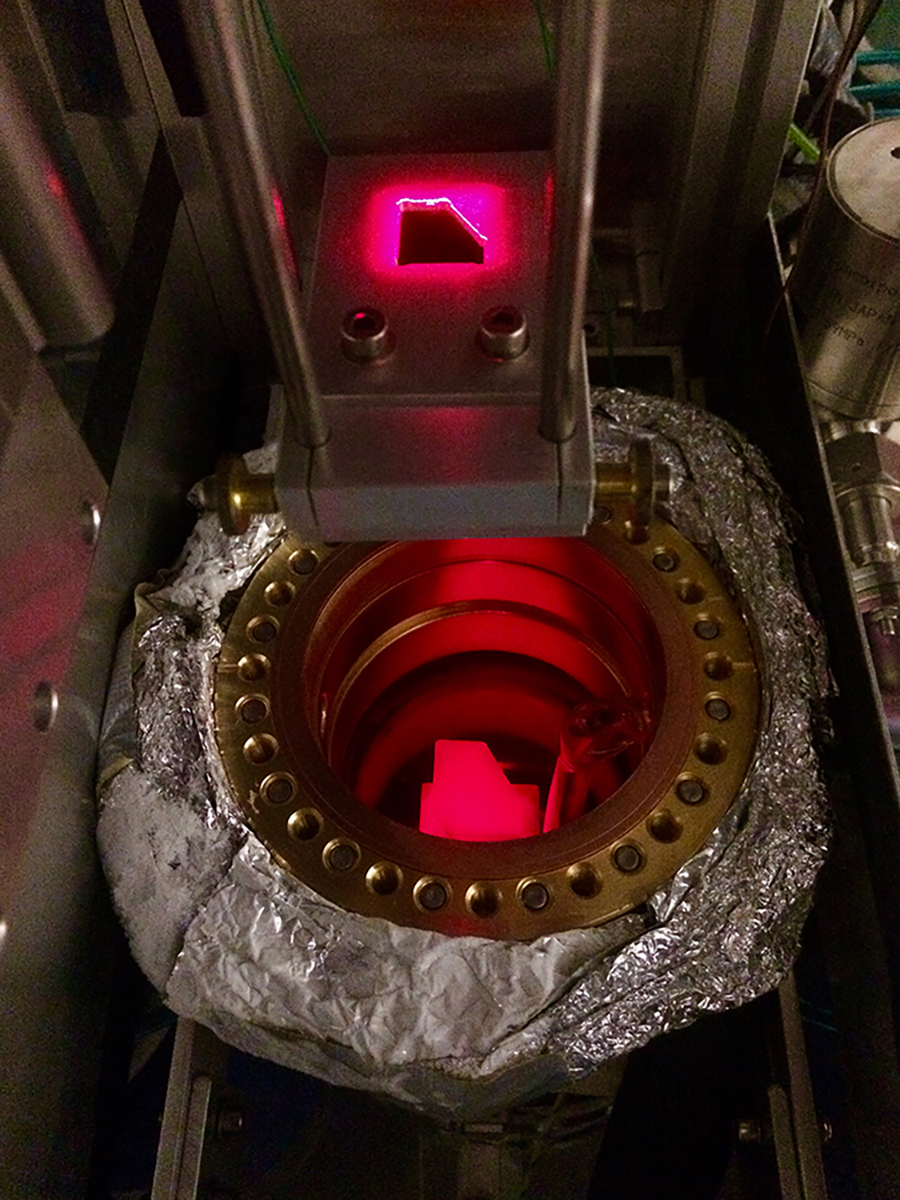
The University of Bern again plays a central role in the analysis of the ice core. Supported by European and Swiss research funding, Hubertus Fischer's team has developed completely new analytical techniques. The special thing about this is that all greenhouse gases can be measured simultaneously with a single analysis. Moreover, the air extracted from the ice samples is not lost during the measurements but can be used for further investigations. Hubertus Fischer speaks of "perfect recycling" and says, "For an ordinary ice core, the enormous effort we have to put into this would never be justified." For the oldest ice on Earth, however, of which only very small quantities are available, it is.
About

Hubertus Fischer
is Head of the Climate and Environmental Physics Department and a world-renowned specialist in the analysis of ice cores as a climate archive.
Beyond EPICA - Oldest Ice
The project "Beyond European Project for Ice Coring in Antarctica (EPICA) - Oldest Ice" involves twelve European research institutions and costs around 30 million euros.
Subscribe to the uniAKTUELL newsletter

Discover stories about the research at the University of Bern and the people behind it.